Absolver (2017) review
The journey from Prospect to Absolver is still one worth taking.

A brilliant, beautiful, buggy brawler
When it comes to modern video games development, there’s a real knack to making fights that feel right. If your character hits too hard, enemies become trivial – and, in time, boring. Of course, if your attack are too soft or slow, fights can drag on and – again – become boring.
Regardless of the genre though, an engaging combat system is built as much on timing and execution as it is giving the player a healthy diet of choices, options and decisions.
Do I want to take it slow - and wait for the enemy to strike first - before unleashing a furious counterattack? Do I try for the opposite - forcing my foes onto the defensive and towards a nearby environmental hazard? Maybe I burn through my character’s limited pool of special abilities right out the gate or perhaps I save them for a critical moment where things look like they could go either way.
The best fights in Absolver are filled with choices like these.
The Pitch
Developed by Sloclap and published by the punk publishing house Devolver Digital, Absolver is a third-person brawler with RPG elements that sees you play as a chosen warrior transported to the cell-shaded and martial-art-obsessed land of Adal.
Once you make it through a brief tutorial, you are tasked with eliminating six Marked Ones and climbing the looming Tower of Adal in order to prove yourself worthy of the titular rank of “Absolver”.
Over the course of your journey, you’ll learn new fighting styles and abilities, encounter fellow adventurers (called “Prospects”) on their own journeys and discover a little more about the world itself.
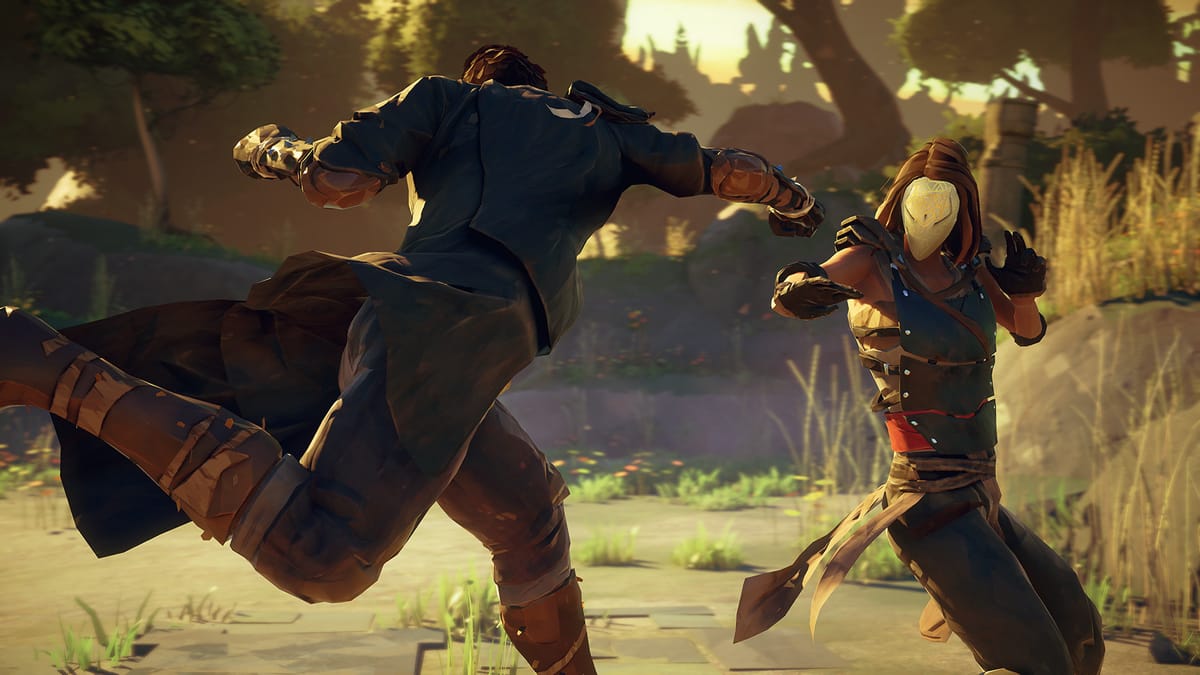
Absolver is an ode to the kung-fu epics of a bygone era and the compellingly stylish choreography that defined them – and it plays really, really well.
Dark Souls Meets Street Fighter
Absolver prides itself on its minimalist UI, mechanics and controls. Left click for a fast attack, right click for a slower, heavier hit. Upon this foundation, however, plenty of additional rules and specializations quickly pile up. It’s a rare and unlikely delight to find combat that both looks and feels this good.
More impressive still, is how effectively Absolver is able hide the depth of the mechanics underpinning it. It’s one of those games where it feels like there’s always more to learn, if you’re willing to put in the time.
Right out the gate, you get to customize your character’s appearance, name, gender and fighting style.
‘Forsaken’ players are the most aggressive and able to parry incoming attacks. ‘Windfall’ players are more agility-focused and all about dodging potential damage. Last but not least, ‘Kahlt’ falls somewhere in the middle by relying on a combination of strength and speed to absorb incoming blows.
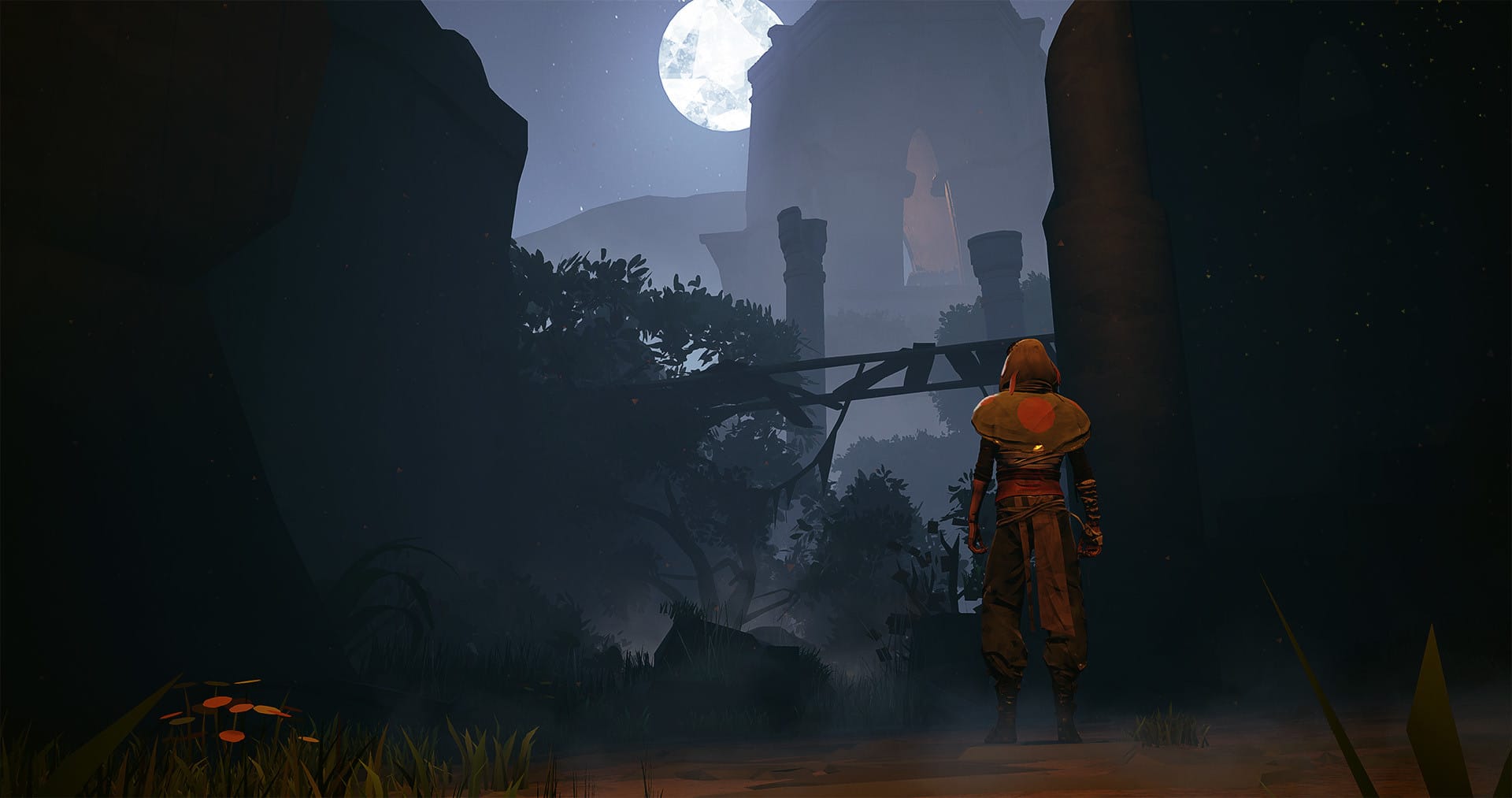
During my first hour or so with Absolver, I fast found myself falling into a satisfying rhythm of combat and exploration. I always wanted to see what was around the next corner and no sooner did I finish a fight than was I seeking out another, more worthy opponent.
The game’s aesthetic is immediately striking. Few games out there have such a distinct style to them, let alone look this good in motion as well as screenshots. The animations are lavish in their kinetics and the environments acts as a silent-but-imposing backdrop to the action. The soundtrack proves itself the final piece of the puzzle, drawing you further and further into Absolver’s majestic mayhem at every turn.
Fighting my way to the game’s major hub – The Guidance Bridge – I leveled up, spent skill points and began to kit out my character with new equipment. From here, I began to encounter other players out in the world.
Though it begins as a solo-affair, Absolver has been built as a sort of pseudo-MMORPG. You don’t share a server or persistent world with other players but the game does frequently generate ‘encounters’ where you and another players are temporarily able to see and interact with one another.
With only the method of communication in Absolver being emotes, you can either work together, face off against one another or even just ignore each other entirely. It’s a fascinating mechanic that opens the door to unpredictable and unique experiences. These encounters, though small, contribute a lot towards making Absolver feel like its own unique thing.
The mechanics also mirror the fiction in a fascinating way here. You are all Prospects on the journey to Absolver-hood, and nobody goes through that journey alone.
Learning To Taking A Punch
Like any other game with RPG-mechanics these days, defeating foes grants your character experience. However, in Absolver, the amount of experience you earn entirely depends on how successfully you defended yourself rather than how quickly you took down your foes.
What doesn’t kill you, makes you stronger. Deflect, block or dodge an attack enough times and you add those to your own repertoire. As you learn more moves, you can build combos both more powerful and harder to dodge.
While the game doesn’t present a huge amount of enemy-variety beyond normal enemies, mini-bosses and big bosses, there are a huge amount of moves out there to be learned – and even a fourth fighting style to be unlocked.
Unfortunately, despite its lofty and ambitions and the treasury of things that Absolver gets right. It’s elegant mechanics are held back by a number of shortcomings.
While the depth present in Absolver’ combat system is a critical part of its appeal, it’s a shame that, beyond the basics, it’s very poorly articulated and under-tutorialized. More than once I had to Google to understand how the various systems worked and how to get the most out of them – which is never ideal no matter how brilliant they might be.
In addition, the narrative underpinning Absolver it doesn’t quite land as evocatively as the art style. It takes a lot of cues from games like Dark Souls in this respect, constraining the broader story to snippets of text-only dialogue from NPCs throughout the world. There are a few cutscenes introducing some of the game’s boss characters but this does little address the game’s underlying narrative issues.
Ultimately, the story feels a little too partitioned to give it much weight beyond being a backdrop to your own individual journey towards becoming an Absolver.
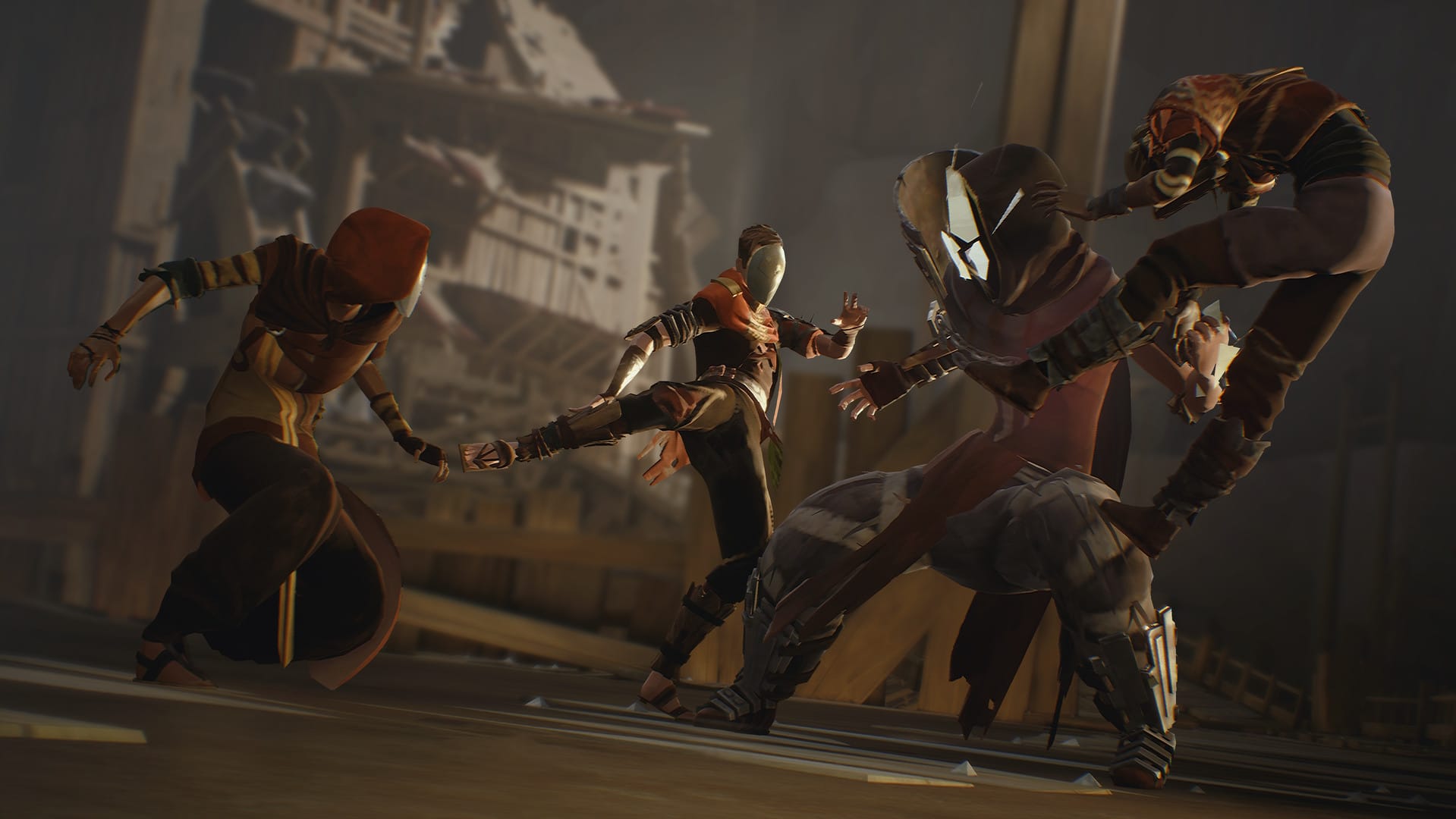
By the end of my first playthrough through the game (which took roughly five hours), I could tell you a half-dozen stories about my encounters with other human players but too few about the fictional history of Adal. The endgame here involves playing Absolver’s PVP mode – called Combat Trials – in order to grind experience unlock the higher difficulty versions of the game’s boss fights.
This aspect of Absolver was one I really wanted to spend more time with, but my efforts to do so were harried and hindered by network issues and bugs. Sometimes the game wouldn’t load any enemies or NPCs – leaving me alone in gorgeous but empty world – until I found a way to die and respawn. Sometimes enemies would reset to full health halfway through a fight.
Perhaps most frustratingly, the game would sometimes just outright ignore my efforts to set my game to invitation-only by turning off the encounter mechanic when the presence of additional players would send my own latency through the roof.
The Bottom Line
Regardless of its flaws, Absolver is still a beautiful and brilliant gem of a game – assuming you're willing to rise to its level. Its mechanics are easy-to-learn and hard-to-master and the world of Adal manages to be breathtaking but never overwhelming.
Even if its ambition ultimately gets the better of it, the journey from Prospect to Absolver is still one worth taking.