Yes, I'm still out here hyping Duskpunk

Why are so many sleeping on this Citizen Sleeper-like RPG?
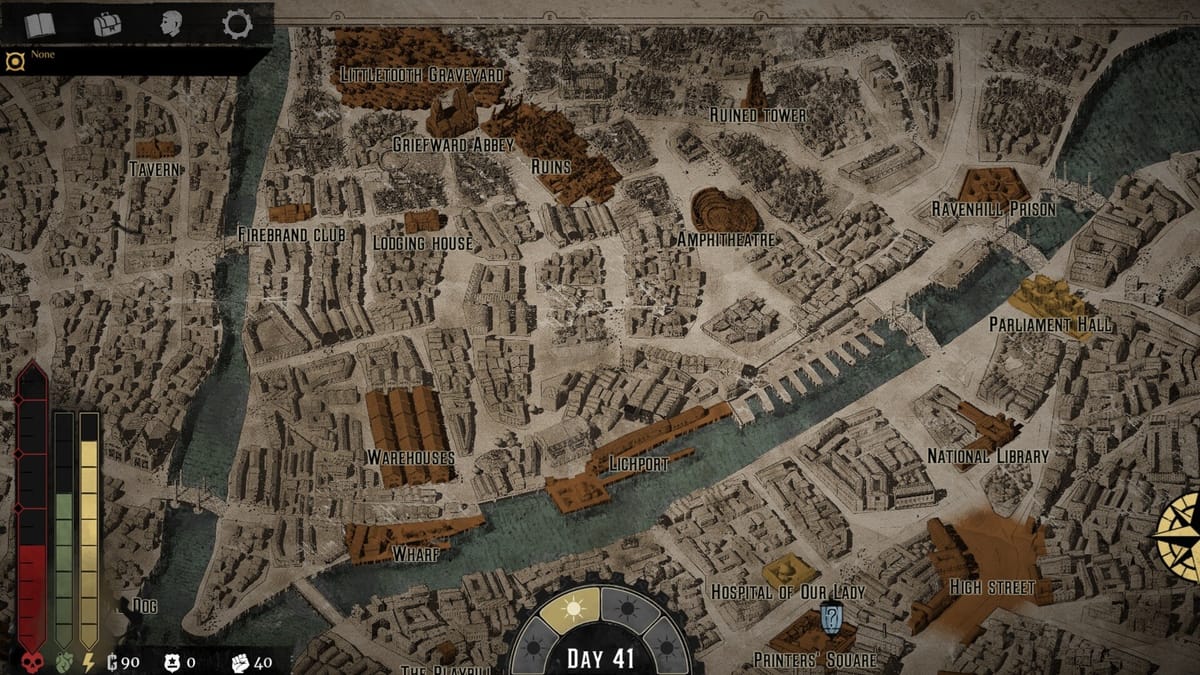
My guest for this issue of Multiplier is James Patton. Patton is the solo devleoper behind 2025's Duskpunk. You can find the game itself on Steam, follow Patton's work via his newsletter, or find them on Bluesky and Discord.
Fergus: The shadow of Western tabletop roleplaying games has long hung over the world of video games. While the recent success of Baldur’s Gate 3 has cast a fresh spotlight on D&D’s influence, the legacy of concepts like experience points, dungeons, dragons, loot, character classes, and skill checks stretches back through the decades in a way that’s easy to see.
Having said that though, the world of tabletop roleplaying games has come a long way since then and one of the most exciting trends I’ve encountered in recent years has been the adaptation of post-Dungeons & Dragons approaches. Disco Elysium is perhaps the most well-known example of this, but it’s hard to look past the original Citizen Sleeper as a case study of how much mileage this spin on the genre could hold. Back when I reviewed it, I came away thrilled with the possibilities of what others might do with the same format.
Lo and behold, it didn’t take long for Duskpunk to arrive on the scene and deliver on those expectations. The finished product feels as much influenced by Jump Over The Age’s stellar RPG as it is by something like John Harper’s Blades in the Dark. Naturally, I have to ask: which of the two do you feel was more of an influence?
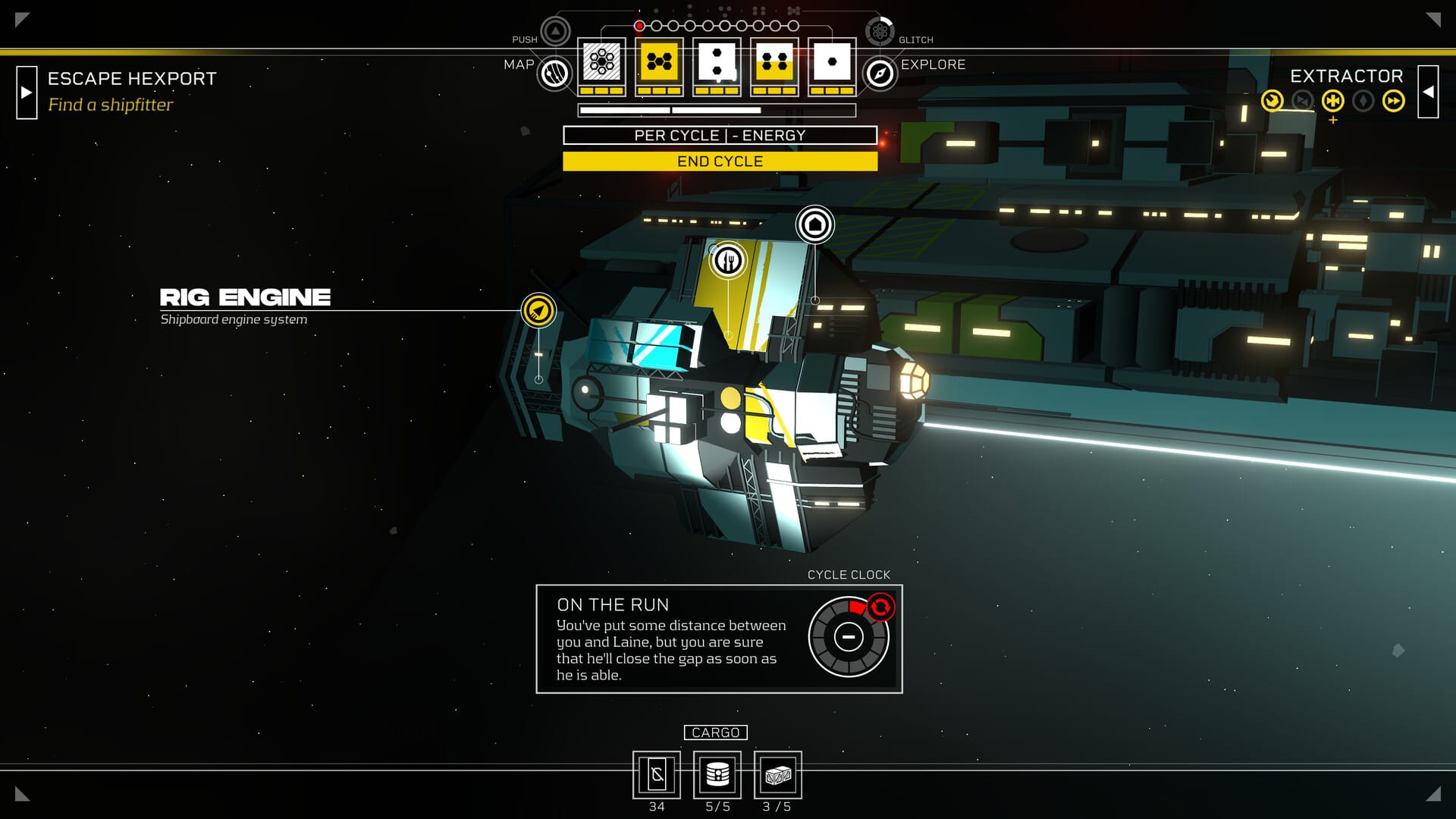
Jamie: Both were huge influences, but in different ways. Citizen Sleeper played the biggest role in shaping the game as a full project: I would never have had the idea for Duskpunk if I hadn't played CS1, and I would never have considered it as a viable commercial project if CS1 hadn't done so well and hit so many Game of the Year lists. And that game's internal engine is its multi-layered gameplay loops: in the short term you have to eat, in the medium term you have to stay healthy, and in the long term you have to explore the city and complete character quests. I adapted that "loops within loops" design, and that's what gives Duskpunk its internal drive.
So CS1 definitely had the largest overall impact on the game as a "game", because whenever I was implementing a new system or feature my first port of call was to check how CS1 did it, and see if that was an approach that would work for my game too.
But Blades still had a big impact on the atmosphere of the game, I think. It's one of my favourite TTRPGs, and it's set in a nightmare steampunk dystopia. It's very stylish - in the same way a 19th century gang leader is sometimes portrayed as stylish, or a gentleman factory owner - but it also portrays its world as very cutthroat.
A major point of the game is that Doskvol is a zero-sum game: for your gang to rise, you must take it from someone else, and that inherently creates friction. I didn't want to take that over entirely, because the point of Duskpunk is that we can ultimately build a better long-term future together, but most of the early and mid-game is more focused on that desperate struggle for survival. Blades capture that very evocatively. Although stress is handled mechanically differently in Blades and Duskpunk, my system was very much intended to mirror that feeling of pushing your luck and watching as you get closer and closer to burnout.
It's also worth noting that Gareth Damian Martin, the developer of Citizen Sleeper, was himself inspired by the Blades system even if his setting is quite different. So in making a game inspired by CS1 and then pushing it through the lens of Blades again, I'm kind of taking it full circle. If John Harper wants to partner to make a digital Blades adaptation, by the way, that would be... quite something.
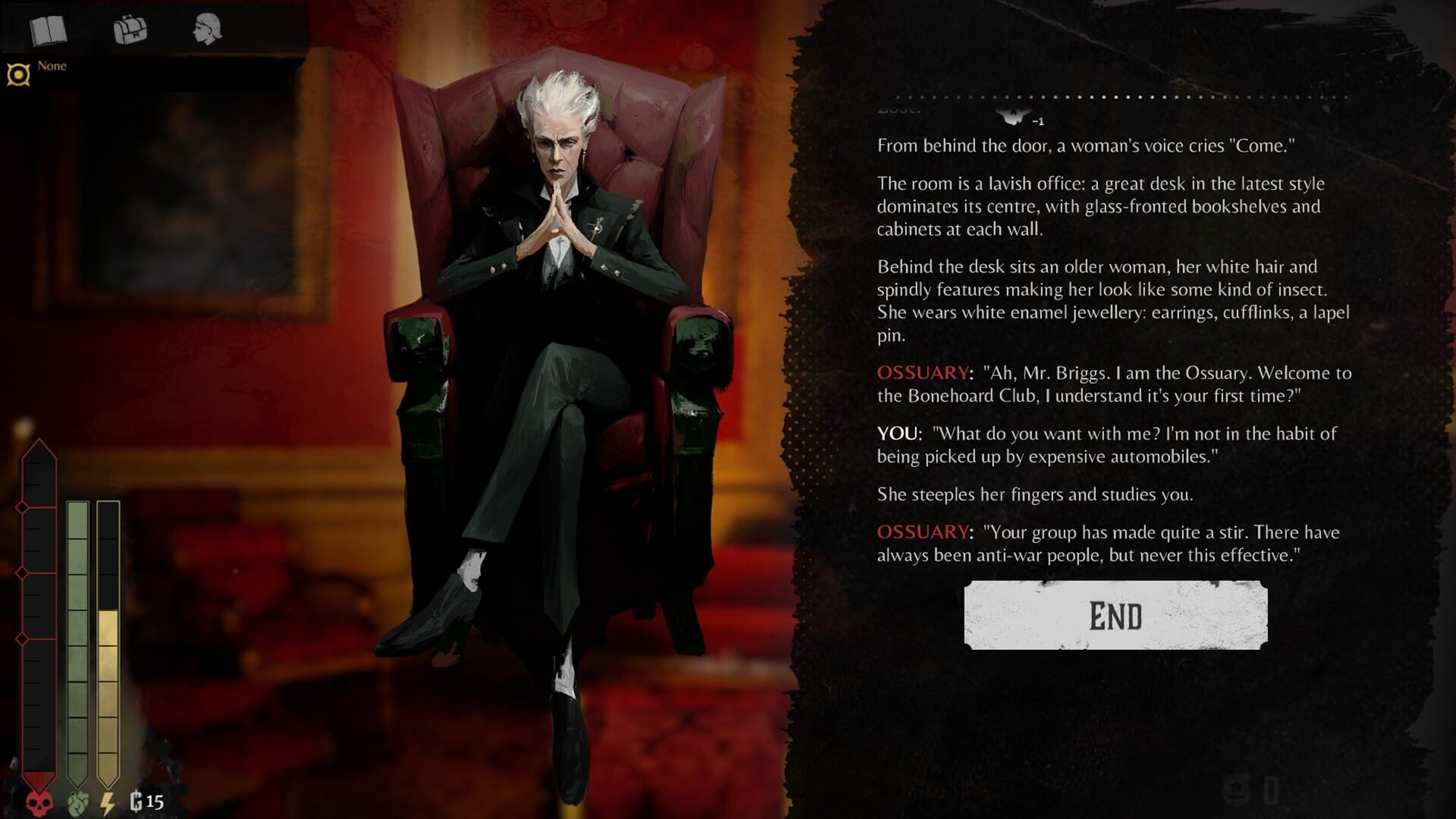
Fergus: I’d be here for that kind of collaboration, though it poses the question of what Duskpunk might have looked like without that thematic throughline of working together to build a better future. Was there ever a point where the long-term arc for the player was more of a zero-sum game? If Duskpunk was a little bit less inspired by Blades and more of an official adaptation, what choices would you have made differently?
Although games like Blades in the Dark are typically less simulationist and more story-focused than something like Dungeons & Dragons, the systemic nature of the systems in Duskpunk and Citizen Sleeper often ends up cultivating a sense of the former much more than the later. As you go through these short, medium and long-term loops, the story you’re telling is one that depicts a routine of daily existence within a specific place.
The world of tabletop RPGs (and especially indie RPGs) is full of iconic locations – Doskvol being just one of many – but I think one of the greatest strengths of this new approach to roleplaying in video games really brings that to the fore. There’s so much potential here to build roleplaying games that don’t necessarily fall into the same old sword and sorcery but try to actually embody the fantasy of living a life that is radically different to our everyday reality.
Jamie: Actually, my first idea for the game was just "you're a nobody in this crazy city. You can go anywhere, do anything, and your goal is just to make it big in whatever way works for you!" It was much more inspired by Fallen London, which basically just has that framing device. And then you would be able to succeed at being a gang leader, or a merchant, or an opera singer, or a scientist or whatever.
I really appreciated the fact that in Fallen London you might start out by using your Persuasive skill to seduce people at a bar, or write doggerel poetry for pennies, and then by the end you're literally writing operas for the Empress. And that felt much closer to Blades, because that game is basically just about creating some messed up characters and seeing what messes they make for themselves. But I realised that one reason CS works is that it has a constant main plot pushing you forwards, so I needed a main plot, and all of these different personal plots felt a bit out of place once I had the revolution plot as the game's spine.
I still think there could be an interesting BitD-inspired game that's both narrative and freeform, a kind of sandbox, but it wasn't this game in the end. But I think that is where I would push the design if I were asked to do a Blades adaptation. If you turn to the back of the book there's table after table of different scores, different encounters, different events, and honestly just rolling on the Entanglements table is a huge source of new complications to the overall story. So I'd start by figuring out a way to convert those more mechanical or procedural elements into the design somehow. I think that's the skeleton of a Blades session or campaign, and then the little moments, the stress-taking and the resistance rolls and complications, hang off of that core structure. So I'd probably start there.
Yes, I think you're right about the lived experience fantasy. People don't really want to hit monsters: they want to be other people. Which makes sense, because the world is so much broader than combat: most of us go through our whole lives without entering combat. Some of the most arresting moments in tabletop play are where a player approaches a situation in full roleplay mode, and just embodies their character. Or when a character in a TV show speaks a few lines which show that they have leverage over another character, and that they are ruthless enough to use it; I'm thinking of something like Hannibal or House of Cards. That's really powerful, and those are great character moments.
It's hard to capture that level of embodiment in a digital RPG, but I think that at least stepping back from only simulating combat, and stepping into simulating other things like persuasion or negotiation or just scraping by day by day, is a big improvement. And it's an interesting but difficult space to work in, because on the one hand, systematising something makes it "real", but it also abstracts it.
So when you eat in Duskpunk for example, that's a mechanic, so the player is forced to attend to that action, but it also completely abstracts the experience of eating: you have very little idea what kind of food it is, or what the cook or the tavern staff are doing.
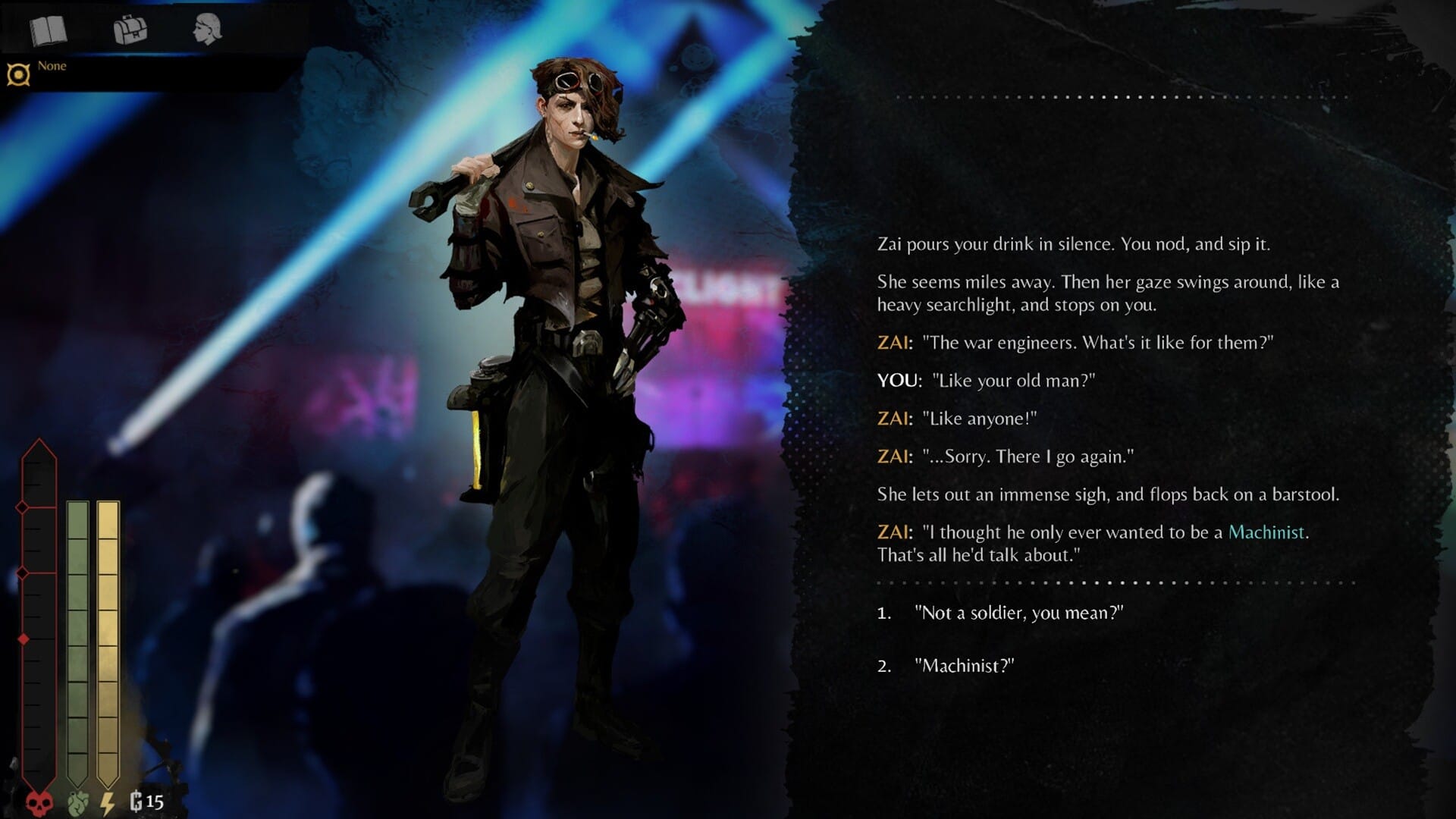
In a tabletop RPG you might want to zoom in on those little details to really savour the luxurious food at a club, or make a point of how gristly the pies are in the tavern. I'm not really interested in those details, so it's not a problem that they're abstracted away. But if I were, then I would put them in a dialogue scene, maybe with another character. But I think that's why the CS design model was so interesting for me: when you want systems and abstraction, you use an action box; when you want detail and flavour, you use a dialogue scene. So then you can create a world where some things are, I guess you'd call it a "generic action", like combat in D&D or any roll in BitD, and other things are "specific details", and those things give you the broad outline of "what you can do" and "why you should care", respectively.