Why do we want to escape from one dystopia to another?

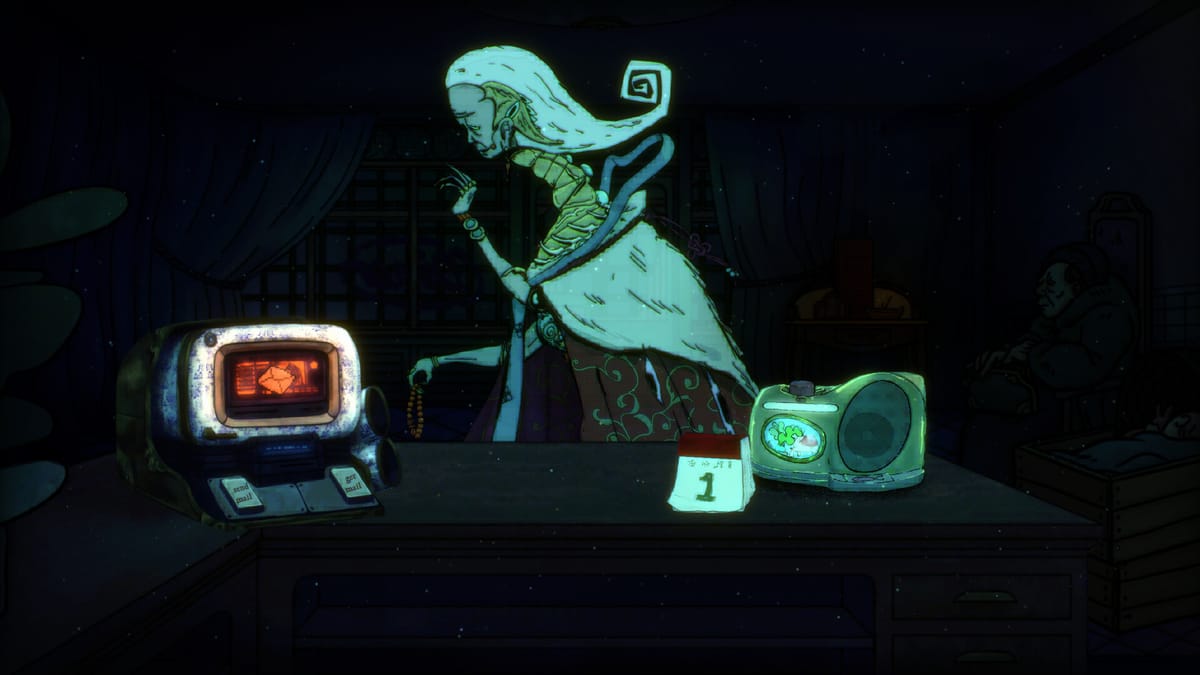
Can you resist the siren song of a better bad future?
My guest for this issue of Multiplier is Anna Zou, the lead developer at Lemon Jolly Games.
I caught up with Zou ahead of last year's SXSW Sydney to chat about the studio's debut title, the intriguingly-named Apothecary of City X. The project doesn't yet have a release date but if you want to learn more, you can find the game over on Steam.
Fergus: Escapism is far from the only reason to spend time playing video but it’s always been a pretty popular choice, especially as the wider world seems to spin in ever more depressing and dystopian directions.
It’s hard to imagine that the rise of so-called cosy games hasn’t played into that dynamic but the niches often associated with farming sims like Stardew Valley have quickly ballooned to encompass both other game genres and more ambitious settings.
Apothecary of City X is only the latest, but the choice in profession, gameplay, and aesthetic push up against the boundaries of what a cozy game should look like. It also begs the question: does it still count as escapism when you’re talking about a climate crisis ravaged world that doesn’t feel that far from our own?
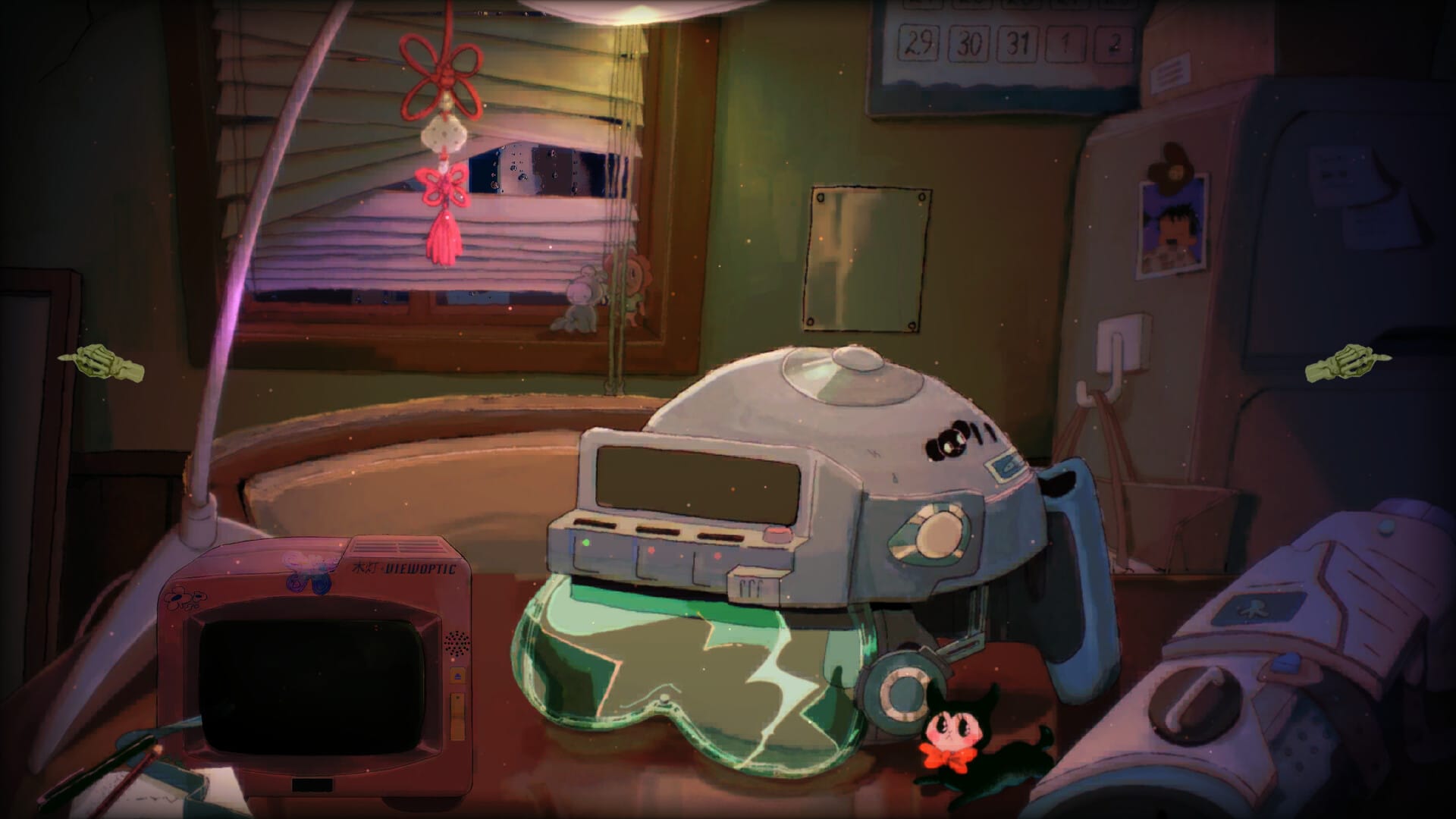
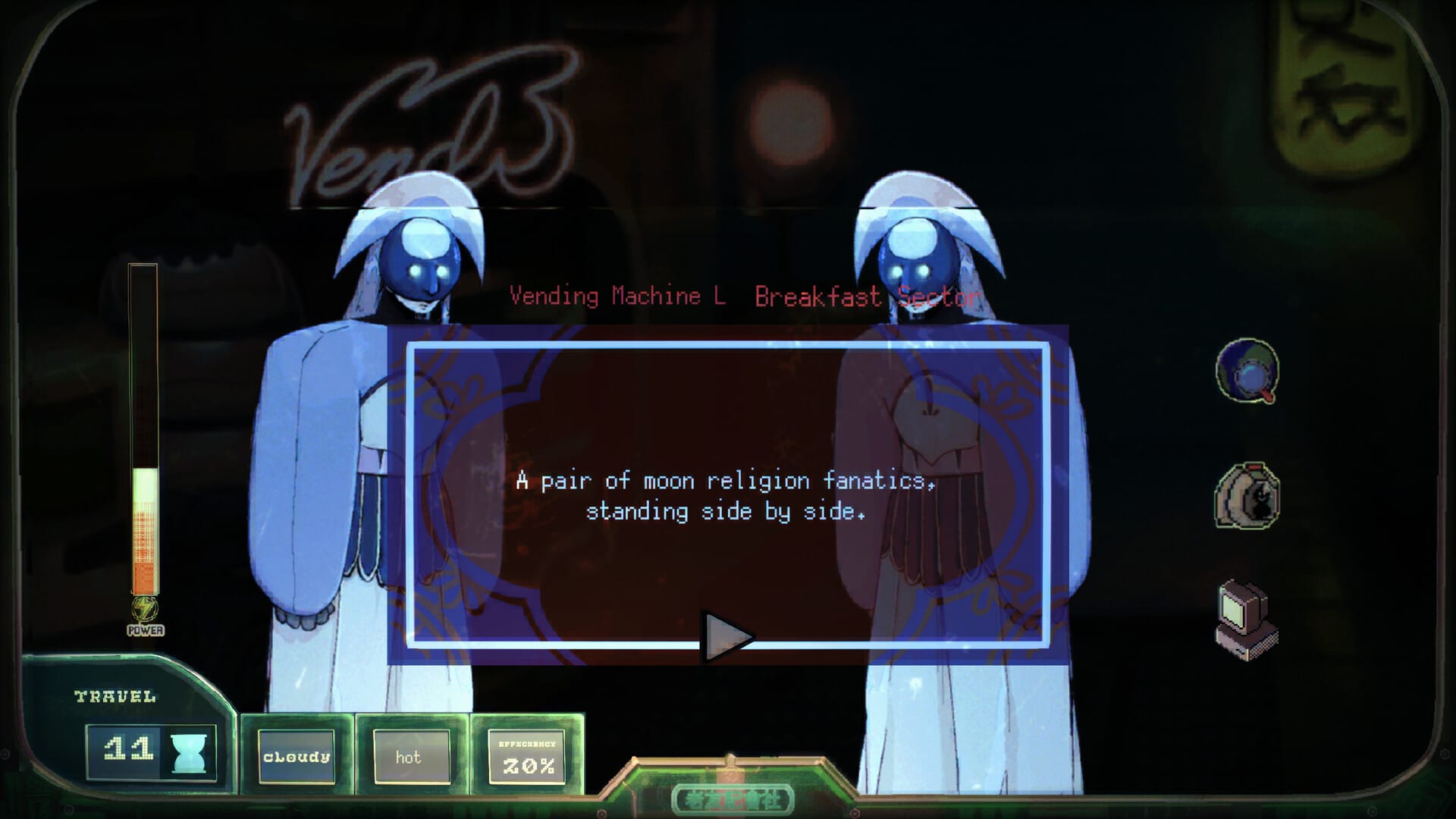
Anna: Therapy is too expensive, so I made a video game to process my feelings about the climate crisis instead! In that, I created Apothecary of City X in order to create a cosy escape from our climate crisis reality, but then also feel BETTER about reality once the game was over. The game embodies escapism in the strategy elements (players feel in control); cosy elements (decorating, ASMR, beautiful visuals) and in the captivating elements (sci-fi story, weird characters).
The game then also will leave you feeling better about reality when the escapism is over, via our hopeful story (narrative throughline based on community) and via the players being able to practice difficult things in a safe, interactive space (combat, climate crisis setting).
Fergus: It’s interesting to see you break apart the act of escapism down into component parts like a recipe in a cookbook. Was that approach based on any underlying theories about how to achieve that effect?
Plenty of games academics have raised and explored the idea that games can be empathy machines in the past but I’ve rarely seen that idea expressed as an antidote to individual despair. Nothing is created in a vacuum so I also have to ask whether you used any specific games that you yourself found a viable avenue for escapism as a blueprint or inspiration? Likewise, there’s no shortage of games that explore dystopia. Which ones shaped the vision of the future that Apothecary of City X offers players?
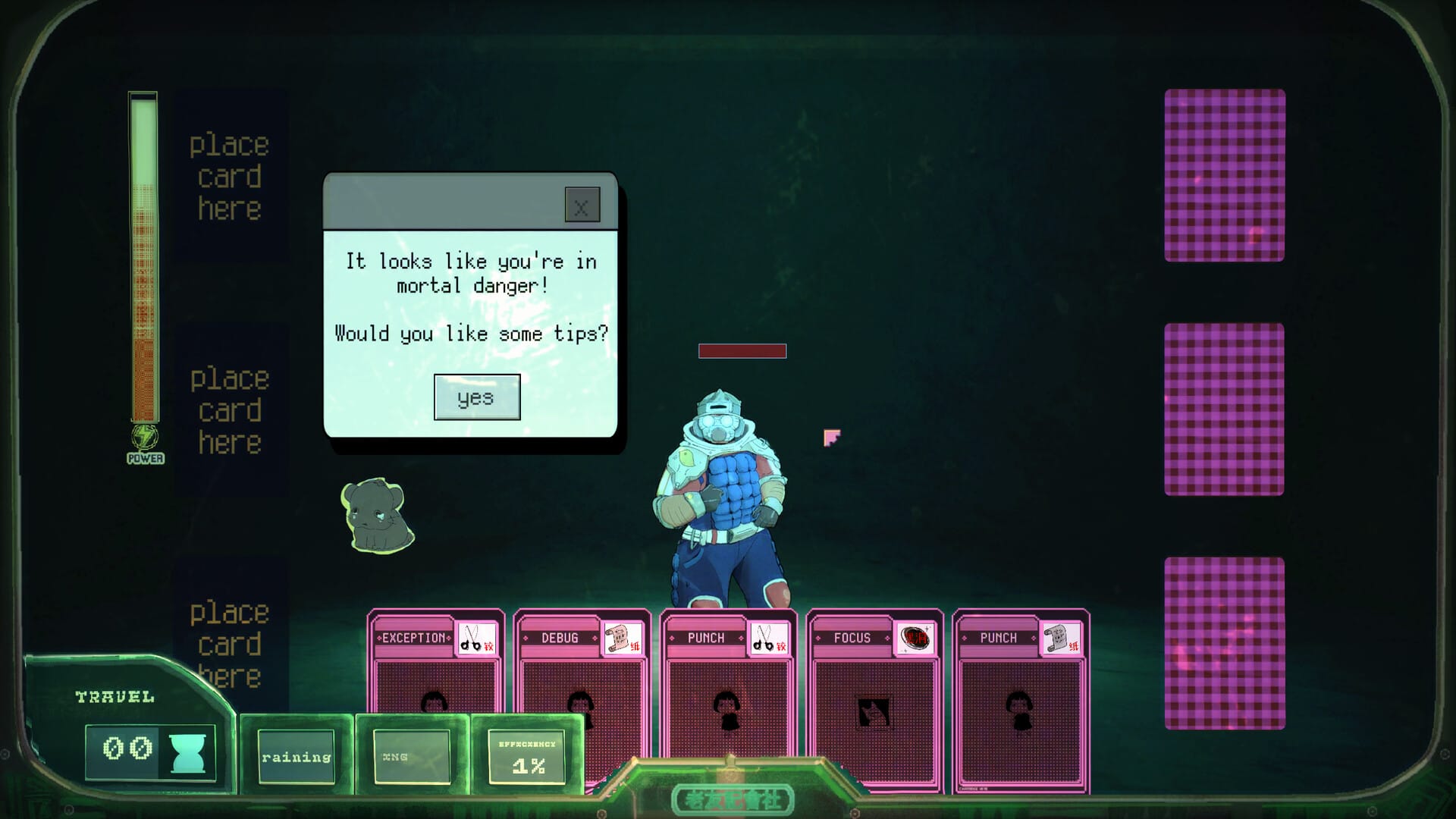
Anna: There was no particular game that we used as a blueprint for escapism or our setting. I do consume a lot of random content though! If I had to guess, I was likely inspired by films like Dark City and In the Mood for Love; games like Papers Please and Sunless Sea; and books like Perdido Street Station and Alice in Wonderland!
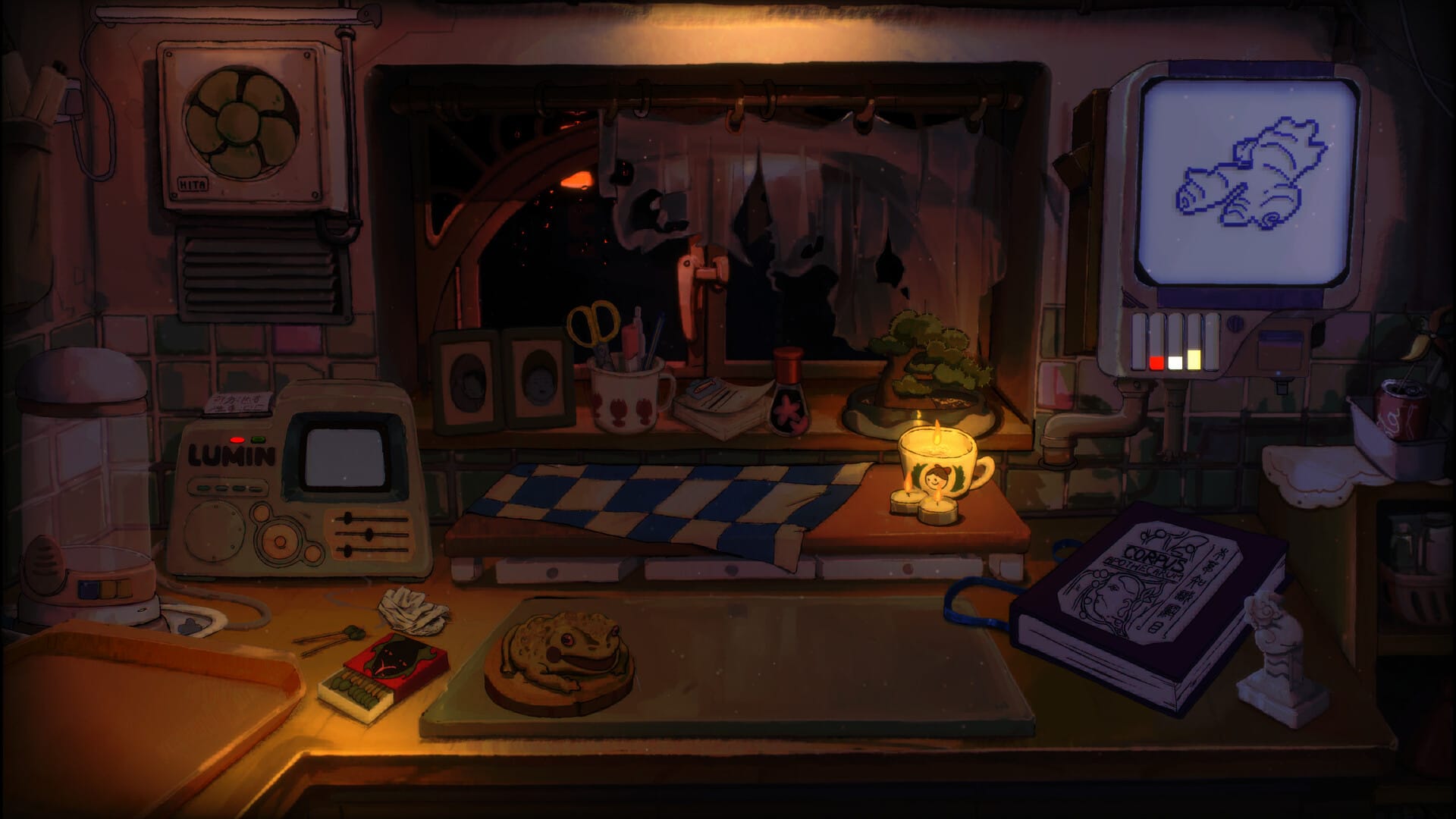
We really want the game to embody the idea of "dystopia but make it cosy" - exploring a city at 3AM where it feels like you're the last person left alive.
Fergus: That’s a really eclectic list of influences, but I think I get what you’re going for. There’s something deeply uncanny about the notion of dystopia. It’s both familiar and not.
The similarities – and differences – between a world like one depicted in Papers, Please, Alice in Wonderland or Sunless Sea are constantly colliding and contrasting one another in a way that produces that overall effect of unfamiliarity. For all that these stories diverge from the world we inhabit, the more mundane details are often just as memorable.