Doom (2017) review
The demons is in the details.

The Pitch
Historically-speaking, third-party support has usually ended up being the deciding factor behind not just the dominant gaming consoles of each generation but also many of Nintendo’s biggest successes. The Nintendo 64 is often as fondly remembered for Super Mario World and Starfox as it is for games like Goldeneye and Banjo Kazooie.
To tap the same vein, where would the Nintendo DS be without games like Phoenix Wright: Ace Attorney, 999 or The World Ends With You? Nintendo makes great games for their platforms but they rarely release on a schedule that’s consistent or regular enough to make buying a whole new platform palatable for those outside the company’s core audience.
Of course, third-party games don’t just fill that gap. For a lot of people, they seal the deal. They bring a desirable diversity to the line-up of games available on the platform, widening the appeal. Not everyone is willing to pay $499 for a console that lets them play Mario on the train. However, throw in things like Skyrim and LA Noire and the story quickly becomes very different.
The Switch goes from being a device that you exclusively use to play Nintendo games to one that you use to just play games in the same way you would any console. It changes the equation, giving both consumers and developers more reason to invest in the platform.
This is why it’s super exciting to see Bethesda really dive in and make the most of the opportunity to bring some of their biggest titles to the Switch. Alongside The Elder Scrolls V: Skyrim, the company are also bringing last year’s DOOM to the handheld console.
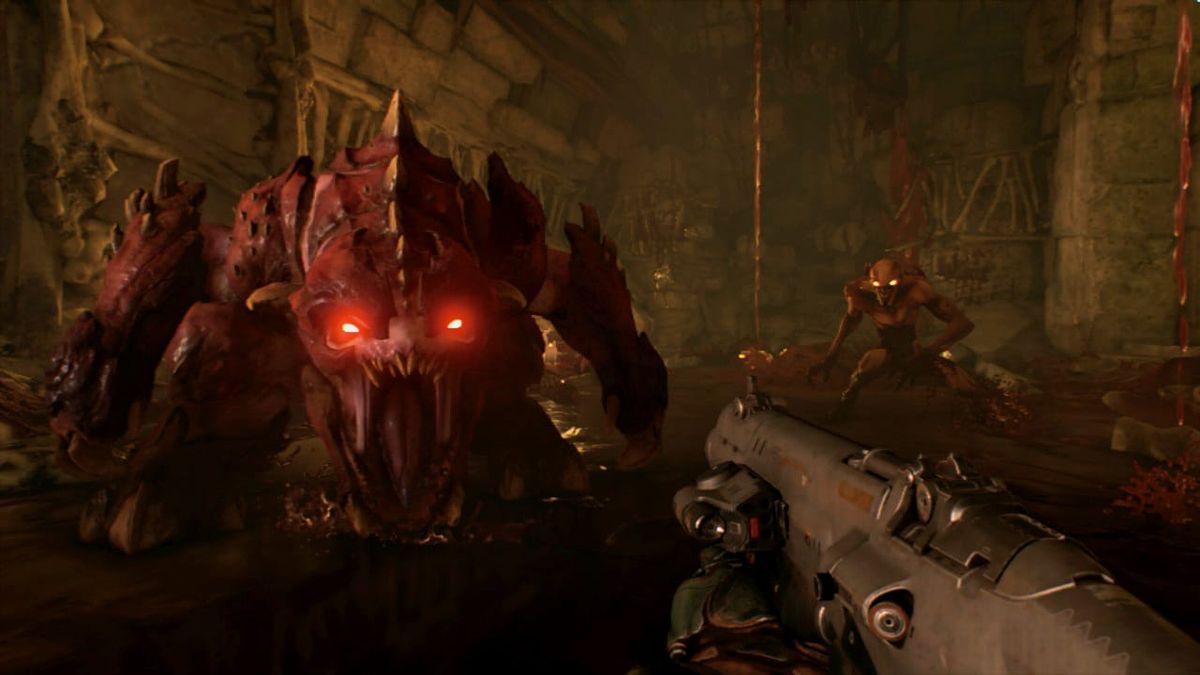
What’s more, despite the smaller screen and graphical compromises, the award-winning shooter is still manages to be every bit as loud, gory, stylish and chest-thumpingly enjoyable as it was the first time around.
Unholy Union
For the unfamiliar: DOOM (released last year on PC, Xbox One and Playstation 4) is a reboot of the classic science fiction shooter of the same name. What's more, this incarnation has been developed by the same studio responsible for the 1993 original: id Software. Like that game, the setup is simple but unashamedly over-the-top.
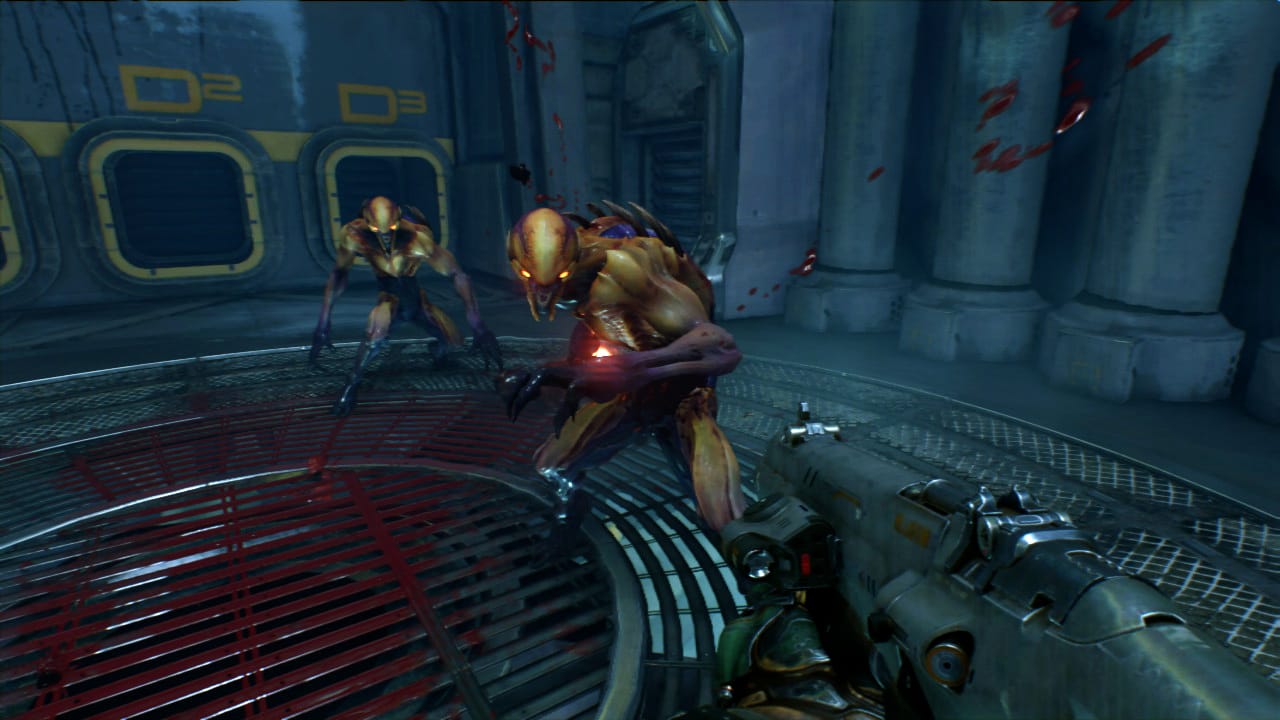
You wake up on a Mars-based science facility on only to find that base’s crew have been slaughtered by a horde of demons. Your job? To blast your way through nightmarish monsters using a unique arsenal of ultra-violent weaponry and put a swift stop to the invasion before the hell-spawn can escape and set their sights on doing the same to Earth.
Of course, to the familiar: this is all old news.
DOOM launched only a year and half ago, and the game has been pretty cleanly recreated when it comes to the content side of things. A far cry from the ports of yore, the game’s entire single-player campaign has been faithfully replicated in all its gory-glory.
Even the Arcade mode added via post-release update is present – allowing you to jump right into any of the game’s levels and pursue that high-score. The multiplayer mode has also been made the jump, though the SnapMap level creation kit is missing-in-action.
The Burning Question
So, with all the content of the original releases accounted for, the question becomes one of playability? Can a device of the Switches’ size and spec really run a game as technically intensive as DOOM?
The answer: yes. However, that affirmation comes with a few caveats. Pick up this version of the game and it'll become very clear very quickly that this feat hasn’t been achieved without some sort of Faustian bargain – and specifically one that comes at the expense of DOOM’s visual fidelity.
Even if most of the things that made DOOM great the first time around are still here, there’s a lot that isn’t and plenty more that’s lost its luster somewhere in the transition. To start with you’ve got things like frequent texture pop-in. Animations look choppier and the field-of-view has been cut down so savagely that it gives everything a glazed-over look.
Early reports suggested that the Switch version of DOOM had been locked to 30FPS. Unfortunately, this is not quite the case. As soon as the number of enemies on screen begins to rise above what you can count on one hand, you’re probably going to experience a pretty noticeable slowdown.
Sometimes, these technical drawbacks don’t exact too great a toll. Over time, my tolerance for them grew. Turning down the difficulty did make them easier to live with though. In fact, you’ll probably want to abandon any ambitions to complete this version of the game on higher difficulties from the outset. The patchy frame-rate and general imprecision afforded to the Switch's Joy-Con controllers is going to make this feat a bit of a stretch for most.
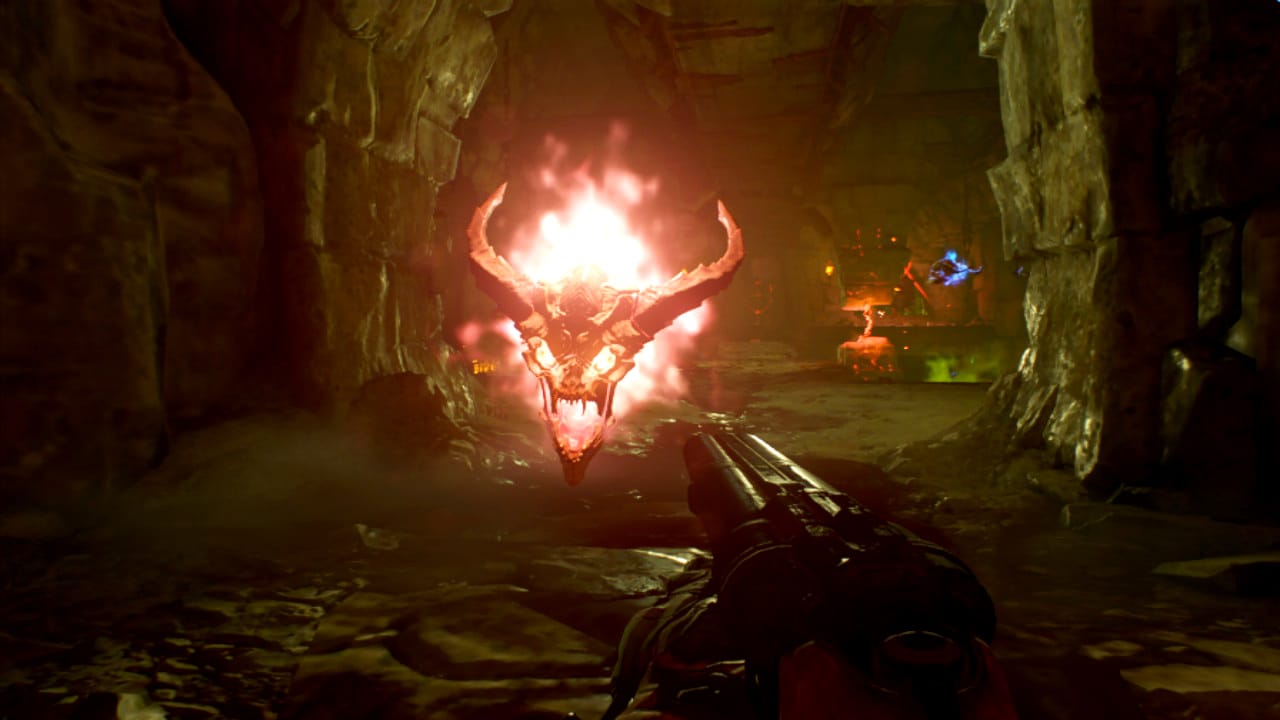
Everything has a slightly-blurred quality to it that gnaws at the game’s gripping sense of style and slurred soundtrack. That said, it does feel like the Switch version of DOOM is absolutely competent enough that you could break down the game’s campaign into snappy commute-sized segments and digest it that way. In fact, that’s probably the way you should play DOOM on the Switch. Longer sessions give you more time to sit with the compromises that have been made to get this game on a compact form-factor.
Even if the experience is a partially-compromised one, it’s still portable in a way that the PC, PS4 and Xbox One versions of the game simply aren’t. To put it bluntly, that's the biggest selling point here. To some, it may be the only one that matters.
The Bottom Line
Even in a year with Overwatch and Titanfall 2, DOOM managed to hold its horned-head high as one of 2016’s best shooter experiences. Everything that worked about it – solid level-design, fun weapons, gory aesthetic, smashing soundtrack – is present here and portable to boot.
Though plenty of compromises have been made in this Faustian bargain of a port, DOOM still fun as hell to play and a worthy addition to the Switch’s library of third-party releases.