Pillars of Eternity 2: Deadfire (2018) review
Everything a good sequel needs to be.

The Pillars of Eternity franchise has always been shaped – both literally and in a more meta-textual sense – by a fixation with the past.
Crowdfunded by fans in 2012 and released in 2015, Obsidian Entertainment’s first Pillars of Eternity was a throwback to the grainy, dense and ambitious CRPG adventures of the 1990s. It offered a nostalgia hit that extended not just to the style of gameplay, but also reflected in the setting and themes of its story.
Set in the loosely-American-flavored Free Palatinate of Dyrwood, Pillars of Eternity very explicitly focused on what it meant to reckon with the past. You took on the role of a Watcher – a figure able to see into the past lives of others – and traveled the land, righting wrongs and uncovering priceless truths lost to time.
As a result, the question of how to evolve that formula and focus in a sequel feels like a pretty open-ended one. Sure, it would have been easy to just double down and make more of what that first game offered. However, having already done so with The White March expansion pack, Obsidian has now set their sights a little higher.
Done with pulling from the past, Deadfire follows the series' central fixation forward to its logical conclusion.
If one of the main reasons that CRPGs like Pillars of Eternity are so beloved is because of the way they evoke and emulate the feel of tabletop roleplaying experiences, why settle for emulating the former of the two? Why not go straight to the source of that appeal?
Pillars of Eternity 2: Deadfire sets out driven by the same motivations as its predecessor but a willingness to innovate and reinvent its approach sees it emerge as a triumph. Where the original Pillars sometimes felt like just another one of those games, Deadfire makes a strong and compelling case for itself as potentially one of the best entries the genre has produced to date.
Breaking the wheel
Set following the events of the first game, Pillars of Eternity 2: Deadfire sees you resume the mantle of The Watcher of Caed Nua.
Possessed by a god named Eothas, a jade colossus rises from the earth beneath your castle, stomps all over everything you spent the last game building up, snatches away part of your soul and makes a B-line towards the nearby Deadfire Peninsula for reasons unknown.
Without spoiling anything too critical or getting too mired in the details, your goal in Deadfire here is to track Eothas down, learn what his plans are for the world, and put a stop to them. Of course, much like the first game, the journey towards that destination isn’t nearly as straightforward as it might seem.
The Deadfire Archipelago is a region fraught with conflict between the native denizens, foreign powers looking to colonize the region, and the ravenous pirate tribes of the Príncipi sen Patrena. As your pursuit of Eothas intensifies, you’ll want to bring at least some of these factions onside, which typically involves some combinations or missions, errands or quests.
Compared to the first game in the series, the structure of Deadfire is more open-ended. You’ve got a lot more freedom and the story manages to find a deft balance between making the world feel big without that getting in the way of actually navigating and traversing it.
Much like its predecessor, Pillars 2 features both realistic travel times and a day-night cycle. However, this time around – and in line with the naval theme of the game – you’ve also got a fully-fledged naval vessel at your disposal. Anologous to the castle management in the first game, this feature is much more than a purely aesthetic inclusion.
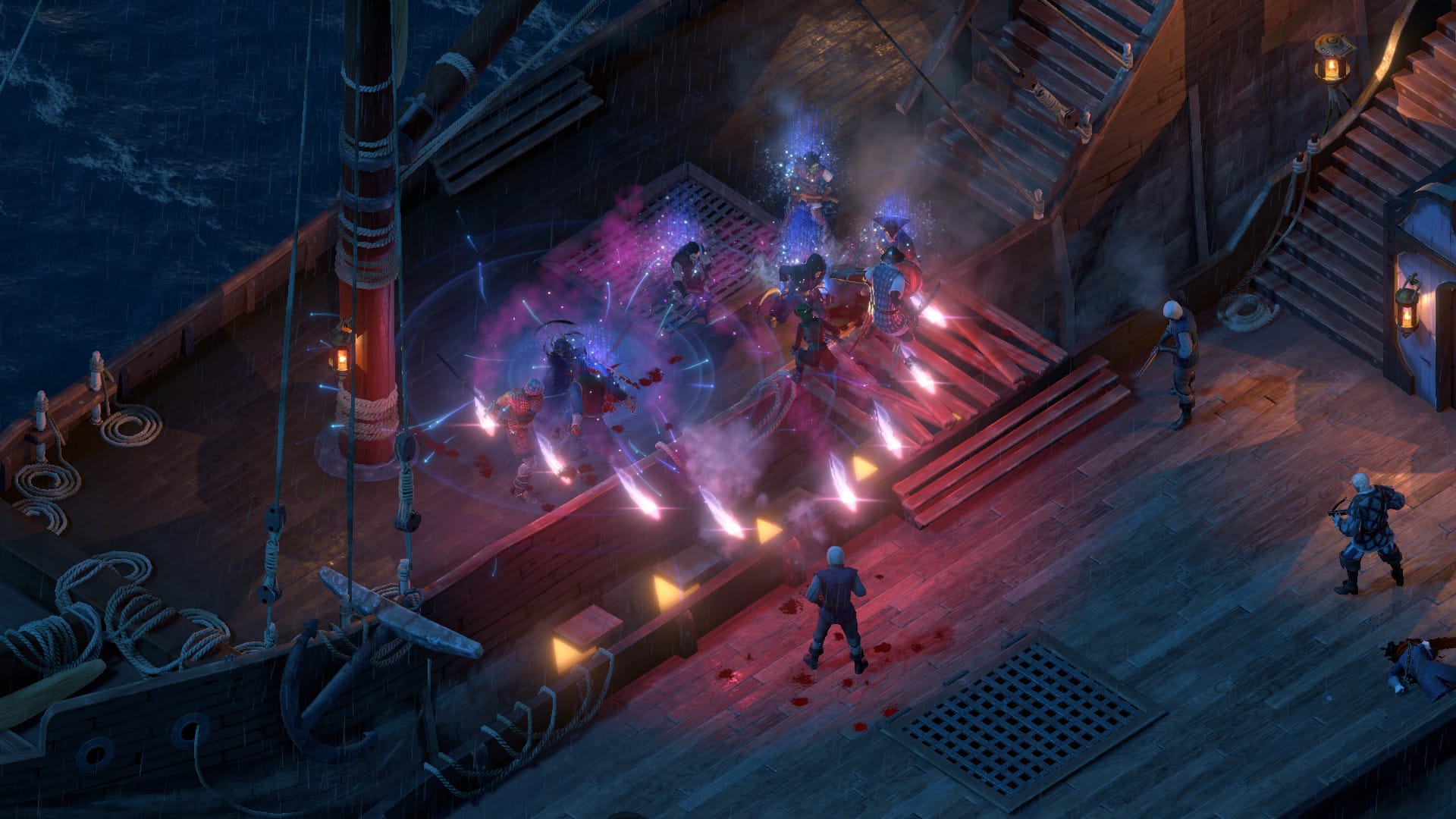
You have to manage your crew, make sure your pantry is stocked with enough supplies and more. Morale is also important too. If you only stock your ship’s pantry with the barest of rations and most milquetoast of booze, your crew of sailors will grow discontented and eventually even mutinous.
Encounter another ship and you’ll enter a choose-your-own-adventure-style battle system of seafaring maneuvers. Get close enough and you’ll be able to board that ship and fight the crew directly. For me, the latter proved the more compelling end of the equation but it's an interesting execution on this idea nonetheless.
If you’re not a fan of the naval combat or ship management elements, Obsidian have included options that allow it to be partially automated and easily-avoidable. As fun as the management systems here can be, you’re rarely forced to engage with them in order to see the game’s story through to its conclusion. As someone who was mostly there for the story, this flexibility was something I genuinely appreciated.
Sea-change
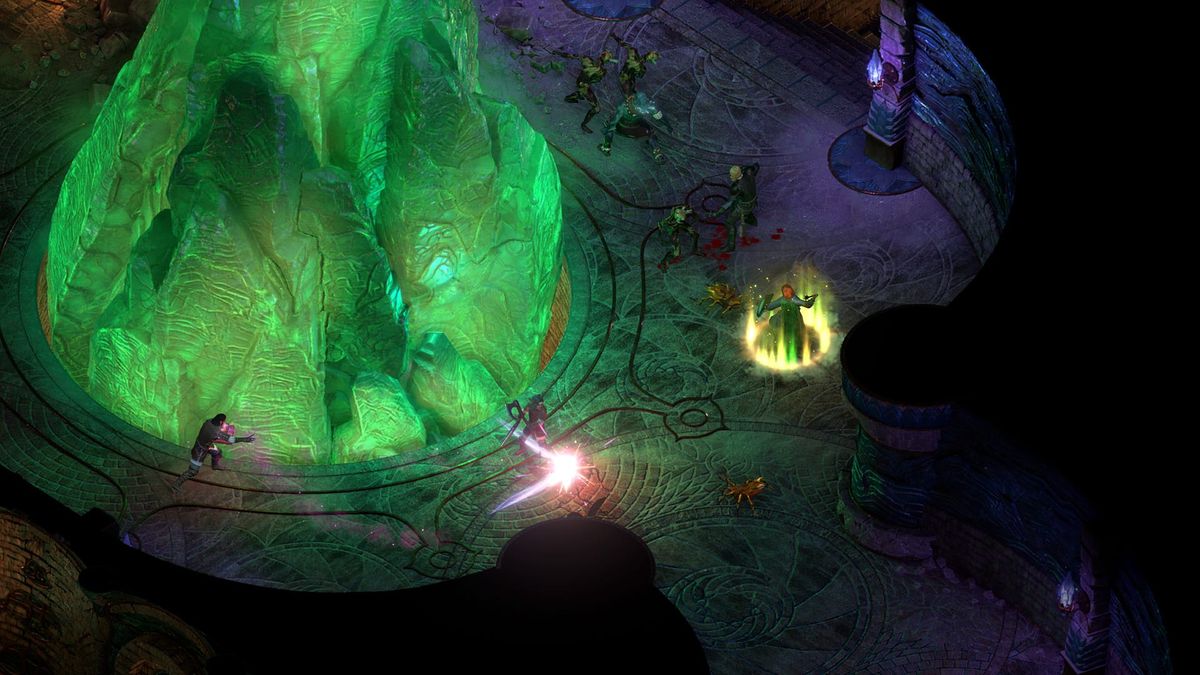
Combat in Pillars of Eternity 2 is fundamentally similar to that of the first game, but moment-to-moment it feels more fast-paced. It feels very much comparable to something like the shift between Dragon Age: Origins and Dragon Age 2. You've still got the choice of scrambling to micromanage your party as things happen and hoping for the best or pausing the action to take your time.
Thankfully, like the first Pillars, Obsidian do give you the option of lowering the difficulty of combat if you are – like me – mostly here for the writing, characters and story.
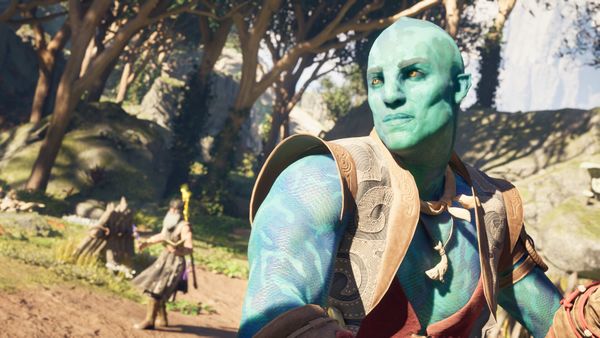
The sprawling isometric environs of the Deadfire Archipelago are largely consistent in look and feel with those found in the first game, but the character inhabiting these locales feel a lot more lively and charismatic.
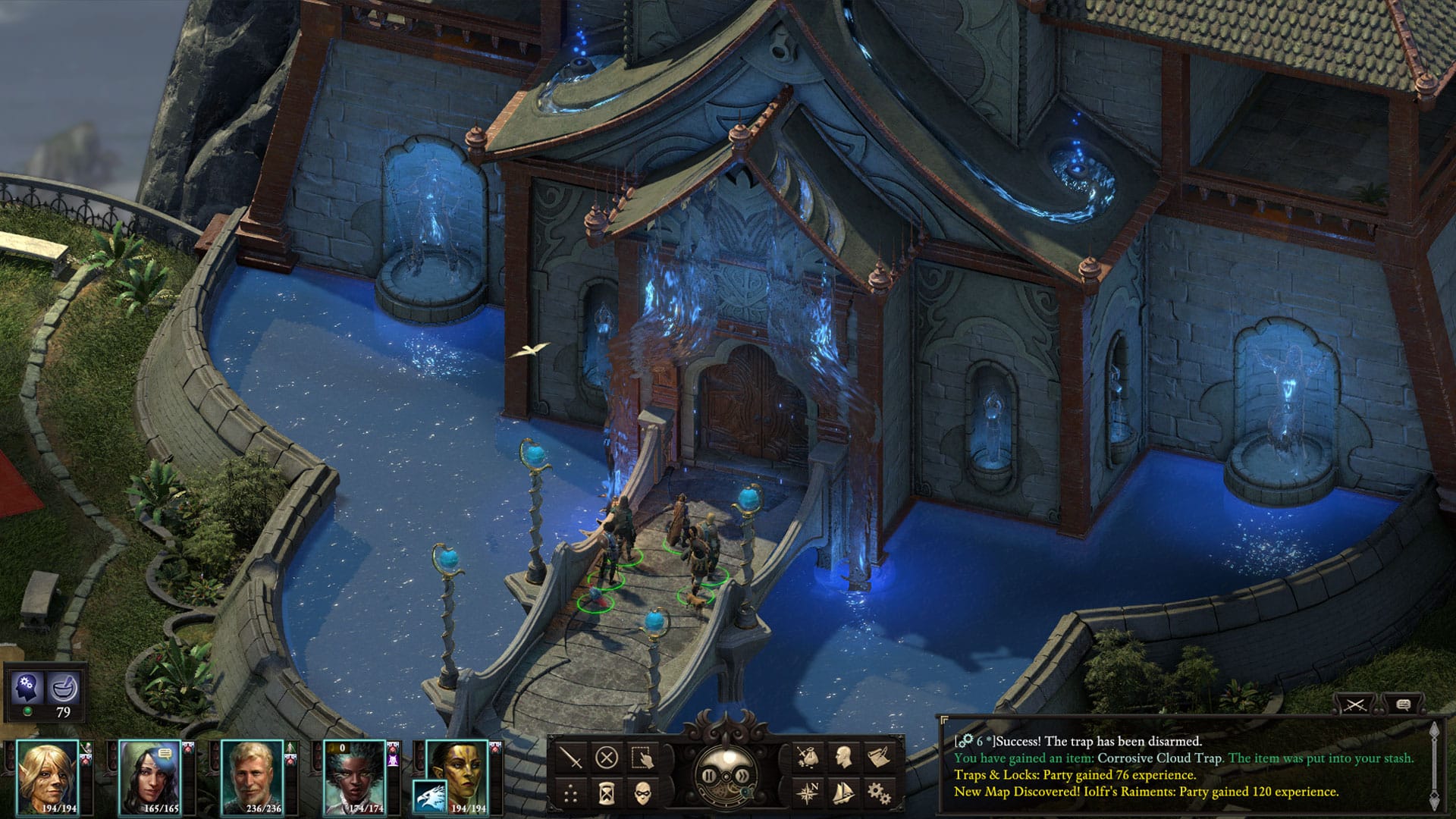
The amount of voice acting in Deadfire is a substantial step-up on what the first Pillars of Eternity featured. Honestly, it feels like almost every named NPC in the game is being voice-acted. Cumulatively, this investment in VO contributes greatly to the tabletop-like feel of the overall experience and helps better convey the tangible sense of culture that underpins the wider narrative.
Deadfire does a great job of expanding overall the scope of the Pillars setting but – importantly – it does so while also managing to keep the tone relatively consistent. At first, the mish-mash of Polynesian tropical islands, colonial outposts and piracy can feel like a radical departure from the first game’s more classical fantasy setting. It doesn’t take long for concepts like ancient Engwithan devices and animancers to make their way into the mix.
The character models in Deadfire have also received a major buff. Everything looks a little sharper and more detailed and the silhouetting of your party members is also a bit more distinct. This helps make combat a bit more legible, but it's not the only improvement on that front.
Enemy variety is better than the first game, but probably not as good as it could or ought to be. It feels like you’re either fighting pirates or lizard-people way too often. The few times this gets spiced up are all too brief and hard to come by.
The Bottom Line
If I had to summarize the difference between the flow and feel of Deadfire and its predecessor, I’d undoubtedly fall back on one specific thing.
In the first game, it sometimes felt like you were reading a really interesting and well-thought out sourcebook for a tabletop roleplaying game more more than it did the experience of actually playing one. It was fun – but it was also a little dry at times. That isn’t the case here, and it makes for a much more involving and memorable experience.
In the same way that sprawling turn-based strategy games like BattleTech and X-COM evoke that raw feel of a board game (minus the tedious setup process and pesky human players), Pillars of Eternity 2: Deadfire comes as an incredibly-accurate encapsulation of what tabletop roleplaying feels like.
There’s banter, there’s exploration, there’s combat, and almost-every aspect of that trinity feels meaningful. With Pillars of Eternity 2: Deadfire, Obsidian make the case not just for another one of these games but maybe one of the best in the genre to date.