Why did the makers of Mini Metro pivot to lo-fi horror?

Where did RTFM come from?
My guests for this issue of Multiplier are Dinosaur Polo Club's Casey Lucas-Quaid, Lucy Weekley, and Dylan Richardson. I caught up with the trio following the low-key launch of the New Zealand studio's new cooperative game RTFM earlier this year. You can follow Dinosaur Polo Club over on Bluesky and download RFTM on Itch.io.
Fergus: If you had asked me what to expect next from the makers of Mini Metro, a lo-fi asynchronous multiplayer game about tech support would not have been anywhere on my bingo card.
RTFM is quite a stark departure from the studio’s previous work and while the text file that comes with the game name-drops a few of the influences, can you talk me through where this project came from? What is it that drew you to this specific style of multiplayer experience?
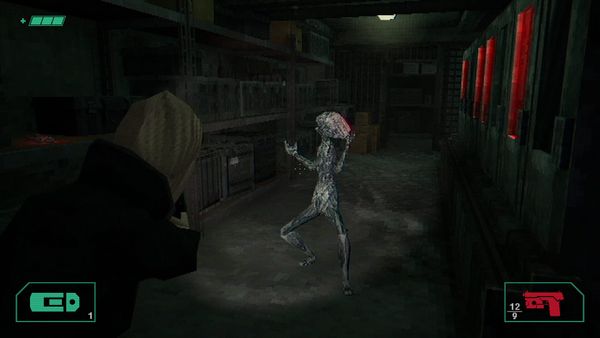
Lucy: While I can't speak to the initial spark as the project was already beyond the "ideas" stage by the time I came on to do the voice work, I will say we have a lot of horror fans in the office! So while something kind of creepy and like sitting on a computer terminal in a liminal office space isn't something one would expect from Dinosaur Polo Club, as individuals we have a huge range of interests and inspirations that were able to come out due to the game jam format – which makes the inaugural launch under our "DPC Labs" name extra exciting, as we now have a dedicated place for our more off-beat little projects!
It's also been nice to see that the departure from our usual formula has been met with surprised-but-pleased reactions as opposed to total confusion.
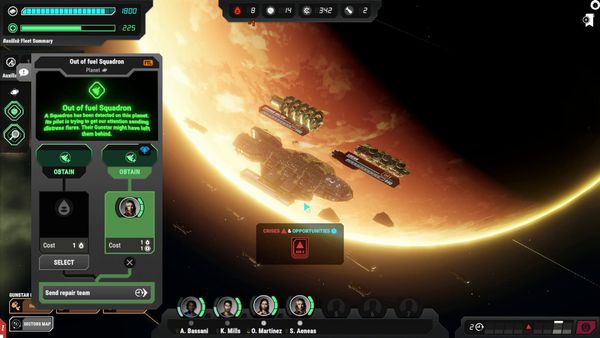
Dylan: It wouldn’t have been on my bingo card either to be fair! For me at least though, the departure is very much intentional. We’re currently working on the next iteration of the Mini franchise and I’ve been living in that clean, minimalist world for some time now. So when our yearly Creativity Week came up I was excited to game-jam with some of the team on something entirely different.
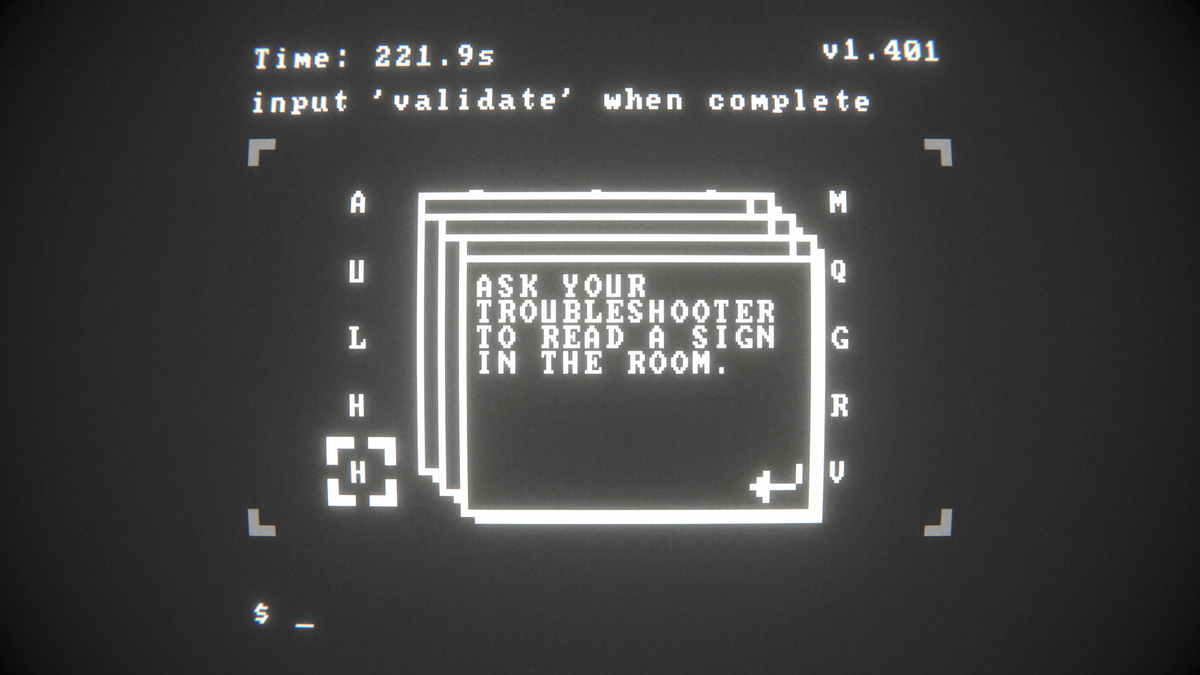
I liked the idea of something that was a bit silly, something entertaining to watch and play together, and also something that we could achieve pretty quickly as our other projects tend to spend quite a while in the oven. That’s why we embraced small, bite-sized puzzles for the core of the game which meshed really well with an obtuse manual and better yet, one you couldn’t see and needed to be relayed to you by a friend. Very much inspired by Keep Talking and Nobody Explodes!
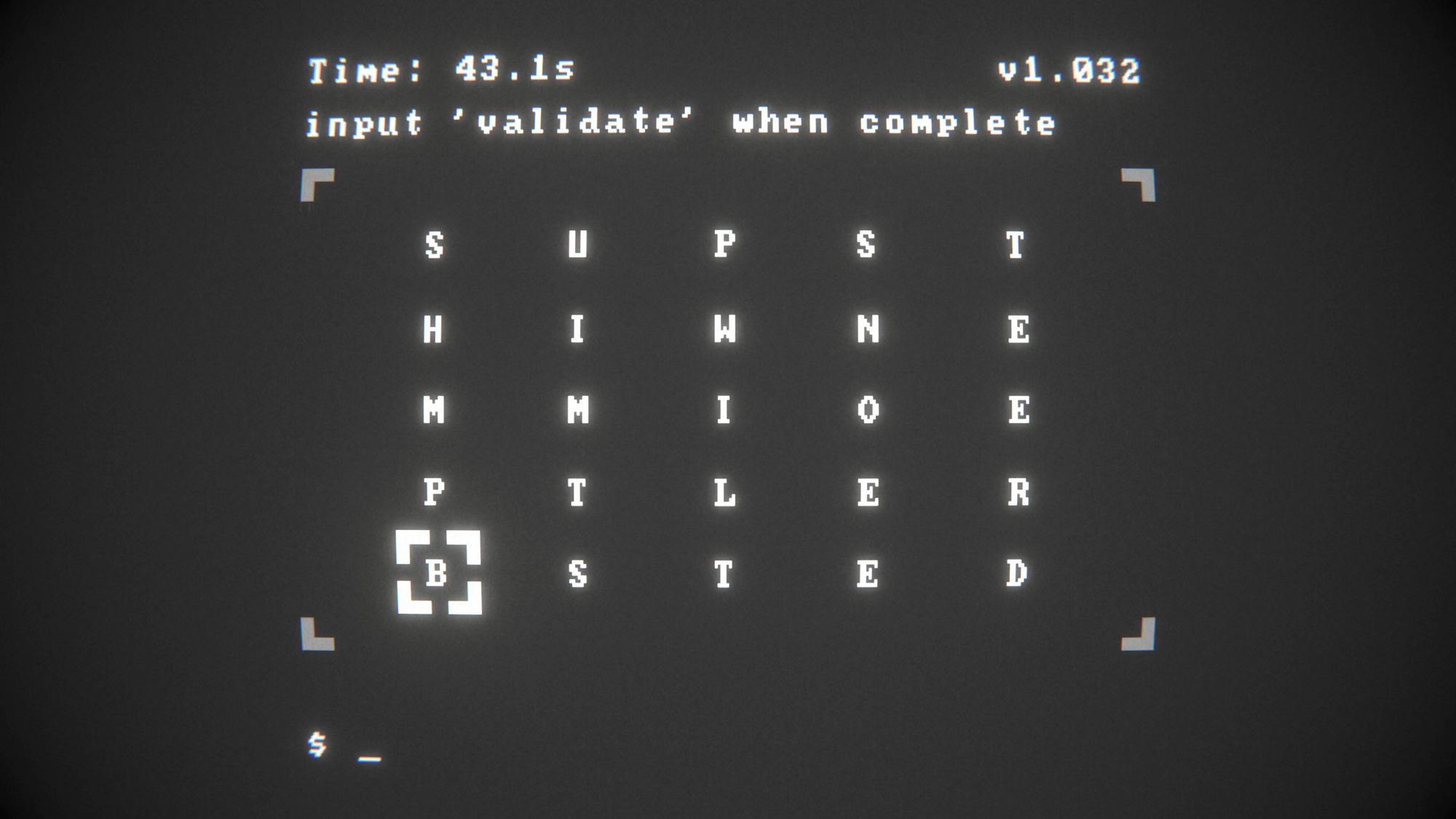
Casey: Our game jam that year was actually themed around communication, so an asymmetric co-play game was a fun riff on that theme because communication ends up being most of the gameplay. While I was sketching up narrative ideas, I kept coming back to the concept of “if the game is about effective communication, what are some scenarios in which preventing effective or truthful communication is a social goal?”
The very first idea that came to mind ended up becoming the inspiration for our Manual: redacted old Cold War documents. Apart from having a cool aesthetic, there’s something about a redacted document dump that gets people’s curiosity and creativity kickstarted. A certain type of nosy person who’s of a certain age and way too online will remember stuff like the Leveson Inquiry document dumps, all the files Wikileaks posted, all the wacky old declassified files from the US’s CIA and nuclear programmes.
While the rest of the team was working on the puzzles themselves, I tried out a few narrative ideas for what the puzzles might represent, and eventually hit on the concept of data processors working on encrypted data packets that are being routed or sorted somewhere without actually knowing the contents. They can see this manual that hints at some really sinister stuff but the nature of the job means you never get to peek behind the curtain.
Atmospheric horror is a lot more effective when you never show the monster on-screen, so to speak, so we left it vague while dropping a lot of hints. Not that there's monsters. Probably.
Fergus: Fingers crossed. In any case, it’s genuinely awesome that you’ve got the opportunity to shake things up and experiment with new ideas each year. Does Creative Week run every year? How does it work? It reminds me a lot of Amnesia Fortnight, but I imagine it’d be a slightly smaller scale affair.
Dylan: Yup! Roughly once a year but of course the exact timing depends on what else we’ve got going on.
The how is a funny one because there aren't really any set rules. It’s a time for dinos across the studio to try something a bit different. Maybe you form a crew and gamejam a new concept as with RTFM. Maybe you continue that course you started a while back or study something new. Maybe it’s simply R&D or a time to catch up on the little things that can get lost in the heat of development. We like to leave it pretty open-ended. All that said, I love the mention of Amnesia Fortnight because we definitely were somewhat inspired by that when the opportunity to release RTFM was floated.
Fergus: The challenges of funding at the moment are likely part of the story, but I do think there’s something to the recent shift we’ve seen towards smaller projects in general.
That’s brought with it new questions, I think. Only a few weeks ago, there was an online discourse about how smaller-scale projects like those that Aggro Crab publishes are not really compatible with the expectations that larger live service games have set when it comes to post-launch support. Do you feel like there is an implicit expectation that any successful game should receive the same kind of support as a live-service title? Does something like DPC Labs let you sidestep that conversation?
Lucy: If it were like our standard releases I’d say yes, but ideally DPC Labs will allow us to release our smaller, experimental projects without the pressure to do frequent updates. We are a small studio but are working on no less than three games at any given time, so we don’t really have the bandwidth to provide full support for DPC Labs titles – aside from any essential patches, of course!
Dylan: Speaking more broadly, I don’t think it’s a given that every successful game needs a lengthy roadmap of new content into the future, though I can see how that expectation has developed over time. It really depends on the game and the studio.
We take a lot of pride in how long we continue to give back to our players but I’m also very aware of the impact it has on our studio in terms of overall output and how quickly we can get our next big thing out the door. Personally, I’ve really come to appreciate a small “one-and-done” experience that doesn’t wear out its welcome.
Casey: I think expectations from an audience are going to be there, especially if you’re lucky enough for your games to have a large audience, but part of being a successful indie studio is building a good rapport with your players so that they trust your intentions and don’t feel abandoned if you opt to do something slightly different. Or more-than-slightly different in RTFM’s case, haha.
Dylan: I’m not sure it’s about sidestepping the conversation so much as setting a clear expectation with our players. As a designer I often think about what we’re promising our players and whether or not the game they eventually play fulfills that promise. Which is to say, if we promise them the world but deliver an experimental little side-project the likes of which we’ve never made before, well then it might backfire. So in my mind, DPC Labs is a way to ensure we’re on the same page as our players. A way to say “hey, this is a bit different to our usual stuff but we think it’s fun, wanna have a go?”
Fergus: More generally, do you have any plans to do more with it? RFTM was released for free, but is that going to be the same for any future releases going forward? Was there another developer that inspired the idea or did it come from elsewhere?
Lucy: RTFM is out in the wild as-is, but if there were a huge push to release a larger, paid version of RTFM, then we would definitely have the conversation internally if that’s something we could rearrange some teams slightly to get resources for.
Our software roadmaps are planned years in advance so that’d be a grand undertaking! But we hope that RTFM is the first of many DPC Labs releases!
Casey: I’m sure other developers have done this sort of thing but this conversation happened totally in-house.
We wanted to release RTFM out into the world and mooted a whole bunch of different release plans. This one ended up being the correct-sized release for the team size we had and the place our other projects were at the time. Plus 1st April falling within the release window was pretty tempting from the jump. I think you can set a lot of player expectations in a reasonable place with an April Fools release.
The “joke project to real project” pipeline is a thing gaming audiences are aware of, but I can’t think of any cases where it’s been “joke project to real project to years-long live service game.”
Big ups to any developer that tries that one, though!
Fergus: Are there any older Creative Week ideas that you might look to launch under the label?
Dylan: We’re always making stuff so safe to say probably! Regardless of which projects end up there, it’s nice to know that if we’re messing around with something and we think it’s cool but for whatever reason it isn’t going to become a Dinosaur Polo Club release, then that still has a home.
It reminds me of when we cancelled our Magic School project but released a lot of the work the team did for the world to see. Our industry is notoriously secretive but I love knowing that whether it be artifacts of projects gone-by or smaller experiments like RTFM, our dinos can still celebrate their creativity and hard work.
 Fergus Halliday