Demeo x Dungeons & Dragons: Battlemarked (2026) review
A latent inspiration becomes a literal one.

Latent inspiration becomes literal.
The original Demeo didn’t have the Dungeons & Dragons brand attached to it, but the influence of the world’s biggest tabletop roleplaying game was easy to see. Released in 2021 and developed by Resolution Games, it offered a rules-light version of the experience of moving your miniatures around a battle map that played out in virtual reality.
That formula proved popular enough to merit a follow up, as well as non-VR support. Given that D&D is now being run less as a game and treated more like a franchise by Wizards of the Coast, it’s little shock that an official crossover between Demeo and its biggest inspiration has ended up happening.
Released in late 2025, Demeo x Dungeons & Dragons: Battlemarked is exactly what it sounds like. It’s Demeo, plus a few gameplay improvements from its sequel and a big bag of nouns pulled from the world’s most popular roleplaying game.
You’ll create a hero, based on one of seven iconic D&D classes and take them through either a one-off adventure or a series of adventures structured as a campaign. You can play with up to three friends or work your way through the game’s two solo campaigns in the game by relying on AI companions.
Most adventures will involve entering a location and resolving the objective, though other more dungeon-oriented endeavors play out across multiple maps. Sometimes you can talk your way to a solution, with the success decided by the dice. Most of the time though, the answer is violence. The two campaigns in Demeo x Dungeons & Dragons are meaty enough, though I did find that the game had started outstaying its welcome a little by the end.
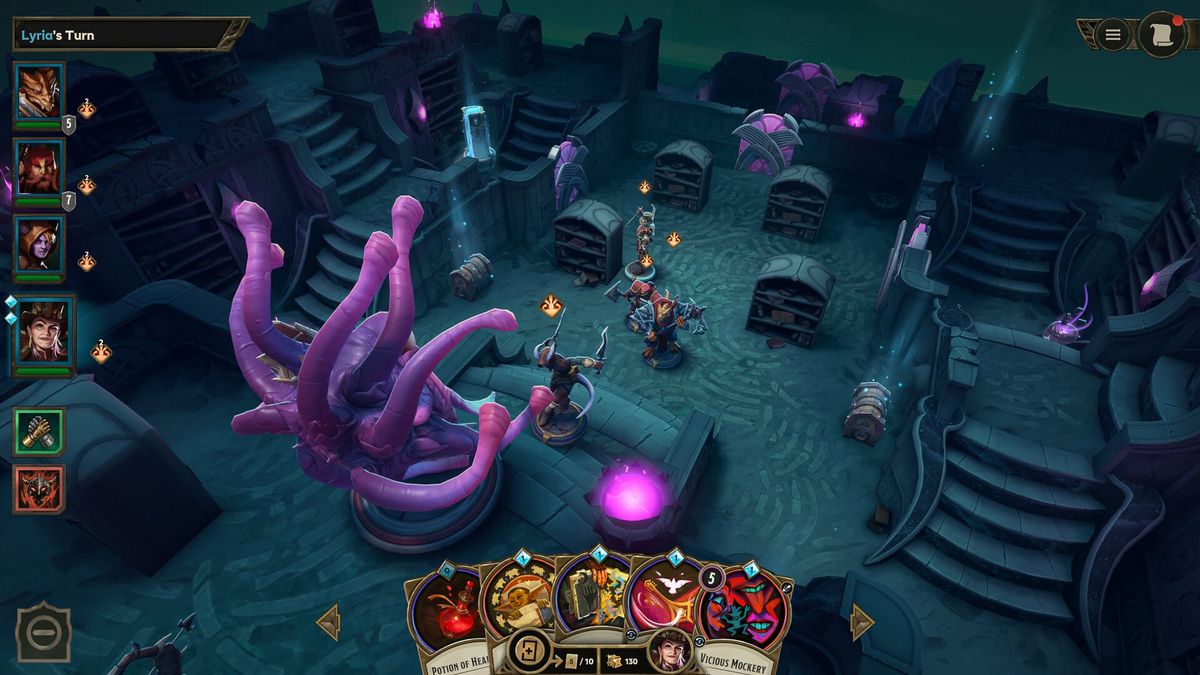
Don’t let the screenshots fool you, Battlemarked owes far more to Demeo than it does Dungeons & Dragons when it comes to the moment-to-moment gameplay. There’s no rolling for initiative here. Each of your party will get to make two standard actions before passing the turn over to your adversaries.
Although moving and making basic attacks are always available to you, the bulk of the strategy here comes from Demeo’s deckbuilder elements. Each hero has a deck of cards, each of which corresponds to special abilities that allow them to light up the board in their specific way. These include things like AOE spells, buffs and even cards that generate additional actions-per-turn.
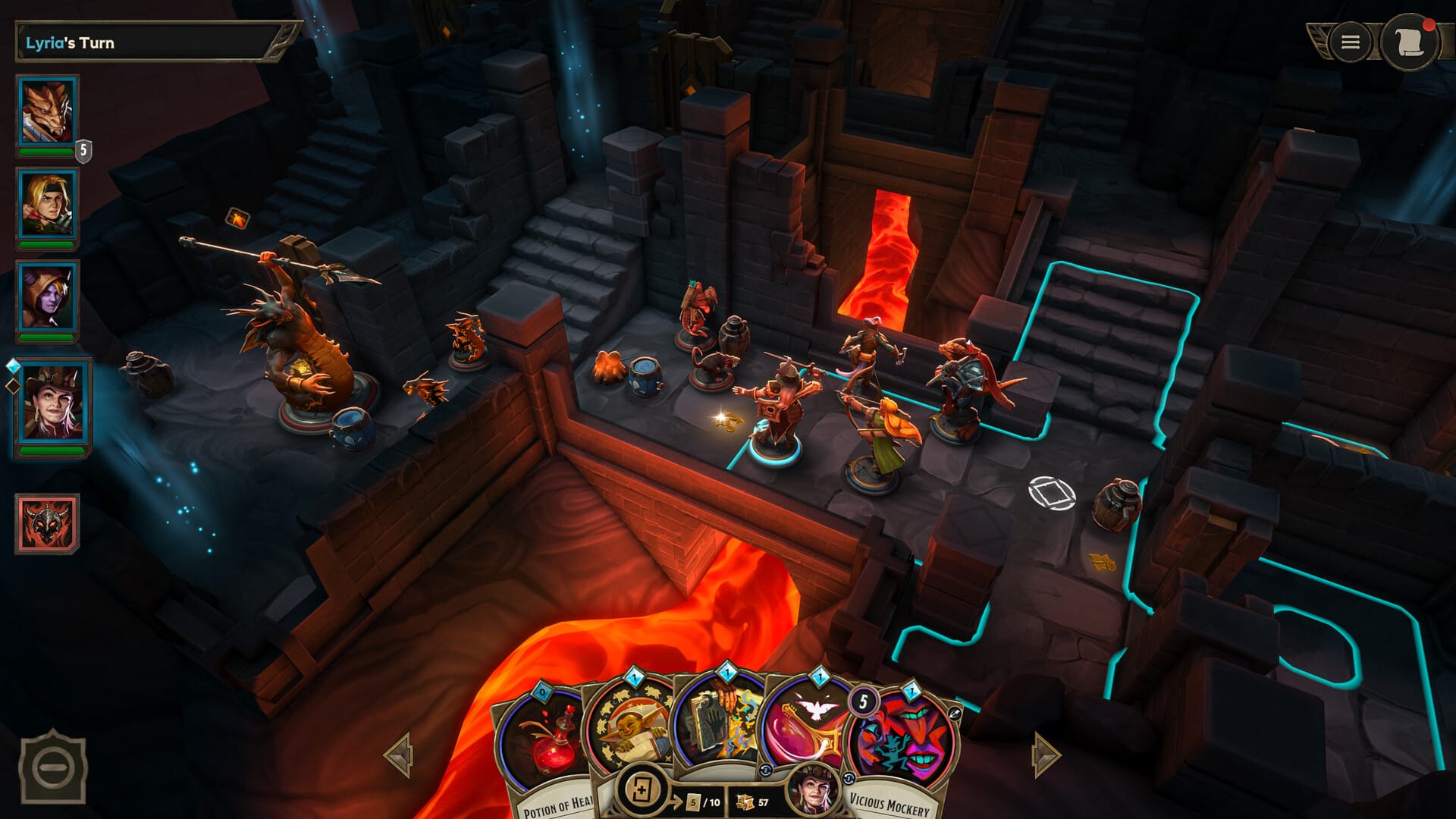
Beyond the baseline imagery of moving miniatures around a board, these cards are where you’ll find more of the D&D flavor in Battlemarked – with classics like Fireball, Vicious Mockery and Divine Smite all appearing in their respective class decks.
Although some cards – like potions – are consumed upon use, others will cycle back into your deck eventually. Unlike most deckbuilders though, you don’t draw at the start of each turn. Instead, you’ll accrue additional cards by slaying enemies, looting bodies and opening chests. Discarding unwanted cards will also do the trick, though that option is obviously a little more inefficient.
The action economy of fifth edition is here in spirit if nothing else. Short-term tactical considerations like flanking or line of sight simply don’t matter as much as the juggling act of keeping your long-term options open. Success in Battlemarked is just as much about solving any given combat puzzle as it is setting yourself up to be in the best position for the next one.
As each member of your party slays enemies and completes quests, they’ll build up experience points. While you don’t level up as you would in a traditional tabletop experience, these points can be spent on a variety of upgrades. These include passive bonuses like extra damage or health or modifications to your cards as well as additional cards for a given heroes’ deck.
Battlemarked generously lets you spend these as you earn them, rather than wait until you’re between adventures – which I appreciated. Nevertheless, I do wish the benefits were a little more exciting or the skill trees were a little deeper. I had pretty much maxed-out my party by the end of the first adventure so the second felt like a bit of a grind by comparison.
Even so, a big part of what kept me keen to continue with Battlemarked was the aesthetic. Rather than hew towards realism, Resolution Games have opted to go for a more cartoon look and the results add a lot of staying power to the overall experience. Animation is minimal, but that constraint mostly works out in the game’s favor as it helps embody that fantasy of moving highly detailed miniatures around a tabletop.
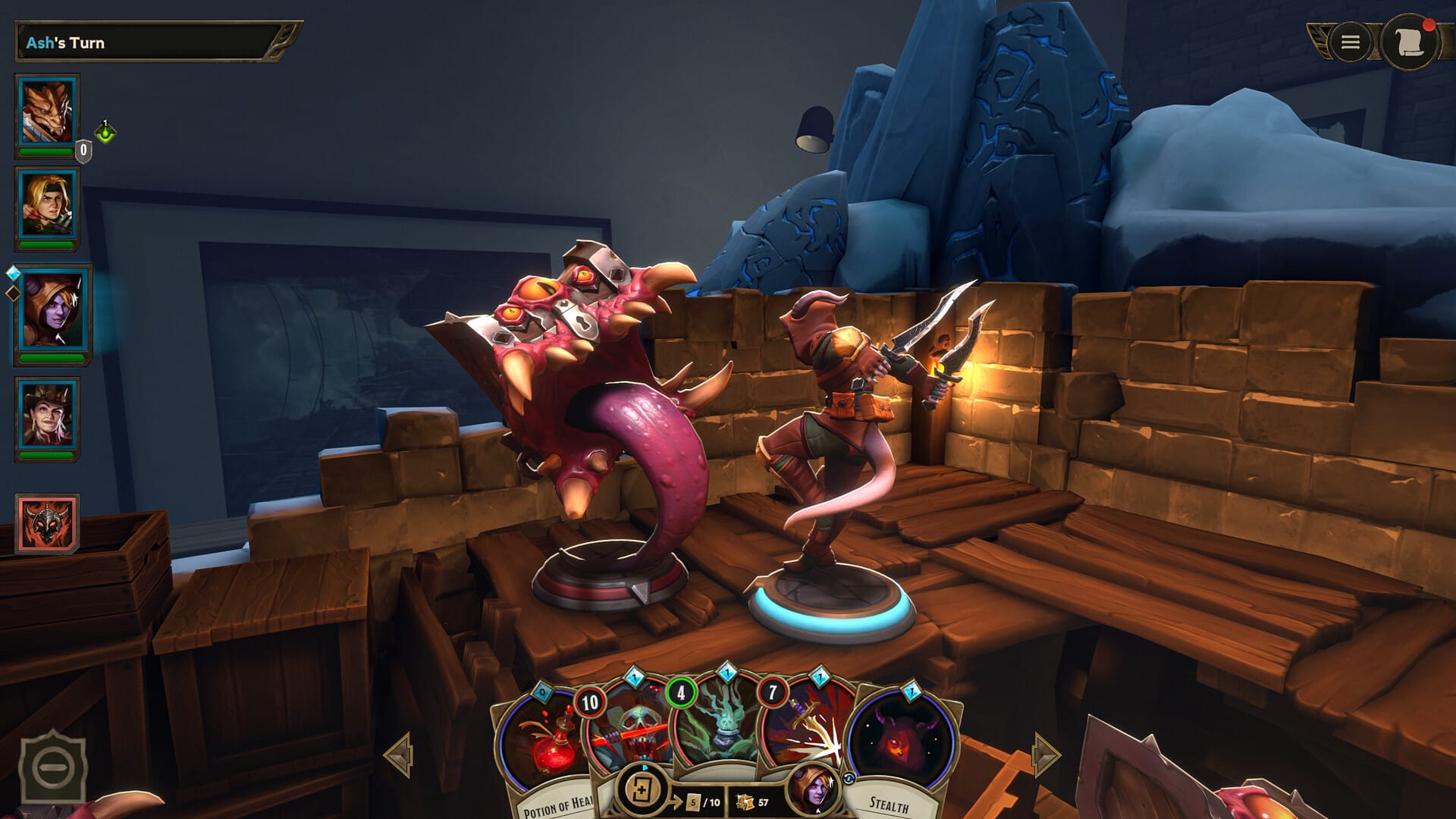
While these vibes have plenty of staying power, I quickly found myself wanting a little bit more from Battlemarked. The tactical combat here is admirably approachable, but it feels like it’s often caught in a middle ground where it’s too easy to fail but not all that exciting to succeed at. The game tends to throw waves of enemies at you until you reach the exit of a given level or complete the chosen objective, which can make it a bit of a slog to tackle things in the most tactical way.
It didn’t help that controls and interface in Battlemarked often felt a little floatier than I’d like. Where something like Fire Emblem or X-COM offers a satisfying snappiness to the strategic decision-making, the inputs, outputs and motions here felt finicky and a little bit too loose for my liking.
Where the storytelling in the game was concerned, I can’t say I was all that starstruck either. The writing in the game often feels generic enough that it comes across like it was written by AI. Even so, as someone looking to learn a little bit more about the Forgotten Realms, Battlemarked mostly scratched that itch.
I just wish it had some sort of level creator because I’d love to see what else could be done with the formula here beyond a basic jaunt through the tundras of Icewind Dale. If this game got the Total Warhammer treatment – or even just a Planescape DLC – I’d be back in a heartbeat. Additional in-game cosmetics for each class would probably do a lot as well.
The Bottom Line
If you’re looking for the next Baldur’s Gate 3, you won’t find it in Demeo x Dungeons & Dragons: Battlemarked – but that standard might be an unfair one to apply. If you’re coming to tabletop gaming for the experience of moving minis around for an evening, this is a fairly friction-less way to do that with friends – and it’s a whole lot less of a hassle than physical miniatures are.
Battlemarked nails the fundamentals of what it’s trying to do, it’s just held back a limited imagination.