Is is possible for players to have have too much agency?

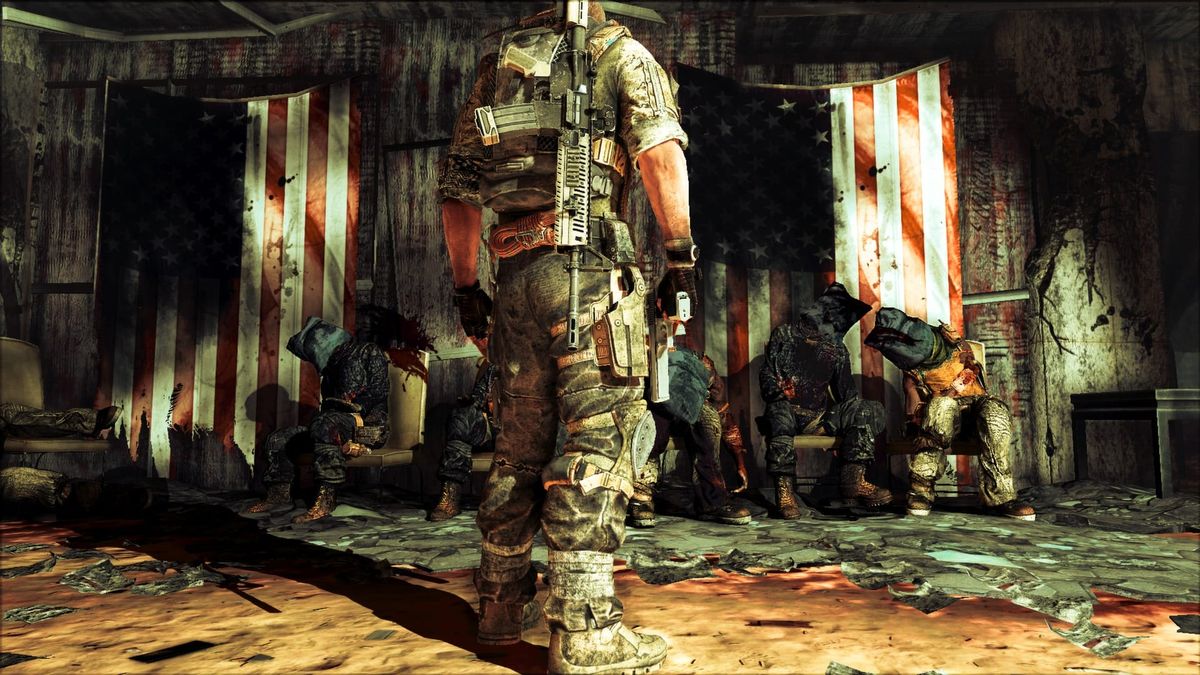
Does YAGER's decade-old cover shooter still have a few lessons to teach us?
My guest for this issue of Multiplier is Renee O'Flynn. O'Flynn is an Australian freelancer who has covered the local gaming scene for Qualbert, The IndiEXP and Player2.net.au. To find more of their work, you can follow them over on Bluesky.
Fergus: A lot of the magic of modern video games is built on not knowing how the trick comes together. It's not uncommon to hear game design framed as the art of giving players interesting decisions to make, especially when it comes to board and tabletop gaming.
At a surface level, the uncertainty of playing to find out what happens next in a video game is similar. Where things get tricky is that the underlying reality is that any choice the player might make is almost always one that the developer has to have anticipated and accounted for.
Every possible player choice has to be one that the developer has implemented ahead of time, so that freedom is a little meaningless at some point. You’re not forging your own path so much as you are picking something on a menu that you can’t see. While the industry has moved on from the times when that illusion of choice was a central selling point, the valorisation of player agency by players has stuck around.
From critics and consumers, there’s something of an assumption that more player choice is always better than less and the casual omission of the caveats that come along with it. When it rarely takes more than a quick Google to find out how thin and shallow most implementations of player agency are, you have to ask if the concept of player choice is losing its luster?
Renee: While some of the greatest moments in games can come from player agency, this is often isolated to multiplayer games where players generally have the freedom to do silly things that the developers may not have expected them to do.
In a narrative driven game, it can be hard to anticipate what a player may do when given choices. One of the easiest ways to do this is to limit the options, such as dialogue in games like Mass Effect. However, this can lead to feelings of being stifled or become ridiculously obvious in their alignment when perhaps the player may have wanted to choose a more nuanced option.
More egregious than bluntly obvious dialogue is perhaps the illusion of choice: something that was employed in the new Pokémon Legends ZA game. This is where [Game Freak] give the player two options, but unable to progress unless they select the right one. It's rather insulting in that they wasted not only the player's time, but also their own coding and writing this dialogue.
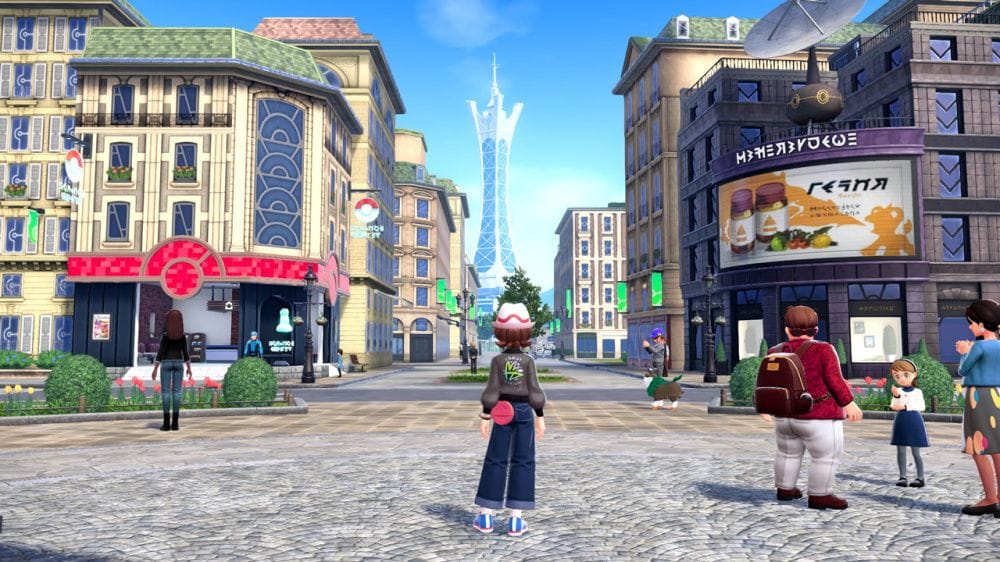
Thankfully, [Game Freak] have also allowed players to have more options in how their trainer responds to questions, meaning they can make their player a walking bag of sass. Small things like this can often make large differences in how players approach a game, while allowing the game to continue to tell its story. It's a step in the right direction for Pokémon as it quickly leaves the illusion of choice behind and allows players to mould the trainer to their preference.
One of the best examples of player agency done right is probably from the game Spec Ops: The Line. The game is well known for many reasons, with the most popular being the only way to truly win is to not play at all.
At one point in the campaign, the game asks players to choose between a rock and a hard place. Either you shoot a hanging man to alleviate his suffering or he will be strangled to death. I chose to shoot the man, but I later found out that other players had done different things like shooting the rope to free the man. Normally this wouldn't be an option, but the developers had anticipated it so they coded it in.
The idea that there were other options besides the two provided blew my mind. I think there is still a place for player agency such as in Spec Ops: The Line, but sometimes that agency can completely ruin a narrative.

Fergus: I totally forgot about that moment in Spec Ops: The Line, though reading your description of it the thing that stood out to me was the way that agency gets deployed reads very differently depending on what a given player is looking to get out of a given game. Specifically, whether they are more interested in playing a game or playing a role.
Unless you’re talking about something more procedural or player-led like No Man’s Sky or Dwarf Fortress, all gaming narratives come with some set of constraints - sometimes narrative, sometimes technical. I think when I was younger – and knew much less about the realities of game development – I was more critical of whether player choice mattered in a gameplay sense. Nowadays, I think I’m more open minded about what it means for that agency to exist at all.
Giving the player agency isn’t necessarily about breaking those constraints so much as about giving them ways to flavor the role that the game casts them as. Shooting, saving or leaving the hanging man in Spec Ops to his fate doesn’t necessarily need to change the larger narrative to have value to a player if the thing they’re looking for is the opportunity to express themselves in the world.
Renee: That moment may not change the narrative at large, but it is definitely a moment that will stick with the player. It's one of the first times when the player is confronted with the fact that things aren't what they seem. I believed it helped drive home the message that Spec Ops: The Line was trying to portray.
Obviously, there are constraints as players probably couldn't shoot themselves or their teammates: Unless you can and no one has tried yet!
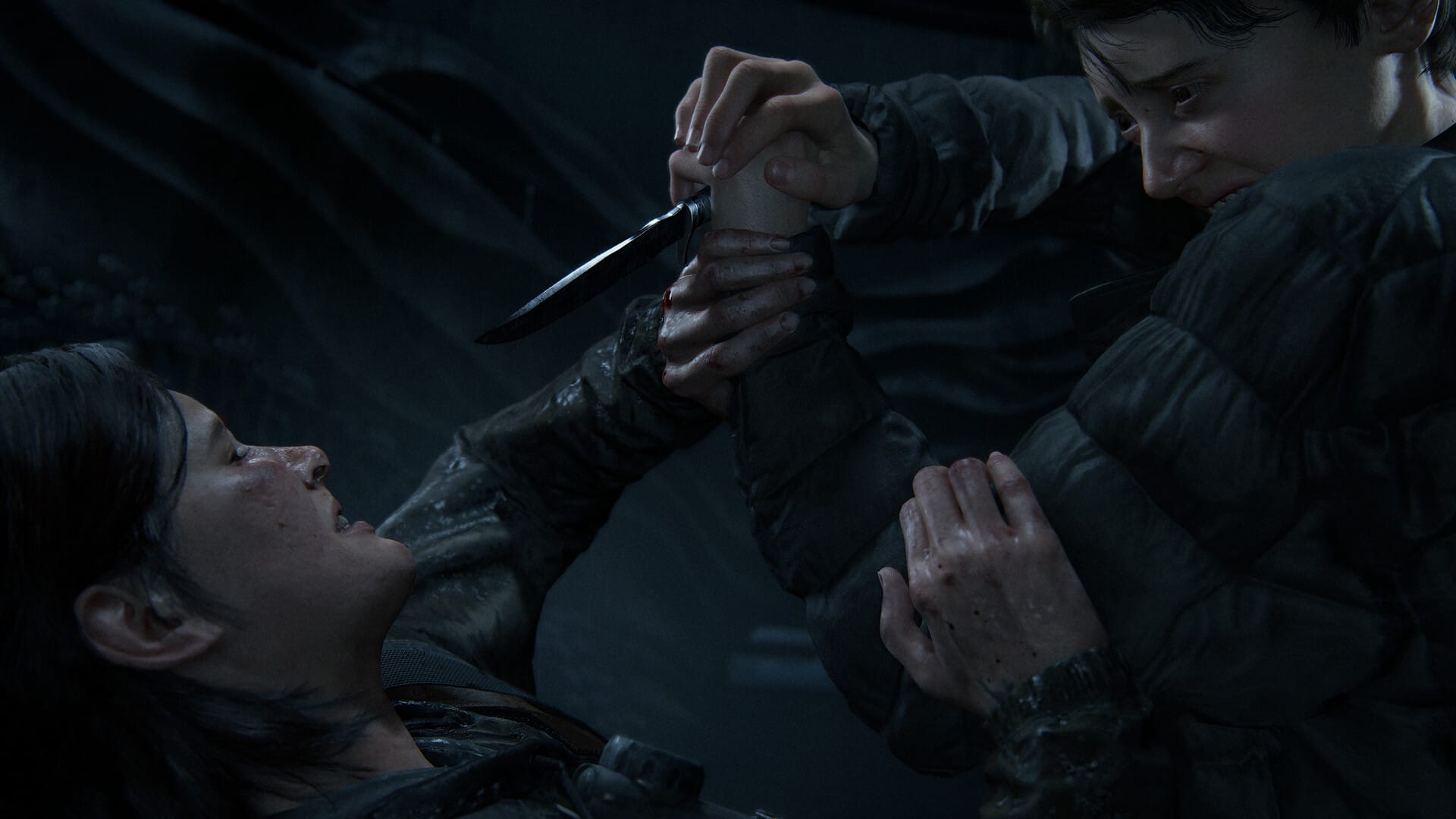
The main argument about player agency being a negative thing, at least to me, is when it interferes with the narrative. This wasn't such a huge point of contention for me once upon a time and it was encountering a pivotal moment in The Last of Us that absolutely ruined the entire game for me that brought it to my attention.
I was excited for the game as I had enjoyed the Uncharted games and had high expectations for it. Instead, I found the gameplay to be average and was only continuing to complete the story as I was now invested. I'm going to spoil the ending so if you haven't played, skip it.
When Joel is confronted with a doctor who wants to use Ellie's brain to find a cure, he is supposed to shoot the doctor dead. How do I know this? Because I shot him in the foot and the doctor keeled over dead. Any interest I had in the story up to that point evaporated.
Why not just make it a cutscene? Why give me the ability to shoot elsewhere if the result was going to be the same regardless? If they wanted to tell this narrative, why allow the player to move the gun? They could have made it so that the gun was pointed at the doctor, but they still had to pull the trigger. Instead, they allowed me to make a decision and then informed me it was the wrong one. It absolutely ruined the series for me.
My experience with The Last of Us taught me that there needs to be balance between a narrative and player agency. Including it for no reason other than because they can, could lead to the story becoming warped or having negative impressions on the player. Games have often played with difficult and emotive stories, railroading the player into doing something they may not want to because it gives the emotional impact it requires.
I'm going to use Spec Ops: The Line as another example, but you can also use Golden Sun or several other games as well.
The white phosphorus scene in Spec Ops: The Line is infamous for a reason. The only way to progress is to use the white phosphorus. Even after your teammates have informed you that the use of the chemical has been banned by the Geneva Convention, you either you use the banned chemical or you turn off the game.
In a way, this is still player agency but in a more restrictive sense. If the player chooses to continue, the next scene will devastate them, knowing they made a conscious choice to continue.
Spec Ops: The Line used its constraints to tell the story and evoke the feelings it wanted by limiting the player. It didn't give the player multiple options and then told them it was the wrong option. I really think that ultimately the narrative should take precedence over player agency otherwise the story may not be told how the developers intended, possibly ruining it.