Marathon (2026) review
This extraction shooter is a perverse corporate pleasure.

It’s easy to get dramatic when you walk about a Marathon, but it’s even harder to avoid talking about the contradictions. It’s a new installment in an old franchise, given a second lease on life by a mainstream-friendly(ish) take on a notoriously niche subgenre. The game is both Bungie’s last hope, and yet also the start of a new era for the company under Sony.
It’s difficult to imagine that Marathon wasn’t always geared to be a game about cynical corporations throwing expendable assets into adverse environments in pursuit of exponential returns on that investment. Still, it doesn’t take much to draw a line between that premise and the increasingly uneasy relationship between Bungie and its parent company.
There’s a lot of lore – both within and outside the game itself – to consider, but it comes underpinned by a premise as dead-simple as these things get.
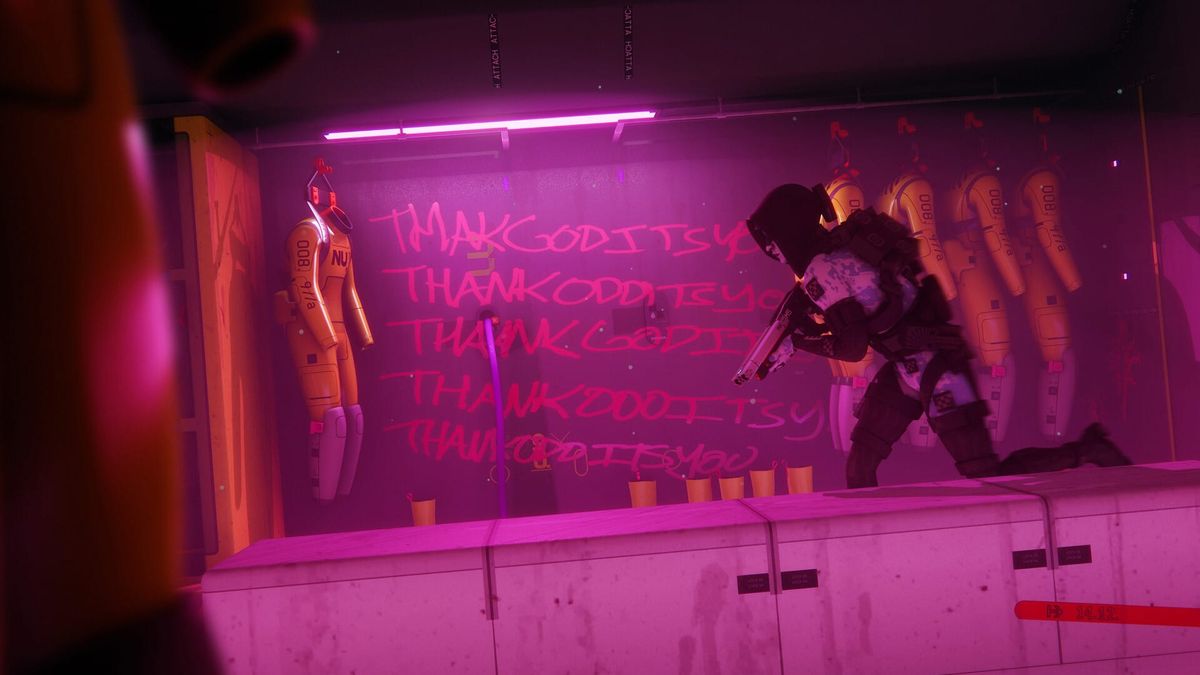
Picking up almost a century after the events of the original Marathon, Bungie’s new extraction shooter sees you take on the role of a contractor in a synthetic body sent down to the surface of Tau Ceti IV. Your mission? Grab what you can and get out.
Make the trip a few times, and you soon find yourself on the radar of Marathon’s many sinister corporations — who are all keen to sub-contract your services to meet their own ends. Each of these entities asks you to approach the game’s core loop differently — but these complications do little to diminish the awesome appeal of raw simplicity involved.
The maps and the names of your teammates might change, but the in-game action always turns on the same axis. Each match, you’ll have to get it, grab what you can — be in salvage or intel or scalps — and then get to the exfiltration point before time runs out. A standard run gives you around 25 minutes to work with, but you can move towards the exit signs after just five if you’re looking for a shorter stay on the surface of Tau Ceti IV.
The maps here aren’t huge and while the computer-controlled robots roaming the ruined colony are dangerous enough in numbers, their ability to deter you from getting more ambitious is short-lived. It doesn’t take long for you to start pushing your luck, and as you spend more time exploring each of the game’s three major maps the possibilities of what you can fill that time-limit will steadily expand.
As lean as the premise above is, there’s no shortage of intriguing variables in the mix. Even something as mundane as the weather or your spawn point can do a lot to change the larger arc of a given run. While some missions will ask you to complete a number of objectives in a single run, others are more generous and allow you to chip away over several matches. You can only have one mission active at a time, but most are scoped to be completed within a single successful run or two.
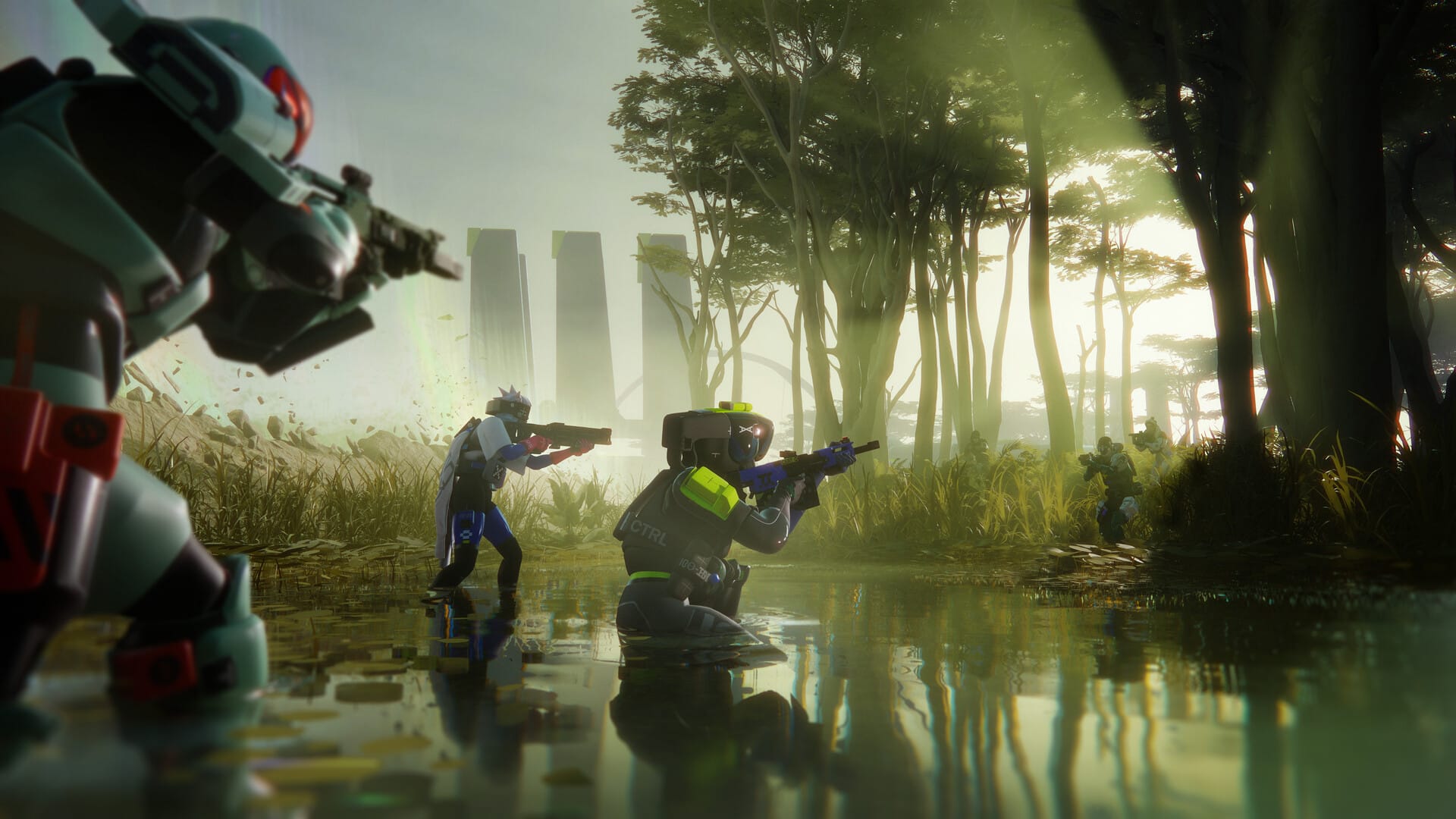
One of the smarter decisions Bungie has made here is to reward every player on your squad for helping achieve each sub-objectives. In practice, this elegant incentive does a lot to encourage your teammates to work together and get the most out of every run. You’ll still get the odd renegade who wants to run off on their own, but more often than not you’ll quickly find yourself working as a unit bouncing between locations as you try to get the most out of each run.
Completing missions in Marathon will increase your seasonal rank, as well as your standing with each individual faction. Gaining influence with each of the game’s six sinister corporations will score you free items as well as new in-game cosmetics.
There’s also a skill-tree of smaller and more passive bonuses that can add up to make your in-game avatar a little more capable, though these gains are undercut by the reality that they expires at season’s end. If there’s one thing that I would change about Marathon — it might be this. I understand the underlying desire to keep the game dangerous for players who hit the ceiling on that progression earlier than expected, but it feels very demoralising and disrespectful of my time.
In addition to the rewards that come with completing missions, each run will likely see you pick up loot in the form of implants for your character, new weapons and mods for those weapons. If you escape Tau Ceti intact, that loot will get moved to your vault — where it can be sold off or used in future runs. Loot is color-coded as you’d expect, though the amount of iconography in the mix can sometimes be very difficult to parse.
It should be said that, relative to the bar set by Destiny, the inventory management and itemisation in Marathon is much more restrained and sensible – though the game’s commitment to hostile interface design sometimes makes that reality harder to grapple with than it ought to be.
Although the loot you bring to a run can matter in a pinch, your choice of shell is usually the more consequential decision when it comes to your in-game load-out.
These are Marathon’s equivalent of character classes. The roster here is not quite as charismatic as what you’d get from a hero shooter like Overwatch. Still, each shell does come with passive and active abilities that help you cohere as a team. The triage unit can deploy a healing drone. Meanwhile, the recon can temporarily cloak themselves to escape danger or sneak up on other players. It’s all fairly familiar, though I found it quite difficult to keep track of under pressure or the midst of a firefight.
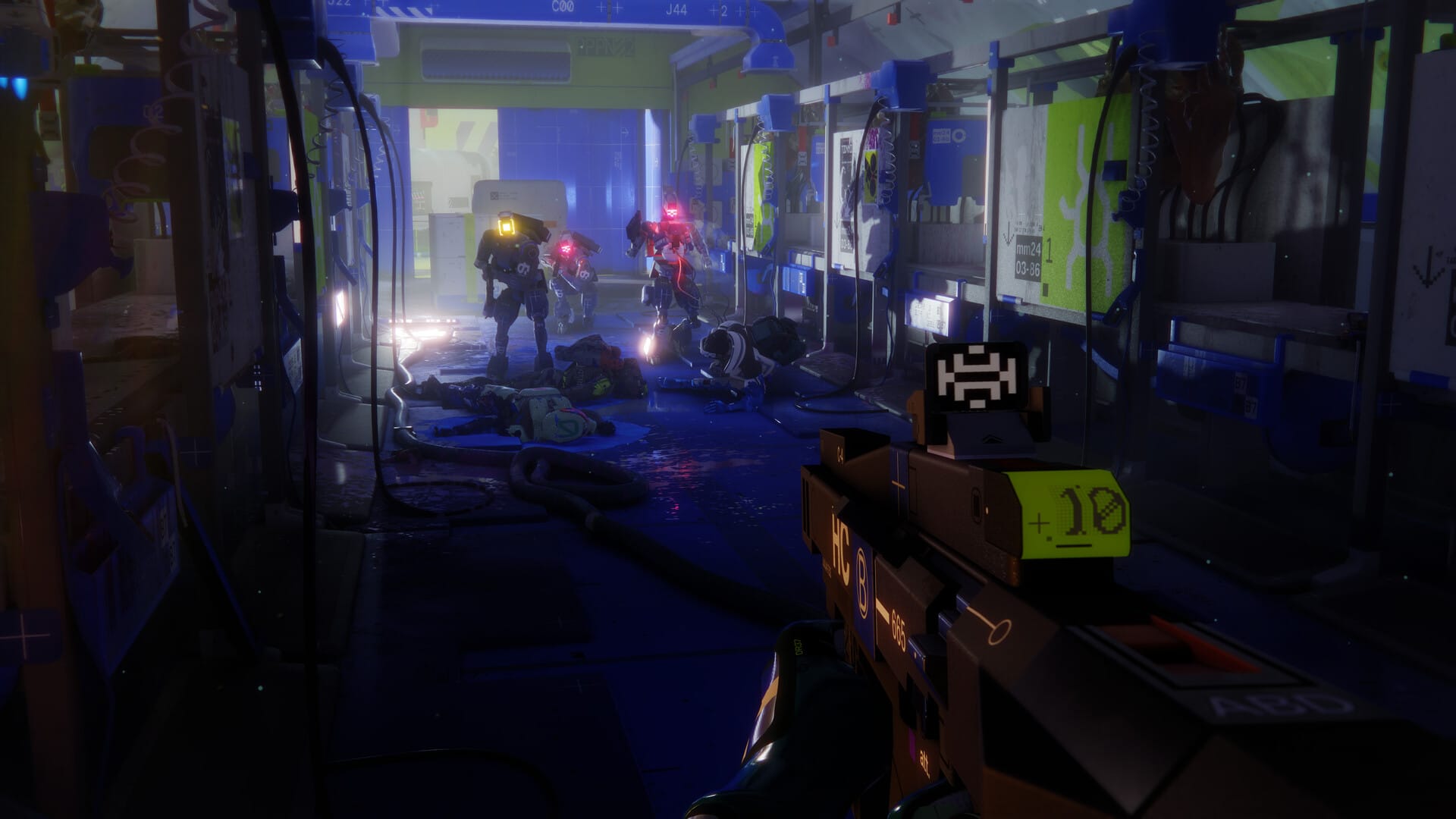
While the PvP aspect of Marathon is an integral part of the experience, the reality is that you’re much more likely to come across NPC enemies in most runs. More often than not, it’s best to clear these automated footsoldiers out, do what you need to do and then make haste to your next waypoint as soon as you can — because if the noise of a firefight doesn’t attract more predatory players then the inevitable robotic reinforcements will do almost as good a job.
I’d sometimes go multiple runs without encountering another human player, aside from my squadmates. Of course, in the months since Marathon launched, the number of players sticking with it has steadily declined. It’s hard to blame too many for bouncing off the game though, given all the choices it makes – from the unforgiving gunplay to the ephemeral progression to the maximalism of the aesthetic and the sometimes openly-adversarial interface.
There are a lot of choices in Marathon that feel like artfully hostile design, which aligns well with the corporate-sponsored morality baked in the premise. The fact that you have to wait a few seconds for your loot to be “decrypted” whenever you open a container or crate is just the tip of the iceberg.
However, the line between those qualities and areas where the user interface and experience falls short is a blurry one. Many of Marathon’s myriad UI micro aggressions are magnified when playing on a console, with the main menu’s cursor-based interface merely an appetiser for the many annoyances that await those who want to sink their time into trawling Tau Ceti IV for fun and profit.
Yet, these friction points add a lot of the flavour to the experience. At first, the music and aesthetics here are abrasive but it doesn’t take long for them to get under your skin.
I don’t think it’s as simple as saying that Marathon is optimised for hardcore players. The more I play it, the more I think that the many hurdles that Bungie asks you to jump over are designed to trick you into becoming a self-described sicko for this game.
All of this is to say that, there’s a clarity of vision here that helps Marathon it defy a lot of the headwinds bent against it. It’s so easy to imagine a version of this game shipping with fewer sharp corners, more micro-transactions, a less aggressive aesthetic or a more conventional narrative. An unwillingness to compromise might be what kills this game in the end, but the commitment to the bit is a big part of what keeps me coming back for just one more run.
That being said, if these queue times get any worse, my nightly trips to Tau Ceti may prove to be short-lived. It might sound sacrilegious, but sneaking a few AI-controlled “players” into the mix would do a lot for making this game a little easier to find a groove with. It’s fairly common practice in the mobile gaming space, and given the low player-count for each match, it wouldn’t take much of a nudge to make the matchmaking queues that much tolerable.
It’s easy to be cynical about the supposed expectation that Marathon might be the next Fortnite, Halo or even Arc Raiders in the making. You have to squint so hard to imagine a world where this game has mass or mainstream appeal, and that’s before you even consider the brutal realities of the modern live-service gaming landscape. Even if the context might prime Marathon to act as an embodiment of everything that can go wrong with the larger multiplayer gaming space, the reality is a stark reminder of just how much can go right as well.
Bungie’s extraction shooter is full of contradictions and drenched in cynicism, but if you can see past that then the clarity of this vision of what a multiplayer shooter can be will likely get its hooks into you before long.