Sekiro: Shadows Die Twice (2019) review
Live, die, repeat.

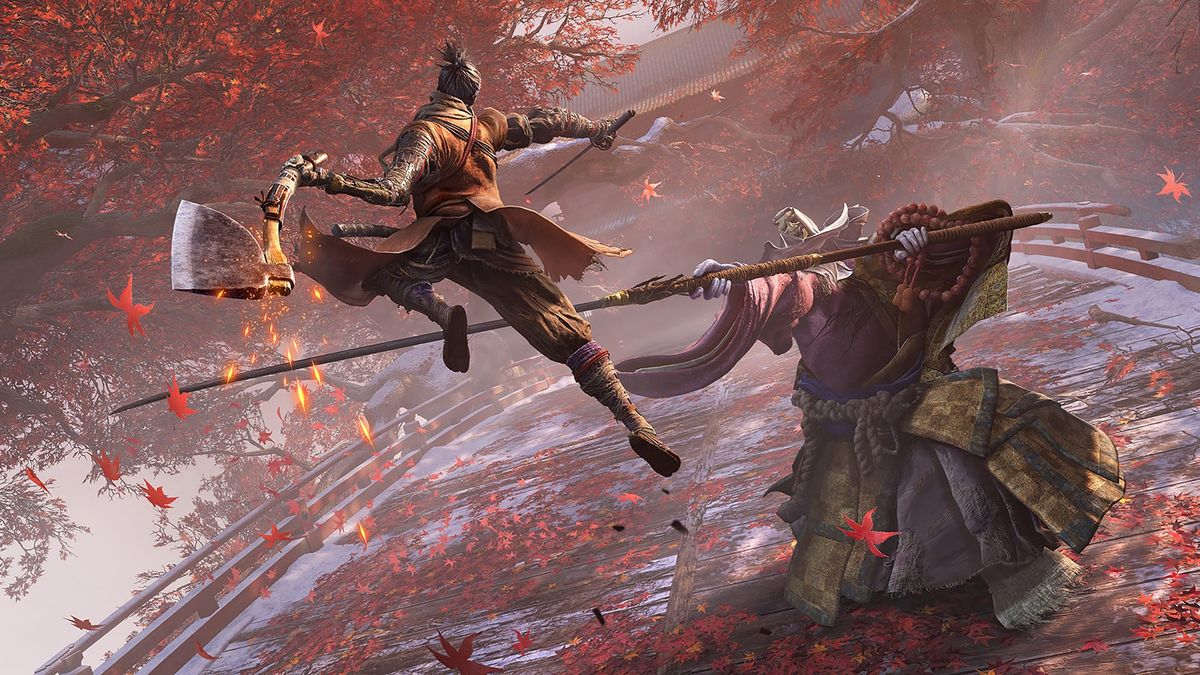
I get the feeling that From Software’s reputation for making masochistically difficult games is going to turn a lot of people away from even trying to play Sekiro, though – in fairness – it can quite be a difficult game.
Discounting Souls-like experiences like Ashen or Darksiders 3, I’ve never played any game in subgenre before. When I say I will never be that freakish person who plays through all of Dark Souls on Twitch without taking a single hit, I mean it.
The thing is, when you’re playing Sekiro, that’s more-or-less what you’re doing – or at least that's how you’re expected to play. You’re supposed to be a Shinobi, after all.
There’s something intrinsically rewarding about meeting the high expectations that Sekiro has of you, no matter how unreasonable they might seem at first. The magical and magnificent moment when you surprise yourself and break through the mental wall that’s been holding back your progress is hardly unique to Sekiro but it’s rare to find a game that facilitates it this well. It feels like an evolution – rather than just extension – of the formula that FromSoftware invented.
Sekiro: Shadows Die Twice is a difficult game but it rarely feels unfair or unreasonable in its expectations. It usually just comes down to learning what the fight is asking you to do. Once you understand, all that remains is the execution.
Die, die, try Again
The latest from Souls mastermind Hidetaka Miyazaki, From Software’s Sekiro: Shadows Die Twice is a third-person action game with a high difficulty curve and a grim sense of atmosphere. In these respects, there are plenty of parallels with Miyazaki’s earlier works. Even so, Sekiro feels like something very different. Where Dark Souls and Bloodborne lean towards the fantastical, Sekiro embraces the historical.
Set during the Sengoku ‘Warring States’ period of Japanese history, you take on the role of a initially-nameless shinobi – later nicknamed Sekiro, the One-Armed Wolf – on a quest to save the liege lord he’s sworn to protect. The game begins with you failing in this task. Everything that comes after has to do with rectifying that initial failure and protecting the Divine Heir from those who would exploit the supernatural properties his blood contains.
There’s a distinct richness and texture afforded to the setting here, complemented by a sense of weight to the way Shadows Die Twice handles its particular narrative baggage. Even in the best hands, immortality isn’t inherently a positive thing. The core conceit here isn’t to do with whether it’s good or bad to live forever but rather who wears the cost of immortality. In this way, Sekiro acts as a really thoughtful and compelling metaphor for privilege.
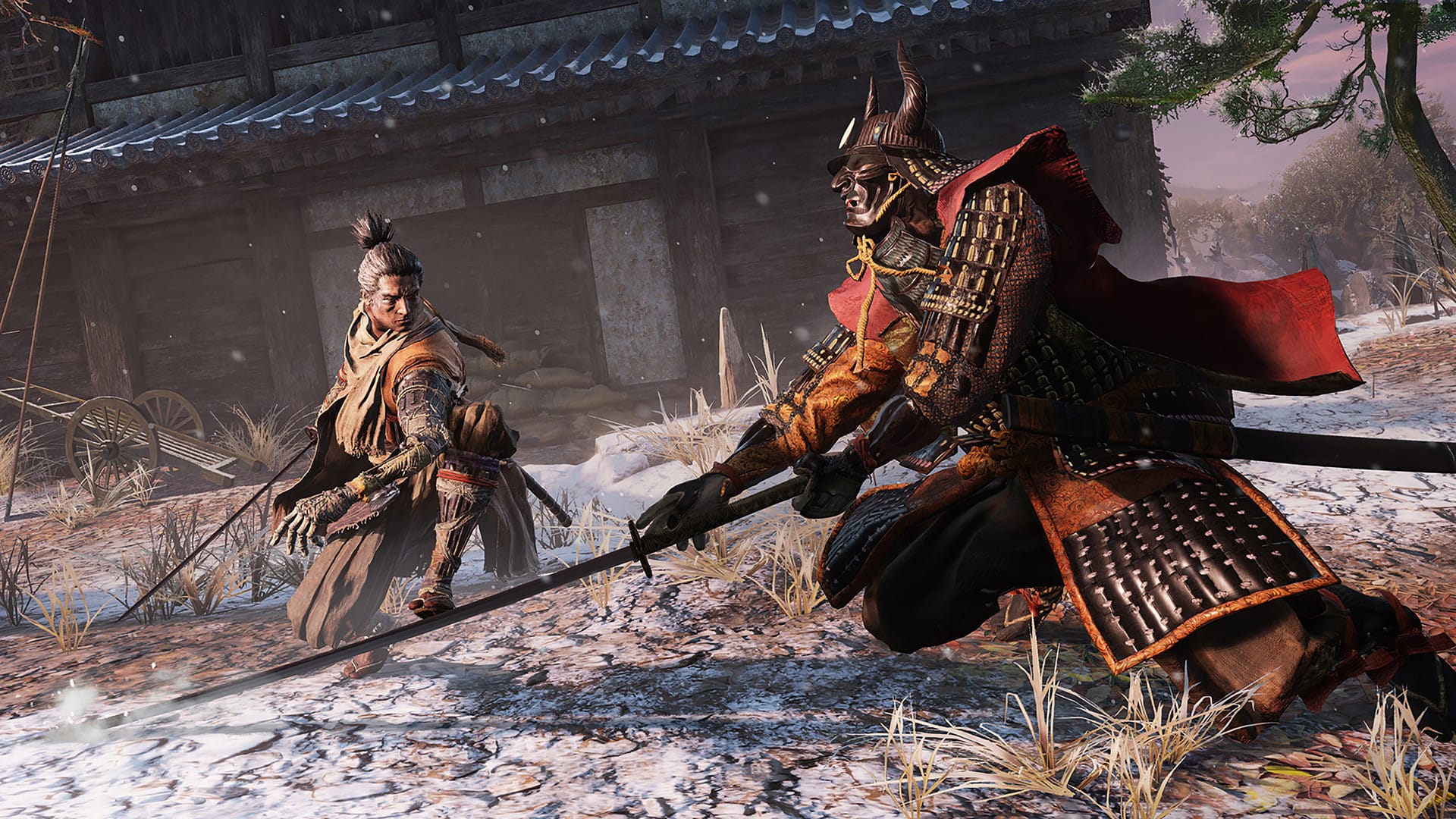
If the knack of Bloodborne and Dark Souls was about learning to fight creatures many times greater than yourself, Sekiro: Shadows Die Twice is about learning to fight opponents just as capable as yourself. With a few exceptions, most of the game’s mini and major bosses are humanoid in nature. For the most part, you’re fighting men – not monsters. What’s more, they’re subject to the same rules you are. Take damage, and you’ll lose health. Obviously, run out of health and you’ll die.
However, any potential damage can be blocked by using a parry. When you parry, you’ll instead take posture damage. This regenerates over time. Deflecting an incoming blow at just the right moment will damage your opponent’s posture instead of yours. Fill up the posture bar at the top of the screen, and you’ll be able to instantly deliver a deathblow to any opponent no matter how high their health bar is.
Though deceptively simple, Sekiro gets an enormous amount of mileage out of these ground rules. Some fights are about breaking your opponent’s posture, others are about hurting their health. You’re playing as much to learn each fight as you to win it.
The two variables that complicate this picture are the shinobi prosthetic and Sekiro’s resurrection mechanic. Acquired early on in the game, the shinobi prosthetic is a mechanical appendage that you can kit out with various abilities. One ability might give you an axe that you can use to break through enemies who carry large shields. Another might let you throw firecrackers that’ll temporarily stun and disorient your foes.
Where the posture-parry system in Sekiro is about repetition, balance and perfection, the prosthetic system invites creativity. You can swap between your different prosthetics at any time, so you’ve got a lot of freedom to experiment and find inventive solutions to the problems that the game’s trickier enemies present.
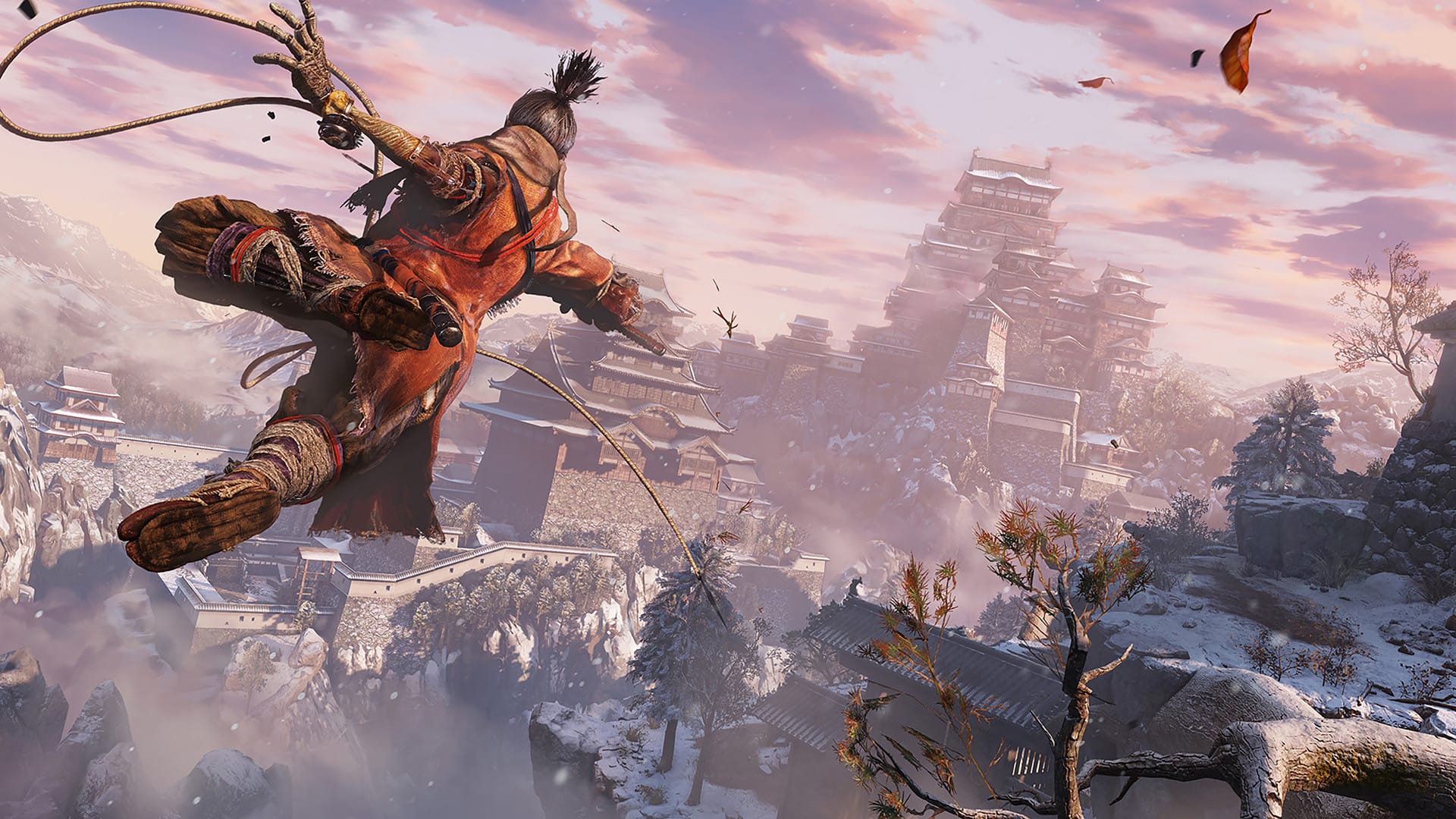
Stealth is also a factor. The grappling hook capabilities of the shinobi prosthetic give you the option to sneak past enemies or ambushing them for easy kills. Sekiro even lets you do this on most bosses, allowing smart players to halve the length of a fight in an instant. As far as fulfilling the fantasy of being a ninja slinking along rooftops and hiding in the shadows goes, Shadows Die Twice hits all the right notes
Finally, as the game’s title suggests, Sekiro is able to revive himself upon death. The catch here is that you’re (initially) limited to one revive per fight but it’s a good hook nevertheless. It gives you a bit more breathing room to recover yourself, even if you make that one fatal mistake during an intense boss fight.
The pursuit of perfection
Of course, all this isn’t to say Sekiro: Shadows Die Twice is perfect.
It’s not. I’ve lost count of how many times the game’s frustratingly inconsistent camera got me killed. I found the way the game keeps track of side-quest progress really opaque. I wish the tutorial NPC who offers to train with you had more to teach me and that the additional damage upgrades you get in later playthroughs had more weight to them.
Though thankfully optional, the Headless boss fights in the game are also quite frustrating in that Sekiro doesn’t really do much to teach you how you’re supposed to approach them. They're a little too sink-or-swim, in my opinion.
The dragonrot mechanic in Sekiro is also a bit of a downer. The more you die, and specifically the more times you resurrect, the sicker the NPCs around you become. If an NPC is sick, your chances of receiving Unseen Aid – a buff which cancels out any XP and gold loss when you die – are reduced but more importantly, you’re unable to actually progress any side quests that involve those NPCs.
Eventually, you do find a way to cure dragonrot. However, the resources you use to do so are extremely limited in quantity and their effects usually only last until you get stuck on the Sekiro’s next difficult boss fight and die enough times to send everyone back to their deathbed.
There’s only a certain number of chances to alleviate Dragonrot in the game – and it’s all too easy to miss or accidentally waste them. It didn’t take long before a second playthrough was basically required in order for me to complete most of the side quest content in the game.
For all that the difficulty of the game does contribute to the sense of satisfaction you get from overcoming its various challenge, I do also feel like a more newcomer-friendly form of on-boarding might make Sekiro better. An easy-mode isn’t maybe what I’m asking but a setting that allows for slightly wider margin of error – or maybe additional resurrections – isn’t the worst idea.
Like I said before, I can’t shake the feeling that From Software’s reputation for making difficult games is probably going to turn people who might end up loving this game away from trying it at all. Still, so much about Sekiro: Shadows Die Twice just works and it doesn’t hurt that the game is so incredible to look at.
The mythical folklore aesthetic that Sekiro is going for lands so well that it’s hard to stay mad at the game for long. The dialogue crinkles with the weight of history, the trees sway with the gust of the wind and steel swords crackle as the slam into another with ferocious zeal. Perhaps most impressively, Sekiro manages to find a good balance between diverse level design and environmental variety that feels like a natural extension of the same seamless landscape.
The Bottom Line
Early on in Sekiro, I encountered an enemy with a spear. In order to deal with an enemy with a spear, you have to regularly execute what's called a Mikiri Counter. Rather than try to block an incoming attack, you dodge into it – stepping on your opponent's weapon, stomping it into the dirt and dealing a massive amount of posture damage in the process.
The Mikiri Counter can be tricky to pull off but incredibly satisfying when you do. The problem is I could never made it work outside of the tutorial. This one mini-boss became a roadblock that I couldn’t for the two lives of Sekiro overcome. Eventually, I backtracked in the hope of farming up some gold. Maybe I’d find a new shinobi prosthetic upgrade or two. I ended up stumbling on an entirely new branch of the world map.
Life went on. Later, I came back with several new upgrades. At this point, it didn’t matter that I couldn’t execute the Mikiri Counter. With a bit of creativity and attrition, I managed easily to overcome adversity and take down my spear-wielding opponent. Who needs the Mikiri Counter? Not me.
That is until I reached Sekiro’s final boss fight. Without spoiling too much about the game’s finale, it’s safe to say that my ability to complete the fight was impeded by my own inability to execute and refusal to learn how to pull off the Mikiri Counter.
So I focused on that. I lost count of how many times I died as a result. At a certain point, I wasn’t fighting to win. I was just fighting to see what happened. Watching how my opponent moved. Learning their moves and waiting for that bright red kanji to appear on the screen, warning me that they were about to unleash an attack that’d require me to initiate a Mikiri Counter.
To start with, I died a lot. Then, I died less. Eventually, I got there. Having finally mastered the Mikiri Counter, the final boss fight in Sekiro became a breeze. I’d barely take a single hit and I’d effortlessly capitalise on every opportunity that came my way. Where before I was happy to let the boss dictate the tempo of the fight, I now took the lead.
The point I’m trying to make here is that with the exception of some of the optional side bosses in Sekiro, most of the fights the game throws at you are ultimately fairly straightforward. Your opponents don’t get better over time. You do, and you will.
If you’re finding the game too hard, it just means you haven’t caught on or aren’t listening to what From Software are trying to tell you about the encounter. The rules of posture and health management apply equally to enemies as well as yourself. So long as you’ve got that to fall back on, nothing is impossible.
Sekiro manages borrows plenty of influences but stands tall as its own beast. It’s part Souls, part stealth game and boasts a bevy of memorable moments that I suspect will see the game enshrined as a future classic.
At times, the hill you have to climb to get through Sekiro: Shadows Die Twice feels insurmountable but the sensation you get when you’re at the top of that mountain looking down is nothing short of indomitable. This isn’t just one of the best games of the year. I think it’s one of the best games I’ve ever played.