Zero Parades: For Dead Spies (2026) review
An espionage epic that strives in the long shadow of Elysium.

Arriving after several years, handful of documentaries, and just as many lawsuits, it’s perhaps appropriate that Zero Parades: For Dead Spies is a story about striving to escape the gravity of past disgraces.
Developed by ZA/UM, it’s billed the official follow-up to Disco Elysium. To describe it as such would be to simplify a very complicated situation though.
As alluded to above (and as chronicled more comprehensively elsewhere), many of the developers behind 2019’s award-winning detective RPG have scattered to wind, spun off to do their own thing, are actively suing one another, or some combination of all three. In the midst of this messy situation, more than a few titles have tried to lay claim to being the spiritual successor to the critically-acclaimed communist detective RPG.
It's all very Reign of the Supermen for my money, but that comic book comparison inevitably poses the question of where Zero Parades fits in relative to games like Hopetown and Tangerine Antarctic – besides just being the first post-Elysium project to make it over the finish line. The most obvious place to start when it comes to answering that question is to point at the brand on the back of the metaphorical box.
Of the many titles looking to lay a claim on the legacy of Harry Du Bois, Zero Parades is the only one to bear the name ZA/UM on it. While it is true that the studio as it currently exists is a long way from the one that made Disco Elysium, this pseudo-sequel has far more than just brand power going for it.
Even if figures like Kurvitz or Rostov have long since parted ways with ZA/UM, the opportunity to leverage the tech stack, art style and underlying systems that the studio kept in the divorce does a lot to aid Zero Parades in its bid to make a positive impression.
Zero Parades wastes no time in peppering big proper nouns throughout its dense dialogue trees, which might rub some the wrong way but does help bring you up to speed on the situation fairly quickly. Like its predecessor, the game is set in a fantastical alternative version of history that’s as drenched in political ideology as it is the contradiction those beliefs invite.
You play as Hershel Wilk – a disgraced communist spy who goes by the code-name CASCADE – dispatched to the town of Portofiro on a mission that promises to make good after your past mistakes and misdeeds saw you sentenced to years of penance in espionage purgatory. That initial set up goes off-the-rails fairly fast though – leaving you to suss out and salvage the situation by chasing up a few leads, recruiting local assets, and get the job done however you see fit.
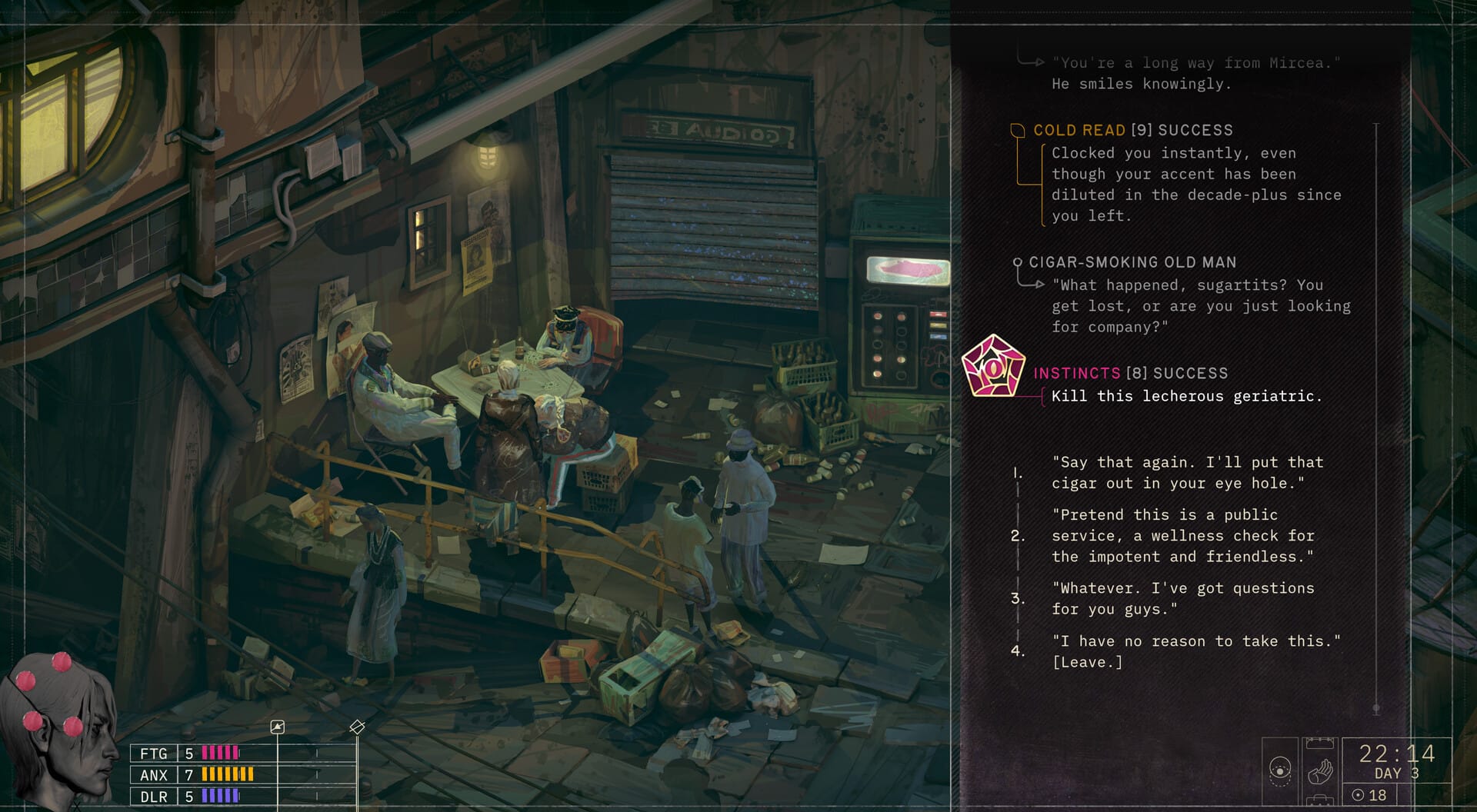
The close tension between the triumph of redemption and the despair of self-destruction was also a major element of Disco Elyium, but these themes are lent extra heft here by the meta-narrative surrounding Zero Parades.
Like Hershel, it feels like ZA/UM is looking to pursue its own redemption arc and prove itself a worthier steward to the goodwill and fandom that its first game inspired. All this is to say that Zero Parades doesn’t try to reinvent the wheel.
Much like Disco Elysium, it’s essentially a point-and-click adventure with dialogue trees, skill checks and an inventory system that lets you tilt the odds in one direction another. The shift in genre from detective story to espionage thriller does a lot to breathe new life into that framework by comparison – even if some elements have been lost in translation.
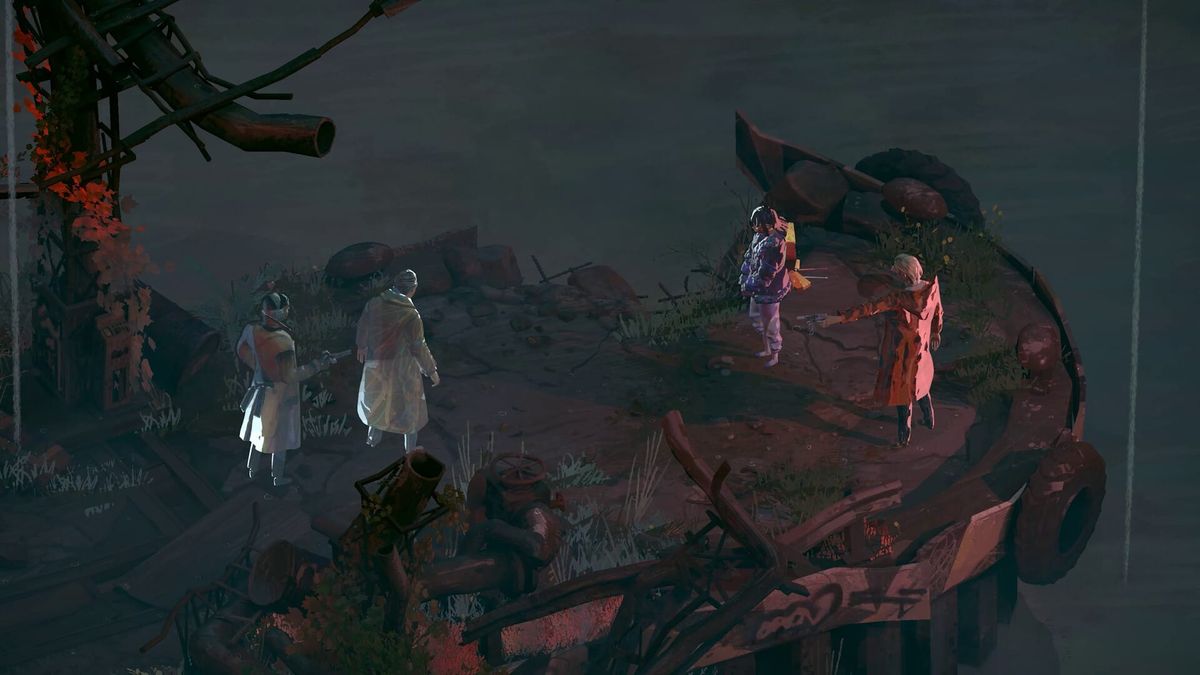
While the isometric environs aren’t necessarily as striking as those in Disco Elysium, the satisfaction of watching the map steadily expand as you get deeper into the adventure remains more-or-less intact. Like Revachol before it, Portofiro is scenic to behold, dense with details to appreciate and populated by dozens of fascinating NPCs you can whittle away the hours chatting to. Whenever you run up against the edges of a situation or conversation, you’ll usually be be able to make a skill check to steer yourself towards a better outcome.
Zero Parades offers a significantly smaller roster of skills than Disco Elysium did, but that subtraction in size does little to diminish the larger appeal. Fundamentally, it remains fun to roll dice to see what happens next and even the zanier and more niche skills in the game – like being good at poetry – are cleverly integrated into the main plot. The writing is also fairly good at making failure interesting enough that you won't necessarily save-scum your way out of the consequences whenever the dice don't go your direction.
As with Disco, your skills will also talk to you – embedding additional color to both larger scenes and smaller interactions. Zero Parades' take on this quirk is more minimalist than its predecessor, with only one voice actor embodying the various voices in your head.
In contrast, the shift away from having a formal partner – a la Kim Kitsuragi – is a more noticeable change. Left largely to their own devices (and guilt), Herschel may be less of a walking-disaster than Harry Du Bois but she also comes across as a much lonelier figure as well.
The flip-side of this is quickly made clear though, with the roster of assets you accrue over the course of your adventure picking up some of that slack and filling out the world that you inhabit with color, personality and history. There are some real standouts in the cast here, though few approach the hall of fame status afforded to the likes of Disco Elysium's Kitsuragi and Cuno. It’s hard to know how much of that more subdued sentiment is down to the relatively sparse selection of scenes and characters with voice-acting in them though.
Those who played Disco Elysium after it received the Final Cut update have only ever known the version of that game with the luxury of full voice acting. Time will tell whether Zero Parades merits the same treatment, but for now the split between scenes with and without VO can sometimes be a little abrupt and disorienting.
The soundtrack is another weak link. It's moody enough when it needs to be. However, like many things in Zero Parades, it doesn't quite reach the highs set by its predecessor's arsenal of evocative ear-worms.
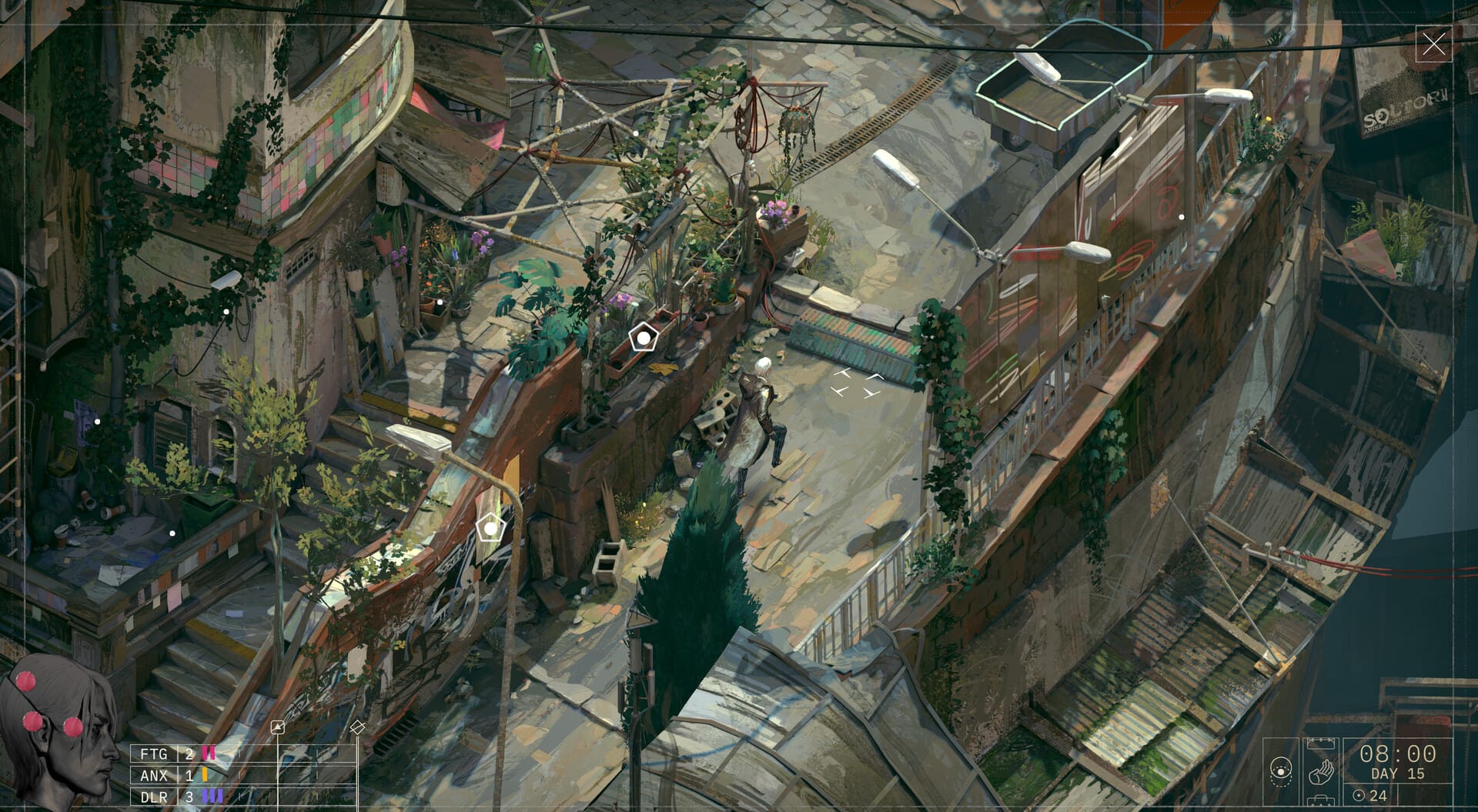
Perhaps unsurprisingly, Zero Parades is also a lot less nihilistic by comparison. Nevertheless, the dialogue does zig and zag between tragedy and comedy with the same sort of reckless verve seen in Disco Elysium. Most of the time, the writing in the game balances to sticks the landing. However, there are a few spots where it tries a little too hard or visibly strains against the boundaries of its own genre.
Every so often, the game seems to forget that the archetype of the detective and the spy sometimes overlap but are not necessarily interchangeable. At its best, Zero Parades feels like an interactive episode of Slow Horses or Burn Notice. At its worst, it can feel like one of the off-seasons of True Detective.
As a follow-up to Disco Elysium though – and especially given how much more central the big picture geopolitics of the setting are this time around – I was a little disappointed in how the Zero Parades approached the looming specter of communism.
Zero Parades might cast you as a communist spy, but doing that political ideology justice is fairly far from the top of its mind and it didn’t take long for that one line from Disco Elysium to drift back into my mind.
“Capital has the ability to subsume all critiques into itself. Even those who would critique capital end up reinforcing it instead.”
Where its predecessor wore its politics on its sleeve, the various idioms and arguments that Hershel spouts can't help but ring as more hollow by comparison. Maybe I'm just more jaded than I was in 2019, but where the ZA/UM's first communist RPG felt like it more authentically channeled the zeal and perspective of its creators the presence of this same subject material here comes across as more of an obligatory fan service or part of the broader aesthetic than anything particular radical.
It’s a similar story with the more nuanced substance abuse mechanics in Zero Parades. Herschel isn’t necessarily as much of an addict as Harry Du Bois was, but as you move through the world and dialogue encounters unfold, you’ll take damage on three fronts: anxiety, fatigue and delirium. Addressing those deficits can be done with drugs, but alleviating is a delicate balancing act.
Pushing Hershel beyond her limits will result in permanent damage to her stats, but when the alternative is to wait out the clock by sending your saboteur to bed early it doesn't take long for you to start pushing your luck.
As with the skills and substance abuse mechanics, the day-night cycle aspect of Zero Parades feels like another elegant evolution of the one seen in Disco Elysium.
Most of the time, the lackadaisical locale and lack of a hard deadline on your investigation makes your time in Portofiro feel like a slice-of-life adventure in a city abroad. From time to time though, you do sometimes end up having to kill the hours separating you from an NPC that'll only show up or speak to you at night – which can be quite tedious. This is fairly predictable outcome, but you could say the same for many of the quality of life changes that have been made in Zero Parades.
For the most part, the tweaks that ZA/UM has made to the moment-to-moment gameplay are smart and straightforward improvements. There's now fast-travel and a more useful set of in-game maps that automatically track failed checks that you might want to reattempt. Meanwhile, the revamped riff on Disco Elysium's Thought Cabinet that lets you accrue significant modifiers to your stats for as long as you comply with the meaningful restrictions that Conditioning places upon your play-style.
The other big addition to the larger experience that Zero Parades makes comes in the form of more action heavy sequences called Dramatic Encounters.
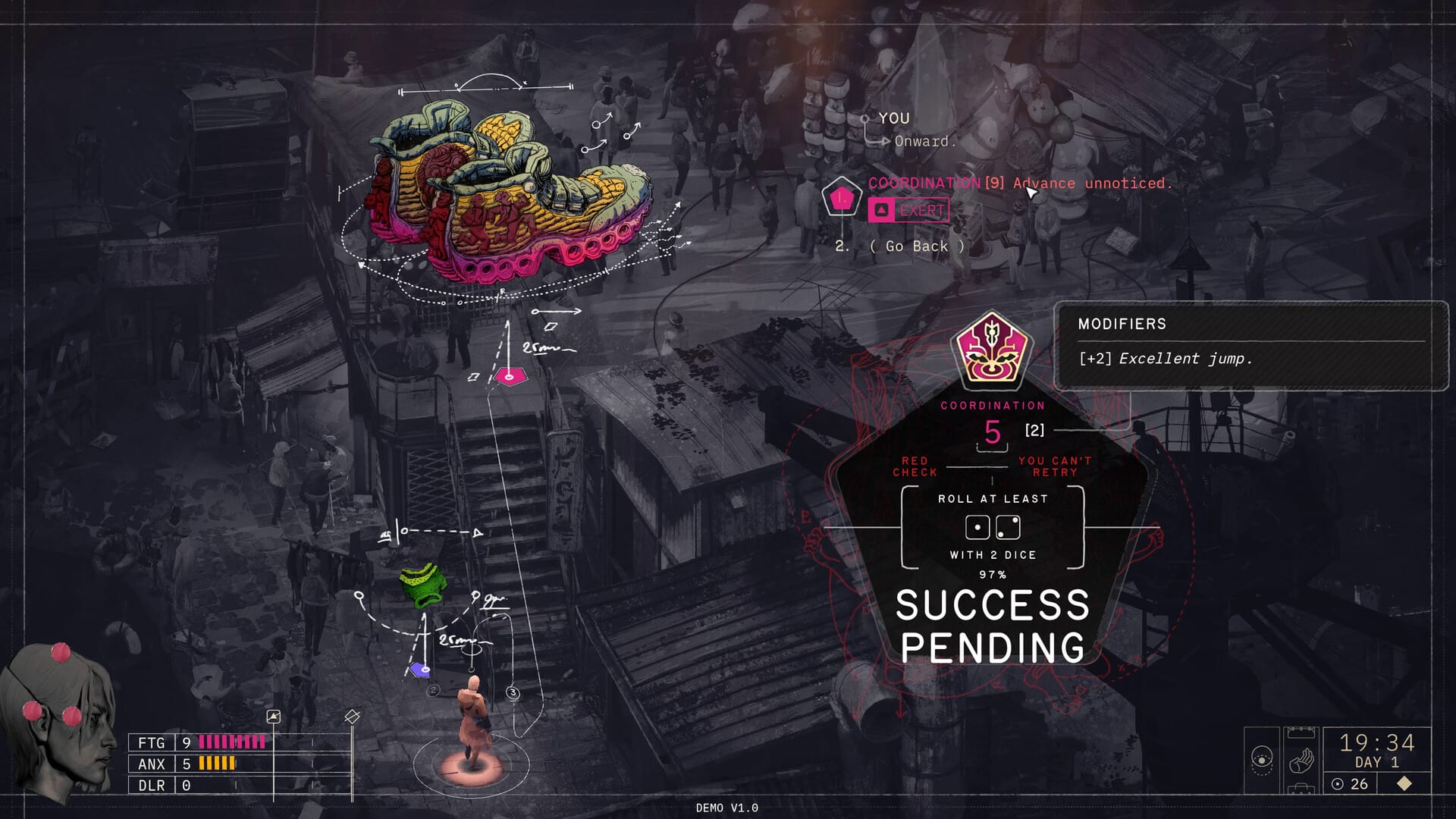
These moments are similar to the shootout seen in the final act of Disco Elysium. Where the tension in a given scene boils over and you’re given a variety of options as to how you want Hershel to respond. These do a great job of spicing up the usual diet of exploration, dialogue and skill checks with higher stakes and more cinematic staging.
While I do suspect that less is more when it comes to the way that both Disco Elysium and Zero Parades deploy violence, the latter left me wanting more from these specific moments – both in terms of their complexity and frequency. Random encounters might be overkill, but I would have liked these dramatic ones to be a little less rare. To be honest though, these are smaller gripes that pale in comparison to the technical issues that I encountered during my time in Portofiro.
I remember Disco Elysium being fairly buggy at launch as well, but hopefully Zero Parades cleans up its act sooner rather than later. I ran into at least one broken quest chain, about half a dozen crashes, and managed to waste about five hours trying to work out why I couldn’t advance a given quest chain due to the game's somewhat-obtuse quest log.
The Bottom Line
After spending almost 30 hours striding up and down the streets of Portofiro, the sense I’m left with is that – of the many games claiming to be spiritual successors to the misadventures of Harry Du Bois and Kim Kutaragi – this might be the one least interested in that larger legacy and more interested in doing its own thing.
If you’re going to take the bones of that breakout hit and try to make something out of those pieces then you could do a lot worse than the espionage epic that this new incarnation of ZA/UM have put together after a couple of false starts. Even if the studio has lost much of the luster amid the lawsuits, there’s still a ton here for those who appreciate intricate world-building and the satisfaction of picking away at a knotty mystery or two over a couple of dozen hours.
Zero Parades loses the edge of its inspiration, but it's still more than good enough to sustain its contradictions. It's easy to linger on the fact that the team involved had little to do with Disco Elysium and lose sight of the reality that lack of connective tissue ultimately makes this game all the more impressive.
If you're going to draw a line between the incarnation of ZA/UM responsible for Harry Du Bois and this one then it's hard to deny that this isn't a hell of a debut by the latter.
Much like the troubled spy it centers on, Zero Parades is haunted by its history but hungry for redemption all the same.