Apex Legends (2019) review
Finally, a worthy opponent.

It wouldn’t be too hard to make the case that Respawn Entertainment's past releases have been victims of circumstance.
Both the original Titanfall and its sequel are tightly-designed, mechanically robust and polished to perfection. They’re innovative, fun-as-hell, multiplayer-focused, and first person shooters from masters of the craft. Despite that, at least commercially, both appear to have flopped.
For whatever reason, be it bad market conditions or poor business decisions, the series just hasn’t taken off in the way that Respawn and EA surely expected it to. The first Titanfall was critically-acclaimed but didn’t come to the Playstation 4 – this generation’s market-leader for console gaming. Then, Titanfall 2 released within a week of Battlefield 1 in 2016 – a scheduling conflict that many suspect ended up costing the former dearly in sales.
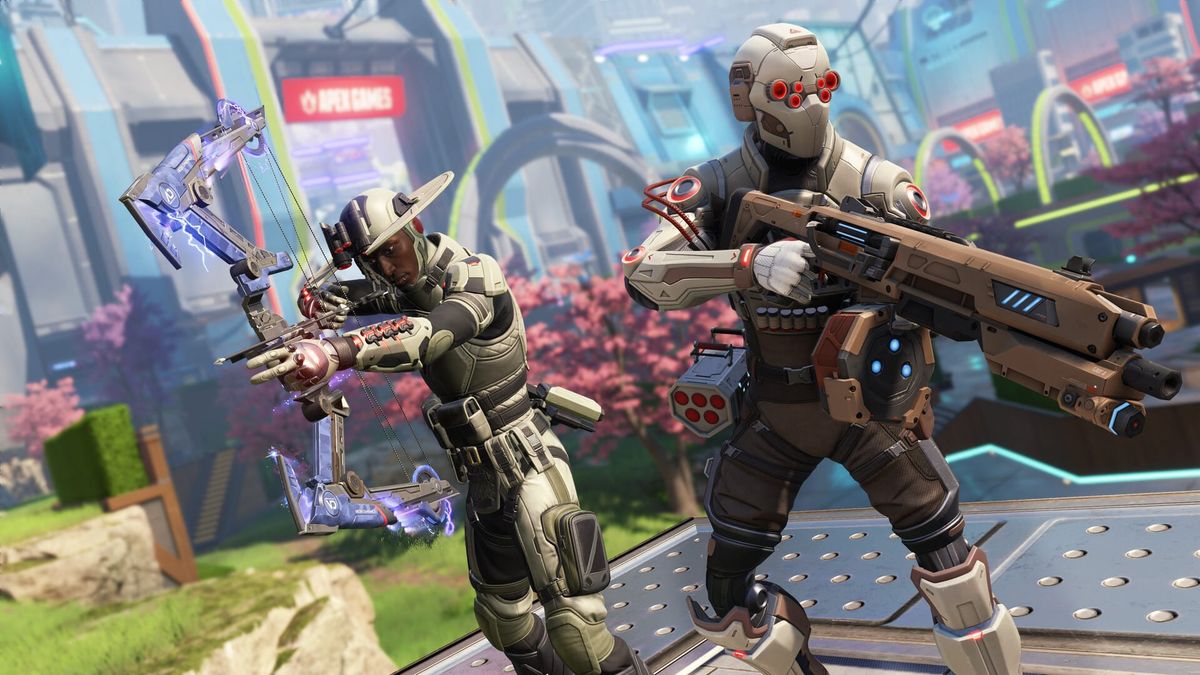
In contrast, Respawn’s latest has already surpassed 25 million players and has humbled heavyweights like Fortnite when it comes to its popularity on streaming platforms like Twitch. Set in the same universe as the prior Titanfall games, Apex Legends is a futuristic battle royale shooter where twenty trios fight it out across a sprawling battleground that shrinks in size over time.
Respawn Entertainment's latest is a little familiar, a little different and a little better that it's predecessors. There are no giant robots (at least for now) nor are there any parkour-inspired movement mechanics, but Apex Legends lives up to the studio’s legacy and then some regardless.
Live together, die alone
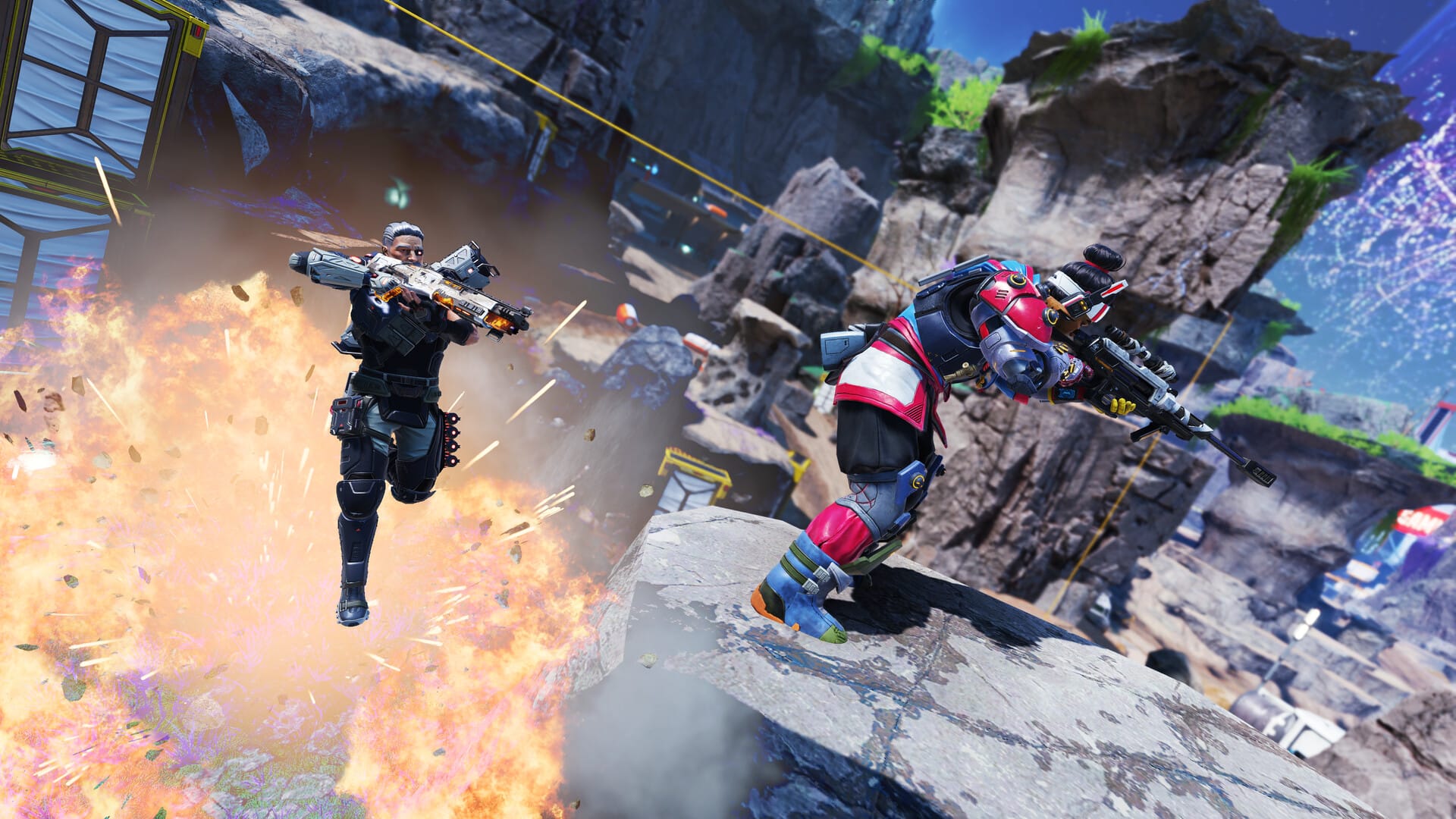
Unlike the cartoonishness of Fortnite or the grittier realism of PUBG, Apex opts for a more comic-book inspired look. Its locations are dripping with condensed coolness. The guns are easy to pick up and use but come laced with plenty of sci-fi flair and each character on the roster is expressive and full of personality.
Like Call of Duty: Blackout, Apex sets itself apart from other battle royales by having you choose and play a named operator each match. There are eight personas in all – referred to as Legends – in play at the moment. More are expected to be added over time to keep things fresh.
Each Legend has a passive bonus, an active tactical ability and a more-powerful ultimate ability – which takes time to charge up and can only be unleashed intermittently. Some can deploy healing drones, shields and air-strikes. Others can bend the space around them to create two-way portals. One can deploy grappling hooks and zip-lines to help your team reposition. Each changes the dynamic of play in subtle and not-so-subtle ways and the teams that can combine their abilities are usually those who end up taking the day.
I haven’t spent enough time with the game to know the pros and cons of each offhand, but the smaller size of the game’s roster does help keep the number of variables here manageable. At least, for now. I’m as of yet unconvinced that Respawn will be able to succeed at giving each Legend the right balance of mechanical depth and personality.
Don’t get me wrong, Apex Legends' current cast of characters have plenty of personality. However, there’s a big difference between the attachment that Overwatch and League of Legends players have to the characters in those games and the level of involvement and attachment you see when it comes to stuff like Rainbow Six: Siege and Quake: Champions. Time will tell which camp Apex ends up falling into.
Regardless, moment-to-moment, Apex Legends plays really well. The gunplay is tight and responsive, the environments are fun to traverse and explore and there’s no shortage of smart decisions when it comes to the interface and overall design. For instance, rather than have to coordinate your landing onto the map with two other people, one person on your team will be designated the Jumpmaster and be tasked with guiding all three players to the drop-site.
Apex’s ping system is another smart addition that sets it apart from the rest. Want to communicate where you’re going without using comms? Look at your destination and tap the middle mouse button once to place a waypoint on the map.
See the enemy lurking across the valley? Tap twice and your teammates will be able to see exactly where. It’s quick, it’s easy and it makes playing with randoms much more tolerable than it would be otherwise. Once you get the basics down, Respawn have made it incredibly simple to convey any and all vital info to your teammates.
Apex Legends is also the rare battle royale game where death is necessarily not the end. This gives the gunfights a more playful feel. Sure, you can still make a dumb mistake and die, but there’s always the possibility of a second chance. Maybe your teammates escape and resurrect you later down the line. Maybe they scrape through the fight. Maybe they don’t. I found this mechanic kept me more invested. Better still, it encouraged more intriguing and creative approaches to shootouts.
There aren’t a huge amount of weapon variety in Apex Legends but that’s not necessarily a bad thing. The usual suspects are all present and accounted for. If you had a favorite gun in Call of Duty, you’ll probably be able to find an analogue for it here. Each of the game’s pistols, machine guns, shotguns and sniper rifles has a ton of polish. There’s an addictive snappiness to the animations that makes them really satisfying to use.
Since Apex Legends is a free-to-play game, it’s worth touching on the game’s microtransactions. In my opinion, they’re not too egregious of an imposition on an otherwise-fantastic shooter.
You start the game with six Legends. Unlocking each of the remaining two takes about fifteen hours of play. If you’re not feeling the grind, you can skip the queue by paying about $8.
There are also loot boxes, which can be bought using real-world money or unlocked through play. These contain character and gun cosmetics that can be used to further customize your in-game look. EA say that Fortnite-style Battle Passes will also be coming to the game later down the line. No word yet on how much that’ll cost.
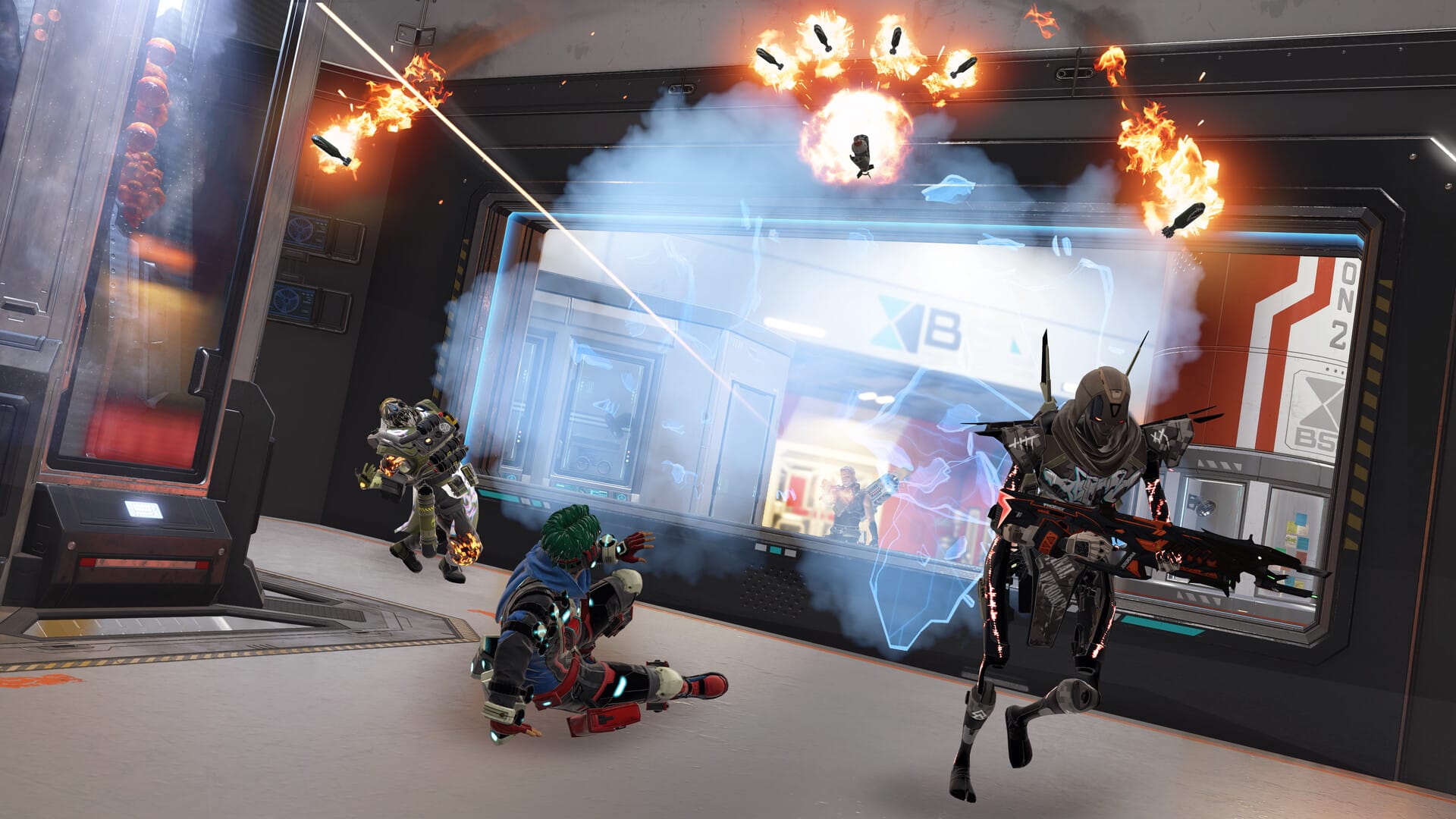
Overall, the structure and pacing of the business model here is pretty close to other free-to-play titles like League of Legends and Warframe – which may assuage some fears around the monetization in Apex. Yes, this is a free-to-play experience with some micro-transactions. No, there’s no real pressure to spend money if you do want to just jump in and play.
The Bottom Line
My experience with Apex Legends so far has been nothing short of a blast. Night after night, I’ve had an incredible time playing this game. Everything about it seems so considered and I’m genuinely impressed that it’s managed to snare and hold my attention where other battle royale games have failed to do so.
Apex Legends is the gaming year’s first big surprise and an impressive free-to-play debut from Respawn. It’s more evolution than revolution but it’s exactly what the genre needed and exactly what you’d expect from the team behind Modern Warfare and Titanfall.