Death Stranding (2020) review
Mountains, metaphors and mystery boxes.

Ahead of its initial release on the Playstation 4, there was a lot of consternation and speculation over just what Hideo Kojima’s Death Stranding was. Depending on who you ask, the lavishly-produced open-world sandbox game is either a work of genius or daunting indulgence. Some might say it’s both.
But for a long time, it felt like the only thing that was really known about Death Stranding – Kojima’s first original property in over a decade and his first release since parting ways with post-Konami – was the long list of celebrities attached to the project. Norman Reedus. Mads Mikkelsen. Lea Sedoux. Guillermo Del Toro. Nicholas Winding Refn. Early trailers for the game dropped plenty of big names, but gave little away.
A stark contrast to the sometimes painfully overt and obtuse hype cycles of other AAA titles, the team behind Death Stranding refused to explain anything. Not even the spooky title. The internet loves a good mystery box, after all.
Previously an exclusive to Sony’s console, Death Stranding has now come to the PC. What’s more, it’s made that jump at a time where the game’s vision of a desperate future where human society is divided and isolated by fear of an invisible threat feels oddly prescient or at least more resonant than it did the first time around.
The BTs of Death Stranding are no coronavirus and, after a few months in the wild, Hideo Kojima’s science fiction odyssey isn’t so much of a mystery anymore. Nevertheless, freed of previous limits, it’s no less compelling an odyssey.
It’s a mad, mad world
While the sense of mystery implied by the title is itself a major thread of the plot, it’s hard not to talk about the gameplay in Death Stranding without laying down some of the basic lore.
Set in the not-so-distant-future, Death Stranding follows the survivors of a cryptic calamity that irreparable shattered civilization as we know it. At some point in the recent past, otherworldly invaders from the world of the dead called Beached Things (AKA BTs) started appearing and causing massive explosions akin to a nuclear bomb going off.
As a result of this seemingly-supernatural phenomenon, Death Stranding’s vision of a post-apocalyptic America is one where humans have retreated underground and become reliant on couriers to physically ferry vital supplies from one place to another.
Cast as Sam Porter Bridges, you’re one of those unlucky few tasked with delivering packages on foot, investigating the mysteries surrounding the origins of the Death Stranding and rebuilding a derelict America by connecting the remaining survivors through the internet-like Chiral Network. Without going too deeply into other proper nouns like timefall (a meteorological phenomenon that causes objects to age years in seconds), MULEs (renegade couriers driven mad by their need to deliver packages), beaches (the personal purgatory between life and death) or the game’s absurdly-named cast of characters (which includes Heartman, Deadman and Die-Hardman), it's safe to say that Death Stranding has a LOT going on in it beyond just an A-plot and a B-plot.
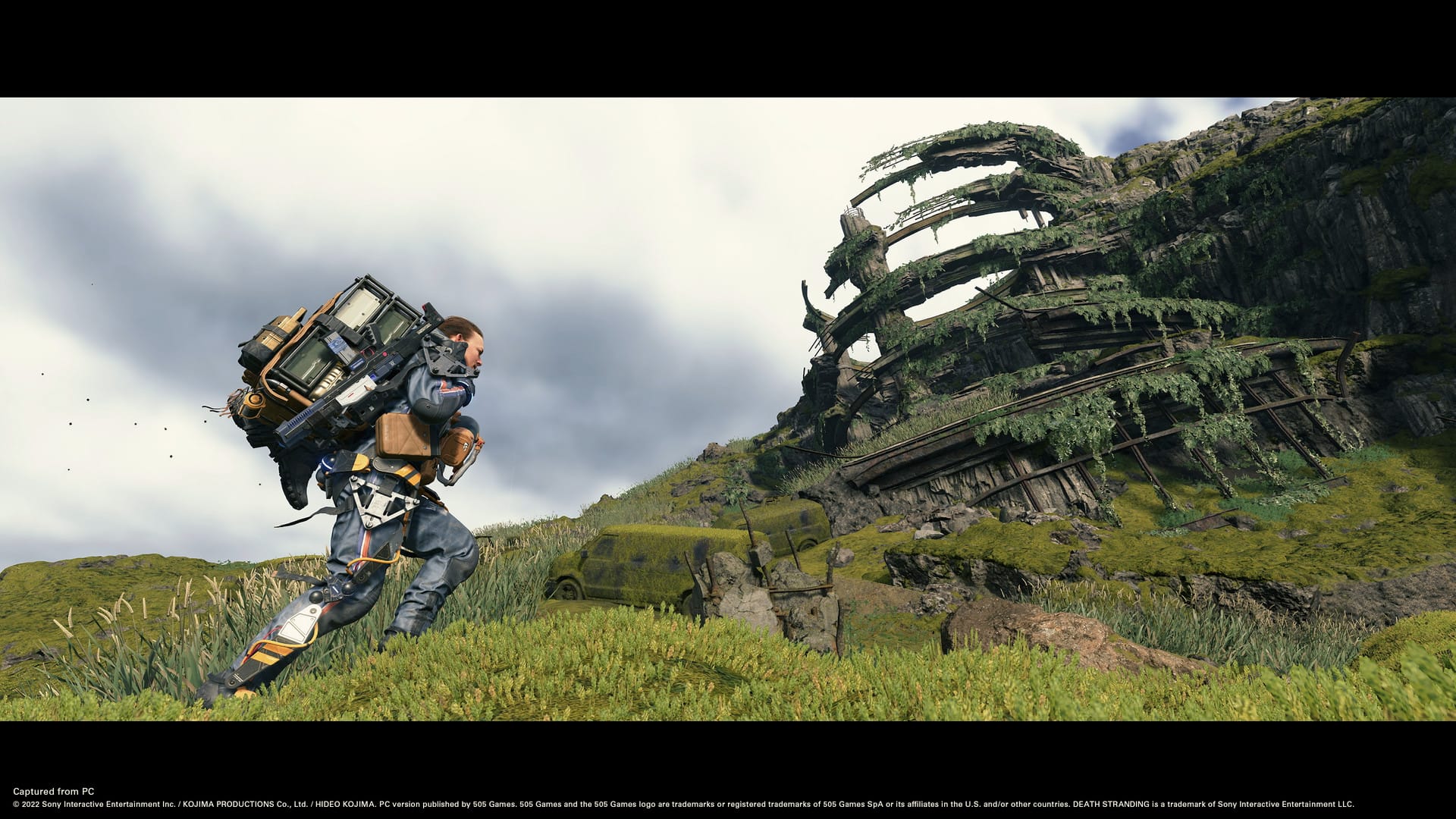
Each of the game’s major story arcs (called episodes) tends to focus on a new region of the world and a single specific individual and their relationship with Sam. There’s also a ton of smaller side-content for those who want to spend the time getting to know each of the game’s various preppers. It’s a simple formula but, compared to the breakneck storytelling found in other AAA games, it’s refreshingly laid back. The game encourages you to tackle things at your own pace. It’s more a slow-burn than a sprint.
Even if the more ridiculous conceits here feel at odds with the game’s often-sombre and more mature tone, Death Stranding comes off as just as charming as it is clumsy.
Like many of Kojima’s other works, the writing in the game is rarely subtle and often more than a little melodramatic. Some audiences will be more forgiving of the game’s indulgences more than others. Even if you fall into the former camp though, it's hard to deny it does the game sometimes become bogged down by its own bizarre mythology. When the default tone is so strange, it becomes difficult to spot the suspicious behavior and hidden agendas at play here.
The tyranny of social distancing
As overwrought and plodding as the writing in Death Stranding is, it suits the gameplay just fine. In a world where most AAA games are about snappy, fast-paced gameplay and instant gratification, it's refreshing to play one that isn’t afraid to slow things down and take its time.
It’d be a mistake to call Death Stranding a walking simulator but, at least to begin with, there’s a barebones quality to the gameplay that often makes it feel that way. Though mission design here rarely gets more complicated than walking from A to B, there's a ton of attention to detail embedded in the systems designed to elevate each seemingly simple trek out into a memorable adventure.
Once you’ve plotted a course to your destination, you’ll have to keep an eye out for environmental hazards, keep track of your stamina and remain constantly vigilant lest you lose your balance and stumble.
Mitigating any of these individual concerns is rarely taxing, but taken together the act of juggling them all at once keeps you engaged and immersed in the action. It’s tedious by design but not egregiously so. There's genuine satisfaction in a straightforward job done well, after all.
Making mistakes in Death Stranding can sometimes be a large part of the fun as well. In one instance, I had to courier some supplies to a nearby prepper. Noticing the distance wasn't particularly great, I opted for the most direct route. Unfortunately, this took me into hostile territory.
Later, on the run from a pack of MULEs, I realised the real problem with this route is that a large ravine sits between me and the plateau where my destination lies. I scope out the cliff’s edge. I curse myself for not bringing a ladder. I size out the distance like Homer Simpson preparing to jump Springfield Gorge. I could jump that, I optimistically thought to myself.
I couldn’t. Instead, I tumble down into the depths below. As my pursuers surrounded me, I scrambled for cover and frantically looked for ways to leverage the natural rock formations around me to my advantage.
All this is to say that, convoluted premises aside, missions in Death Stranding are rarely as simple as they might seem. Even at its worst, each adventure is full of anecdotes and detours like the one above.
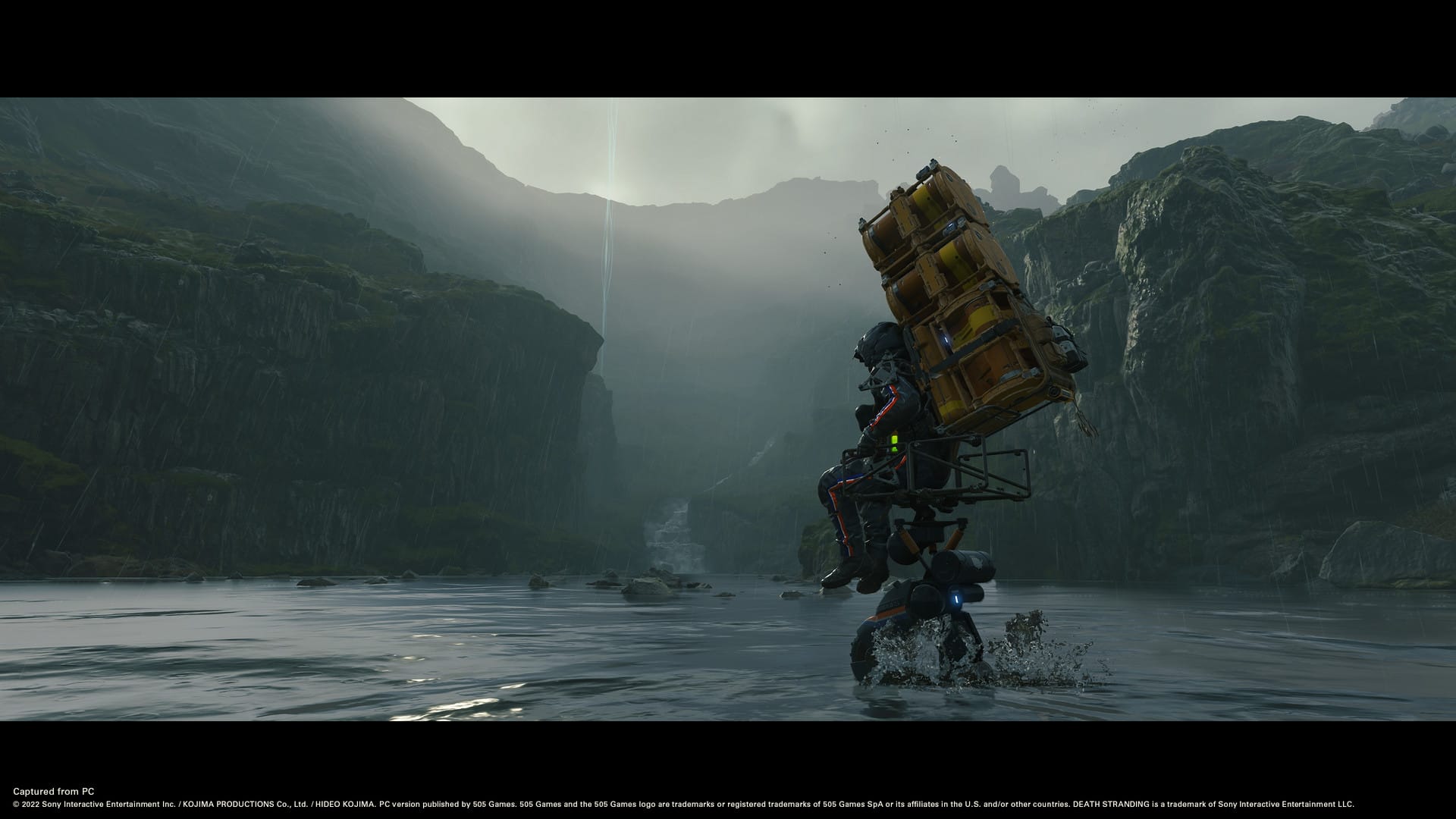
More often than not, distance itself is often your greatest adversary and this game gives you tools upon tools with which to conquer it. There’s a minimalist pleasure in the act of simply hiking across the landscape to your destination but a blistering thrill in zipping across it once you unlock vehicles and other, faster methods of travel.
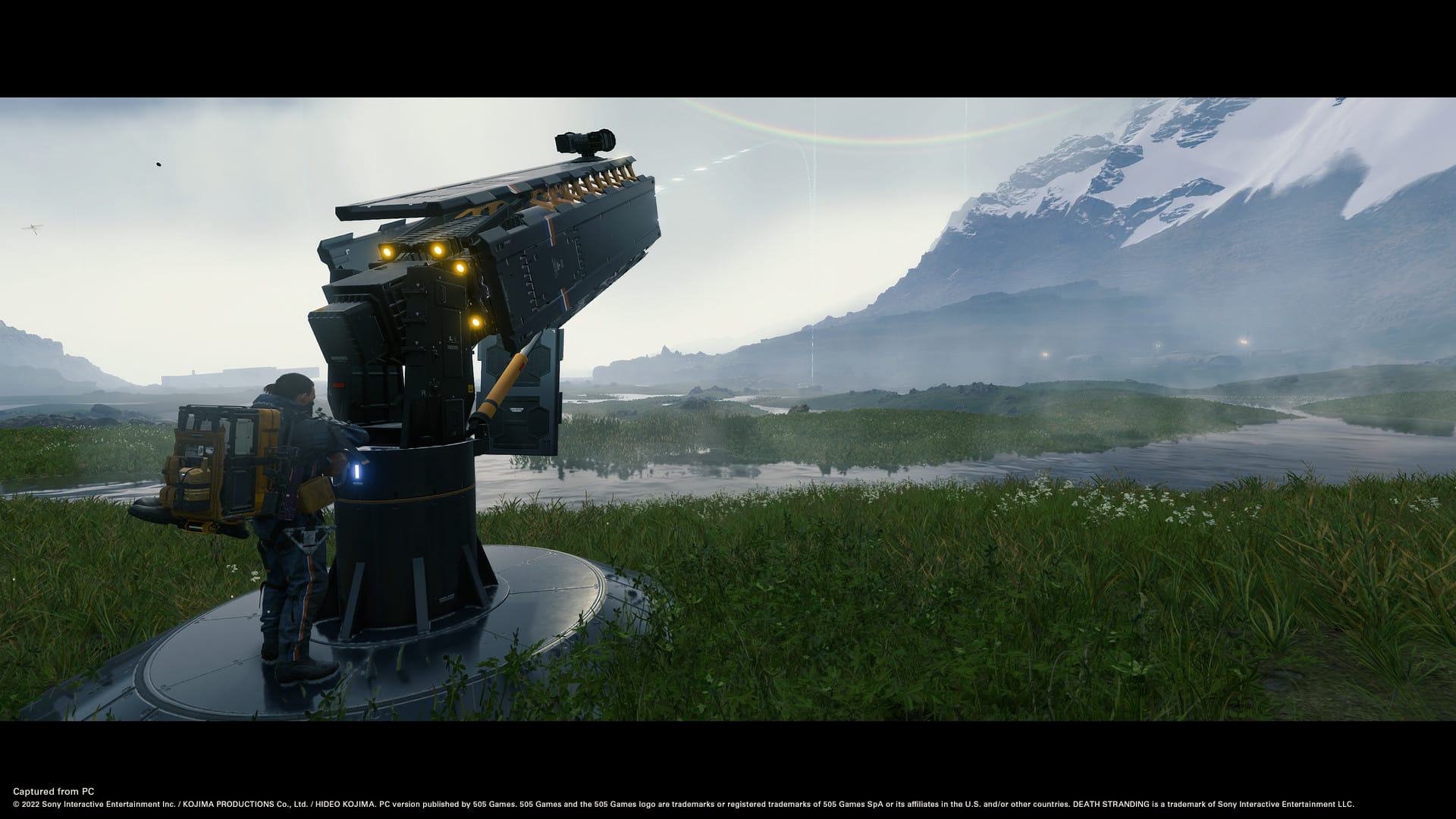
In addition to increasing your own speed, Death Stranding later gives you the ability to change the landscape around you through structures. Initially, you’re limited to smaller utilities like postboxes, which let you deliver any lost packages you find littering the landscape, and watchtowers, which give you a vantage point from which you can gather intel about the surrounding area.
Eventually, you gain the ability to build bridges, roads and other things to make life easier for yourself. For as long and slow-paced as Death Stranding is, it continues to throw new items, mechanics and structures at you throughout. It feels like the game is constantly one upping itself adding fresh new ingredients to the mix.
"You thought roads are cool? Wait until you see this."
Somehow, someway, Death Stranding makes mundane infrastructure feel just as compelling as unlocking a new gun or ability in something like Rage 2. The construction system in the game also ties neatly into it’s multiplayer elements.
While there’s nothing as discrete or deliberate as actually playing with friends, the structures you build can often turn up in other player’s games and vice-versa. This cross-pollination helps build up a sense of community that I didn’t expect from the game going into it. Although Death Stranding is an entirely single player adventure, it rarely feels like you’re the only delivery-person out there doing the work of getting those packages where they need to go or the only person in the world that matters.
The final piece of the puzzle here are the stealth-action sequences. As the saying goes: when it rains it pours and precipitation often precedes the arrival of BTs. Whenever that happens, you’ll need to slow down and either sneak past or around them.
While some of the early BT encounters are scripted, most of the time, they aren’t. They’re systemic. Not every delivery is going to see you go up against them but there’s always a chance, and you need to be preparing for that possibility.
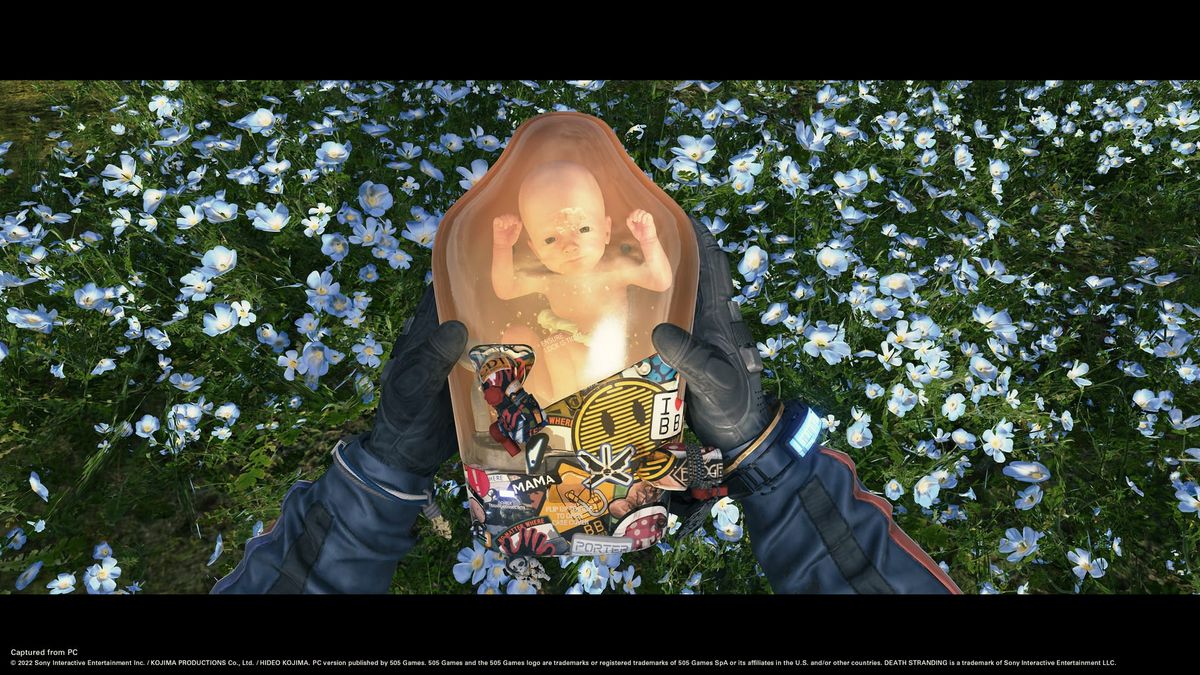
The problem here is that BTs are all but invisible until it’s too late. To navigate this ambiguity, you’re given a Bridge Baby (AKA your BB). This small child is strapped to your chest and essentially acts as a portable BT detector. If you’re not moving, you'll be able to get a sense of where nearby BTs are and proceed based on that intel.
The sound design in Death Stranding really shines here. Sifting through the sonic debris of your own footsteps, the otherworldly cries of nearby BTs, the wailing of your BB, the pitter-patter of the timefall itself and the metronomic chimes of the odradek hanging over your shoulder really draws you into the natural tension of the situation.
As with the quieter stretches of the Death Stranding experience, BT encounters are a juggling act. You have to think about how much noise you’re making as you move, how close you are to nearby BTs, whether BB needs to be cradled back to silence, how much damage the timefall is having on your gear and more. On their own, none of these is overwhelming but forced to reckon with them all at once, you're kept on your toes.
Being detected will result in a chaotic and oft-surreal boss fight sequence. Even if these confrontations can be survived or absconded from, there’s usually a risk or cost involved. Detection doesn’t equal failure here, it’s just a catalyst for complications.
The last thing worth touching on here are the things exclusive to this version of Death Stranding. Unlike the PS4 version of the game, you can really crank the visual settings in the game up to eleven.
The open world game also now supports higher frame-rates and larger resolutions – including wide-screen displays. There’s even a dedicated photo mode in the mix. As far as ports go, this thing includes more than just the essentials. It’s arguably the definitive edition of the game.
Last and least, the PC version of Death Stranding comes with a handful of unique Half Life-flavored missions that let you unlock a number of accessories for Sam. This content is entirely optional but it’s a fun, if goofy bonus for those that want it.
The Bottom Line
It’s hard not to talk about a game like Death Stranding without also tackling the cult of personality around the man behind the game. Kojima’s past works – specifically the Metal Gear Solid series – have earned him a reputation as one of gaming’s greatest auteurs.
Before blindly accepting and attaching this label to Kojima (or anyone else in game development), it’s important to actually unpack what the term means in its original context and think about whether the conditions that enable auteurs to exist in film apply just as well to AAA game development. With films, it’s arguably easier to make the case for auteurs as everything that the audience sees can be directly shaped or molded by someone like the director. Either it’s in-frame or it’s not. With games, you have to reckon with an entirely production environment and I’m not so convinced that the same rules apply.
Sure, Kojima’s influence is easy to see here but the downside of auteur theory is that it almost erases the creative contributions of hundreds or so other people involved in a project like this. One person didn’t make this game. A whole team of people put in the work here and they deserve the credit for it because Kojima Productions’ debut title is nothing short of exceptional.
For as much as the typical cinematic stylings and questionable dialogue that gaming auteur Kojima is known for are present, Death Stranding feels like a game that’s firmly stepping out of its comfort zone and into the unknown. Not every idea this open-world adventure brings to the table is a winner, but I’m delighted to grapple with a game with this many verbs that fall outside the usual vocabulary of modern AAA game design.
Death Stranding is incredibly convoluted but incredible all the same.