Legends of Runeterra (2020) review
A generous card-battler that pounces on Hearthstone's weaknesses.

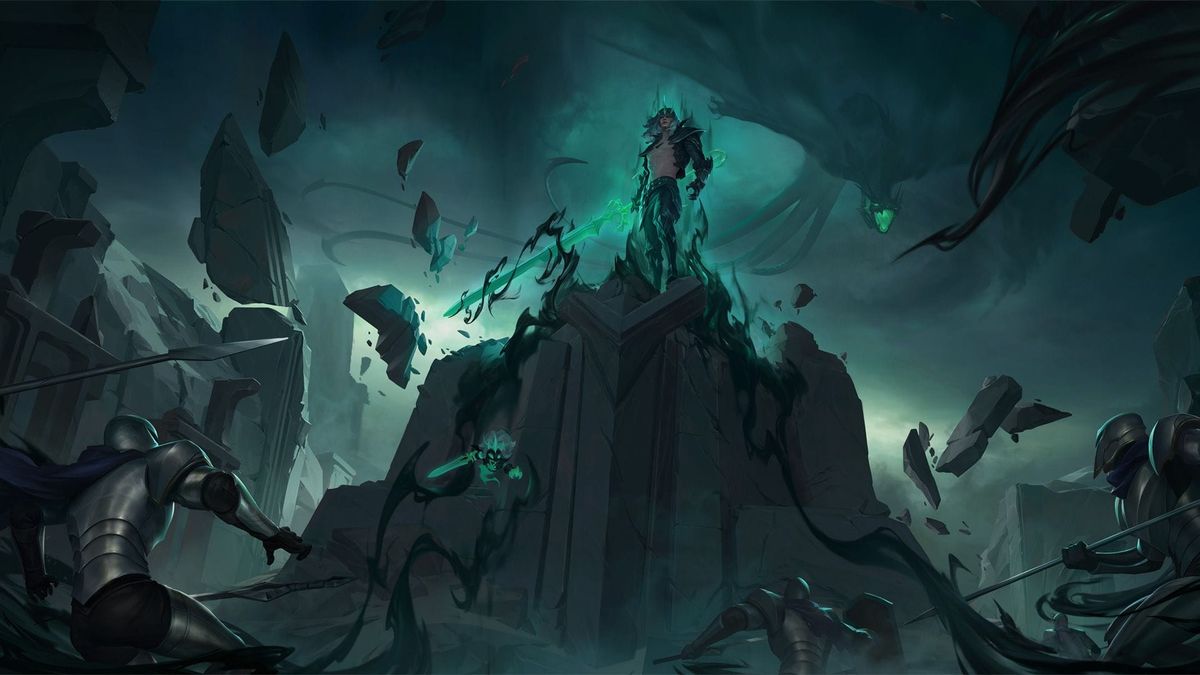
As the saying goes: you come swinging at the king, you’d best not miss.
Say what you will about Legends of Runeterra, its swipes are neither light nor mild. If anything, Riot’s entry into the increasingly-crowded digital card gaming space is the most bold bid to upstage heavyweight Hearthstone since Valve’s Artifact crumbled under its own ambitions.
The difference is that while previous pretenders to the throne focused on emulating Hearthstone’s strengths, Legends of Runeterra hones in on its weaknesses.
Modern Hearthstone is a simple game made complicated by years of expansions and shifts in the game’s competitive meta. By contrast, Legends of Runeterra feels like a complicated game made simple. Where Blizzard’s card-battler plays with chance and chaos, Runeterra emphasises individual agency and more-reactive gameplay.
For those spurned by Blizzard’s frugality and the cost of keeping up with Hearthstone, Legends of Runeterra is going to seem particularly generous when it comes to monetization. That specific quality may prove a massive boon to the game’s popularity over the long run.
Right from the start though, Riot have been spinning Legends of Runeterra as a response to the things that people hate about modern card games – both digital and traditional – and the launch-day experience embodies those virtues to a tee.
Playing your cards right
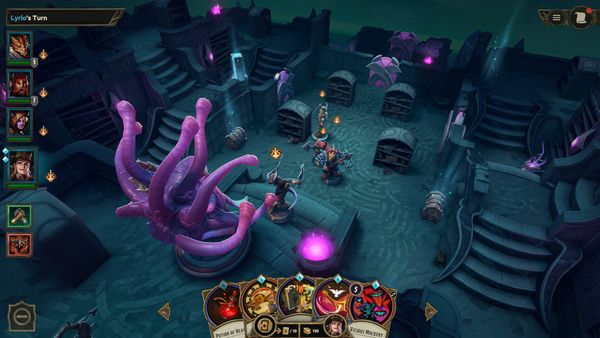
Matches of Legends of Runeterra are turn-based and one-versus-one, with either side vying to reduce their opponent’s HP to zero by deploying champions, minions and spells against them. If you’ve played many digital or trading card games like Hearthstone or Magic: The Gathering, spells and minions play pretty similarly to what you’d expect.
Legend of Runeterra's first big twist on the template comes in the form of Champion cards. Here, Riot have injected their own MOBA-flavored spin on an otherwise familiar formula.
These hero characters tend to be better than your baseline minions when it comes to stats. In addition, each hero also has a special condition for leveling up – some of which can be met regardless of whether the hero is on the board or in your deck. Leveling up grants existing heroes better stats and new abilities. Left unchecked, a hero card can quickly tilt the odds in your favor.
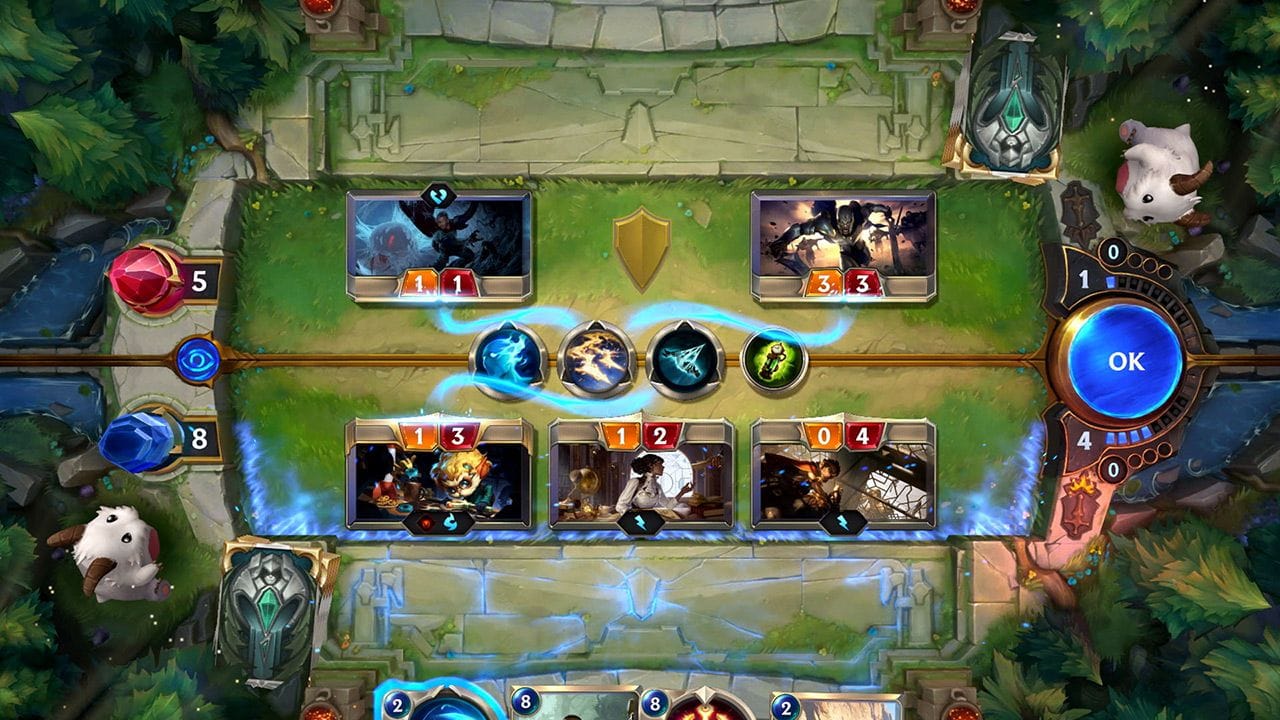
At launch, cards in Legends of Runeterra are currently split across six different regions. These regions don’t just reflect the lore and geography of the game’s titular fantasy setting, they also embody different playstyles. Noxus cards tend to be beefy brawlers, treating offense as the best defence. In contrast, Piltover and Zaun are all about spells that buff and empower their units.
Functionally, that setup here is closer to Magic: The Gathering than the class-based antics of Hearthstone. Decks in Runeterra are built out of cards belonging to either one or two of these regions.
Riot says that additional regions will be added to the game over time, which theoretically promises to keep the meta interesting in a way that most card games – digital or not – rarely attempt. Magic: The Gathering had five colors when it released in 1993 and modern sets are still built around those five same colors. The notion that the fundamentals of deckbuilding in Legends of Runeterra could shift over time is narratively and strategically intriguing in a way that's distinct from rivals like Hearthstone. It's far from the only difference though.
Most cards in Legends of Runeterra cost mana. Both players start at 1 mana and their capacity grows with each turn. Unlike Hearthstone, unspent mana can roll over into your next turn and the mana capacity of both players grows with each consecutive turn. This, combined with the lower HP pool for both players, allows for both faster and more meaningful early game play. Simply put, there’s less filler before you reach the part of a match where individual turns have the greatest potential impact.
Another key difference here is that whenever you play a card, you cede control of the board to your opponent – giving them a chance to respond. Where Hearthstone lets you make as many moves as you want before ending your turn, Runeterra only lets you make one move at a time. In practice, I found that this made turns move a lot faster since both you and your opponent are only ever focused on what's in-front of you rather than anything more elaborate.
The final wrinkle here comes in the form of Runeterra’s initiative system. Players take turns being designated as the attacker and defender. If you’re the former, you can launch an offensive against your opponent using anything you have on the board. If you’re not, you can’t. This creates an interesting rhythm to matches, where some moves are worth more and better saved for a turn where you’re on the defensive.
All this is to say that even if the setup for Legends of Runeterra does resemble Hearthstone, it's the unique configuration of these familiar elements that yields fresh results.
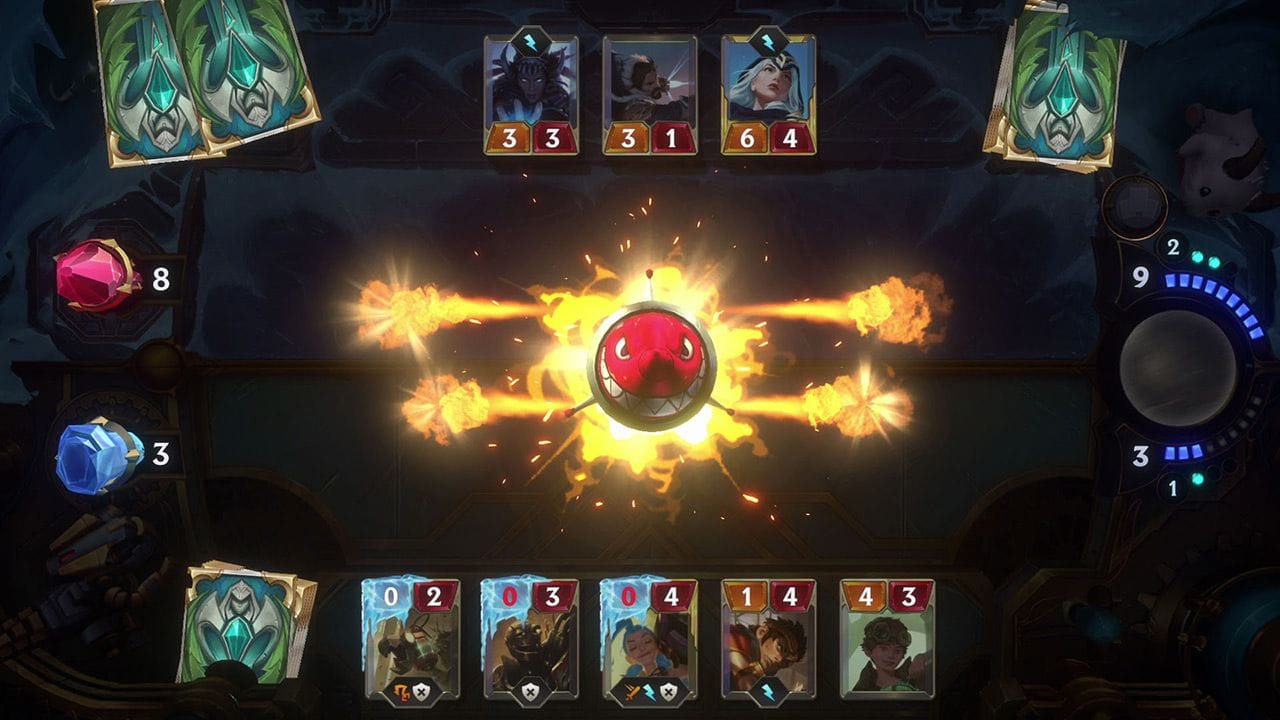
Matches in Legends of Runeterra don’t take nearly as long for things to get to the point where you’re making interesting strategic decisions. Even if you get a bad hand up front and can’t mulligan your way out of it, it only takes three turns of waiting to build up a potential 6-mana swing that could put you back on the board.
Another smart inclusion here is the oracle. Whenever you remember to use it, this on-screen button lets you instantly get a glimpse of how your next potential move will change the board state before you lock it in.
In addition to regular and ranked play, there’s also a drafting experience in Legends of Runeterra called Expeditions. Here, you get to draft two decks and then your rewards will scale with whichever of the two performed better over a series of matches. You’ll also get the chance to tinker with your deck by swapping or adding cards to it between each round, which gives you room to course-correct and refine your strategy over time.
The other thing that has to be talked about here is the monetization. Legends of Runeterra is monetized in the same way as Riot’s MOBA is. You’re able to buy new board themes, pets and card backs.
The in-game store also sells Wildcards. These are vouchers that can be redeemed for any card of the corresponding rarity. Wildcards can also be purchased using real-world money but you’re limited to only buying a handful of these each week.
Unlike other digital card games, you don’t buy any random booster packs in Legends of Runeterra. Instead, you earn new cards by playing. The more you play with one region, the more cards you’ll unlock for that region.
Each week, you're awarded a handful of random new cards for your in-game collection and the quality of those cards scales with how much time you put into the game. The end result of this system is that you feel like you have a more tangible sense of progress as your collection of cards grows.
Money isn’t so much the object as time is. Even just play a few matches each day, you’ll probably be able to collect every card in the game or at least every card you’d want to own.
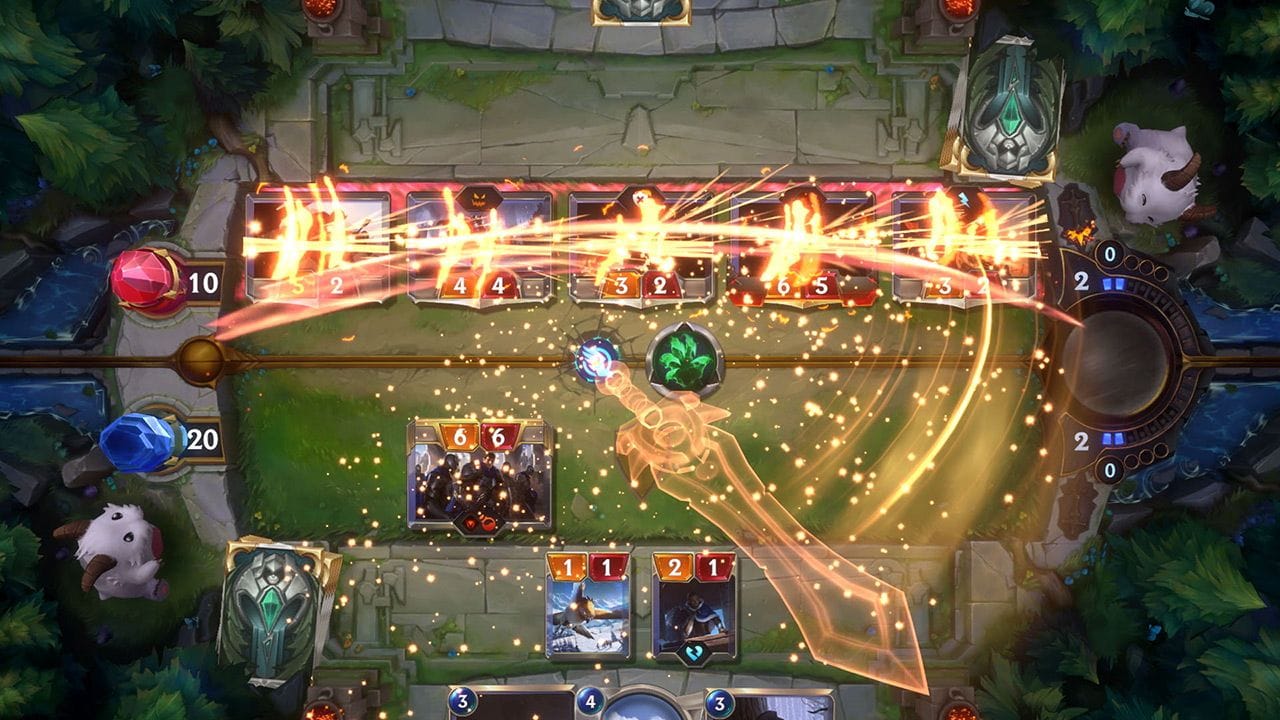
As a free to play game, Legends of Runeterra does almost everything right. Riot have made it really easy to see at a glance just how far you’ve come and how far you have to go when it comes to mastering each of the game’s regions. It would be nice to be able to check my quest progress in the middle of a match though.
The Bottom Line
Although doubtlessly intended to be welcoming to newcomers, so much of the pitch and the reality of Legends of Runeterra feels like it's been targeted to steal away the free time of those vexed by the status quo of modern digital card games.
Riot’s willingness to be generous as well as smart makes a big difference. With Hearthstone, it sometimes feels like you’re fighting an uphill battle to become good at the game. In Legends of Runeterra, it feels like Riot are encouraging you at every turn. Whether that feeling lasts is another question but right now, it feels like a breath of fresh air.