Monster Hunter: World (2018) review
Forget the loot. It's all about the thrill of the hunt

Beneath the overwrought presentation their settings sometimes entail, gaming’s most beloved action roleplaying games usually come with a good hook – a kind of kick to the experience that keeps you coming back for hours on end.
These days, more often than not, that hook manifests as the eternal quest to find the best loot. Other times, a social or narrative hook is employed. When you care about the fictional characters or the real-players in a game, it’s easy to keep finding yourself drawn back to it.
In the newly released Monster Hunter: World, things are a little different. This time, the hook isn’t solely to do loot, other people or exploration. Instead, it’s a bit of a mix. In the end, it all comes down to the thrill of the hunt. Finding the biggest monster you can, then taking it down in single combat.
As someone more familiar with the story-driven fare of companies like Bioware, the Monster Hunter series is one that I’ve always heard good things about but struggled to ever connect with beyond the odd demo. I mean, I’m hardly opposed to a good ol’ fashioned monster hunt. I’ve been a fan of The Witcher since the series first made the jump across from Poland, but if that hunt is all there is I can't help but ask whether that's enough?
Open season
Assuming the role of a hunter sent as part of an expedition to uncharted wilderness of the so-called New World, Monster Hunter: World sees you hunt exotic monsters, mine their corpses for materials, craft better armor and more-powerful weapons and then hunt bigger and bigger monsters. Rinse. Repeat.
As reductive and bare-bones as that premise might sound, there was a lot more of a formal narrative in Monster Hunter: World than I expected. The game wastes no time introducing you to the different faces and personalities of the Fifth Fleet and the ecology of the game's setting. Then, as the hours roll on, it spends a surprising amount of time telling you about the gargantuan and Godzilla-sized monster known as Zorah Magdaros – whose migration acted as the catalyst for your expedition in the first place.
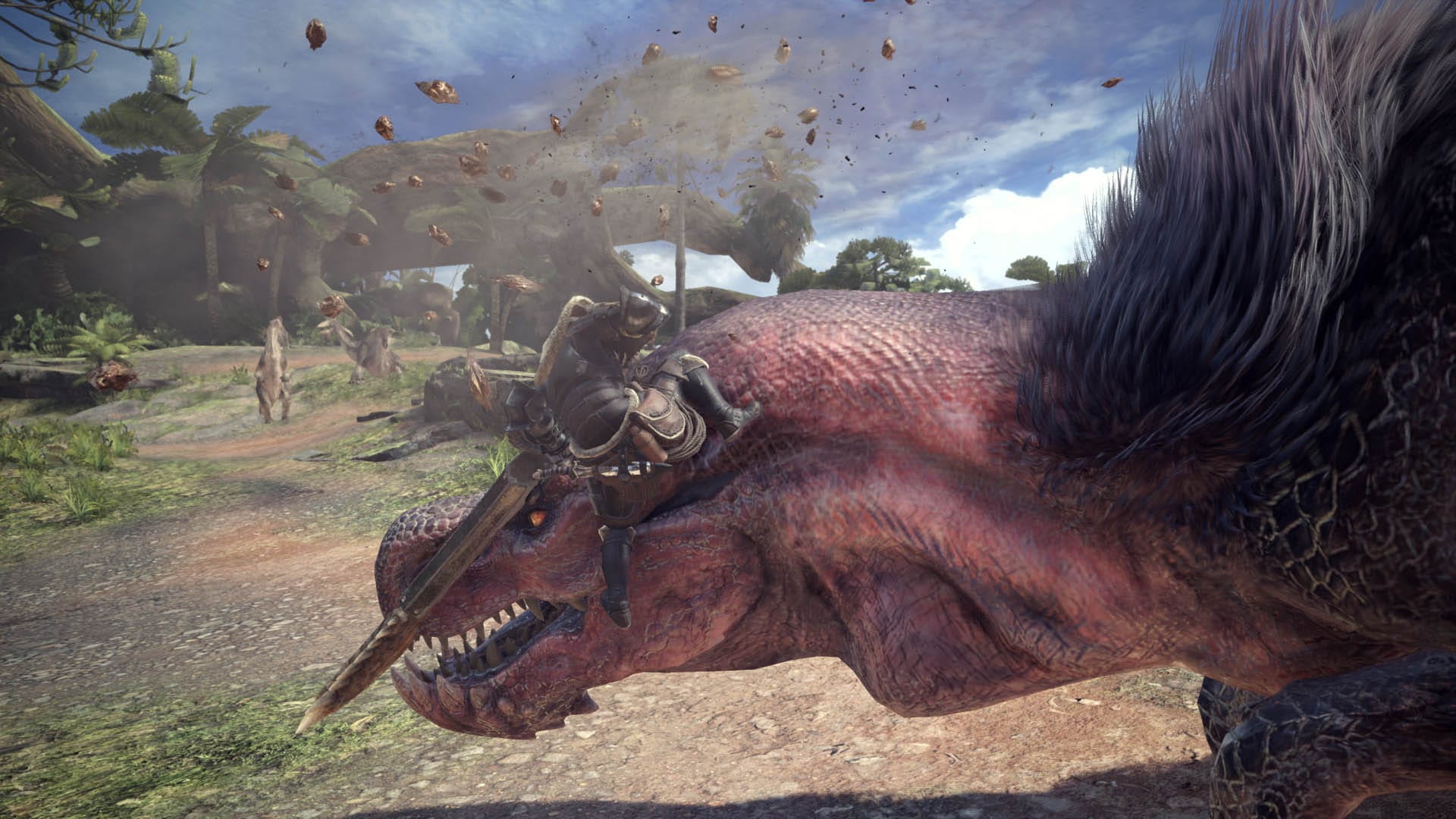
After creating your character, you play through a short but dramatic introductory sequence that helps familiarize you with the controls of the game. From there, it’s open season. Each of the game’s hunts will see you traipse across one of the game’s four large, open environs until you find some relevant trace of your quarry. You'll then pick up and follow the trail before eventually engaging your prey in combat.
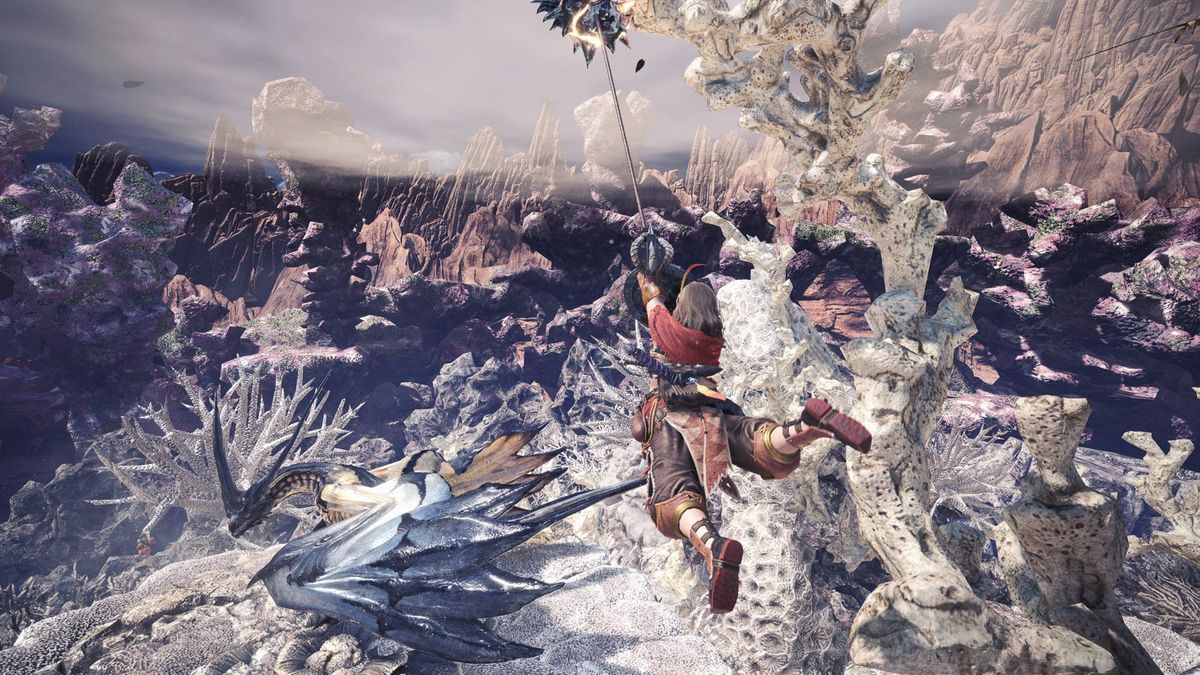
Speaking of those environments, there are times when Monster Hunter: World looks pretty ordinary amongst the likes of hyper-detailed blockbusters like Final Fantasy XV. However, there are equally plenty of other moments where it’s absolutely jaw dropping in its own right. The use of lighting, sound and level design really comes together here, resulting in sweeping vistas that do a lot to complement the earnestness of the premise.
Each of the open world maps in Worlds is a sprawling playground, filled with a literal ecosystem of flora and fauna that all interface with one another. As the hours tick by, the nuances of those interactions slowly seep to the fore. The game’s third environment – the Coral Forest – stands out as a particularly compelling example, but it's far from the only such instance.
The UI In Monster Hunter: World is a bit more of a mixed bag by comparison. For the most-part, it manages to hit the mark of good enough. Unfortunately, some of the interfaces for the crafting menus do end up feeling a lot more convoluted and clunky than they need to be. In addition, some of the text on the tutorial screens was so small I almost had to strain my eyes to read them. I can't speak to how these elements compare to the series' past installments but on this front, it does feel like there's room for improvement.
Big game hunter
On the surface, the combat in Monster Hunter: World fairly straightforward. As a newcomer, it definitely feels more approachable than what the series’ reputation had led me to expect.
There are a few combos for each weapon to remember. However, more-often-than-not, fights come down to your own preparation, focus and concentration more than they do any sort of stats on your weapons.
Over time, you get a sense of how each of the game’s colorful monsters fight. You learn when to dodge and when to retreat. Where to focus your attacks and how best to utilize the surrounding environment against your quarry. Battles are often prolonged affairs, with you chipping away at a monsters health until bit by bit.
Monster Hunter: World offers minimal indicators when it comes to the health of each monster, so you don’t really know how long it takes to defeat them until you’ve done so. This element of mystery encourages you to play conservatively wherever possible and makes the final taste of victory all that much sweeter. It's similar to something like Dark Souls, but not as punishing. If you die, you’ll usually get another attempt or two before you fail the hunt outright.
What's more, once it has established the basics, World opens up in terms of depth and detail. Even more impressively, it manages to avoid overwhelming you in the process.
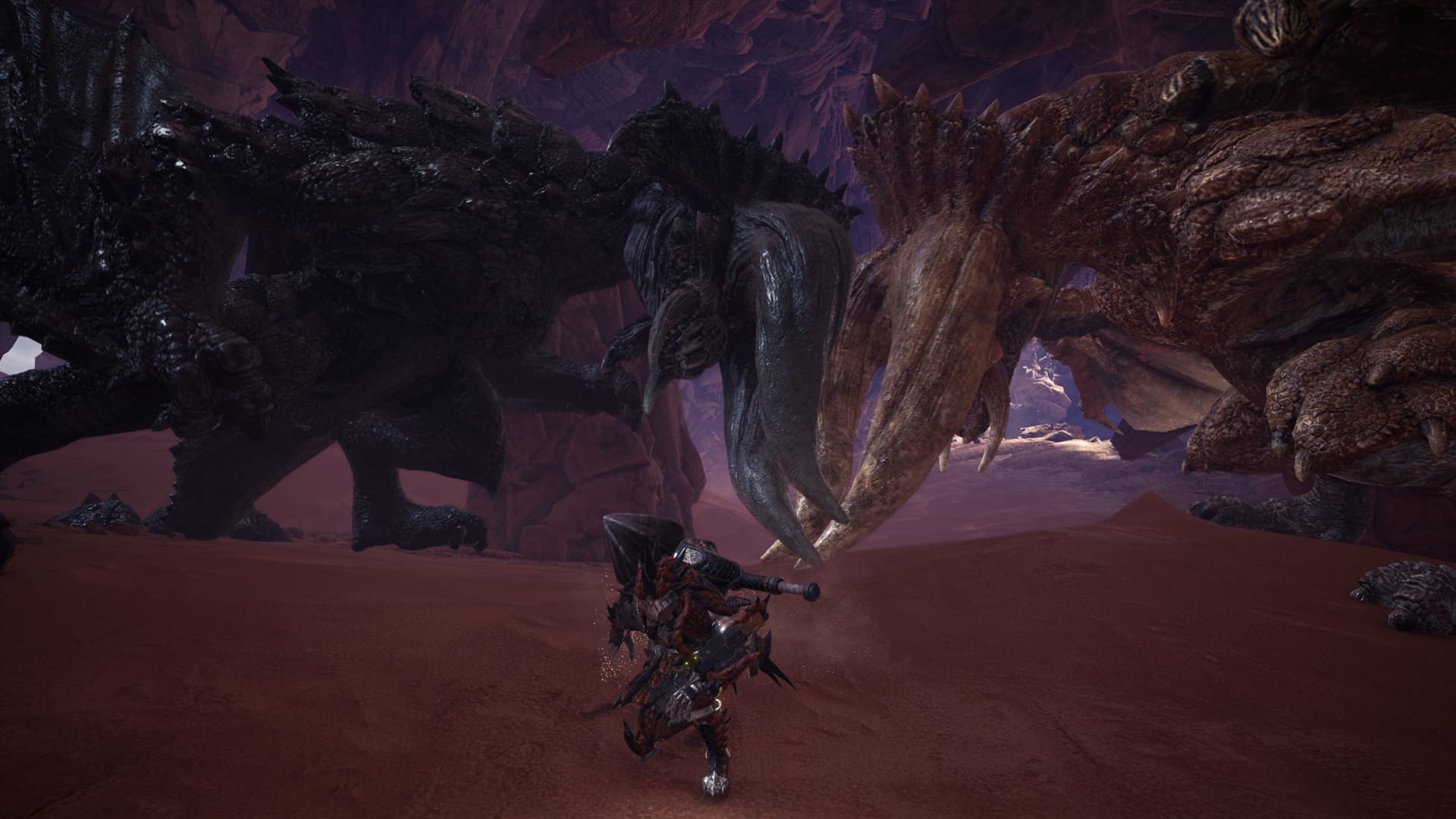
Ultimately, each monster is a problem for you to solve using the tool at your disposal. That freedom is intoxicating. This is true from the first monster you hunt all the way to the last. There are dozens of different weapon types in the game – 0from bows to axes to lances to ‘Insect Glaives’ – but all are equally viable. Players who want to learn and juggle a number of armaments are just as capable of besting the game’s menagerie of beasties as those who want to devote themselves to a single one.
Between hunts, you’re able to explore your home base and interact with various NPCs. You’ll be able to craft new armor and items and even order food at the canteen. This bestows statistical bonuses on you before a hunt, which can be crucial against monsters with elemental affinities.
Monster Hunter: World also lets create and customize a cat companion who will follow you around and fight alongside your side, called a Palico. This ensures that you have a fighting chance against some of the game’s more difficult beasts, even if you're reluctant to engage with the cooperative online multiplayer scene for the game.
That being said, Monster Hunter: World has been designed as the series' most flexible yet in regards to multiplayer. If you want to put in the time, you can probably get through pretty much all the main story missions on your own. It might just take a little longer or require a little more grinding beforehand.
Alternatively, you can fire off an SOS Flare whenever the going gets tough and you'll quickly be matched with other players attempting the same mission or just looking for a fight. Having multiple players (and Palicos) in the mix makes for a much easier time overall, though it can bring with it additional challenges.
During hunts, my Palico would actively distract monsters in fights and, later, rally other critters to my aid when the chips were down. You can even craft special weapons and armor for them to improve and upgrade their combat capabilities. Kitting out my Palico with increasingly ridiculous and adorable sets of armor was probably one of the most gleeful experiences I had with Monster Hunter: World.
The Bottom Line
Monster Hunter: World makes the thrill of the hunt – the hook that’s drawn many to the series in the past – more accessible and visually-arresting than ever before. I've dabbled with the franchise before, but this is the installment that managed to make me a believer.