RUINER (2020) review
A violent delight that left me unsatisfied

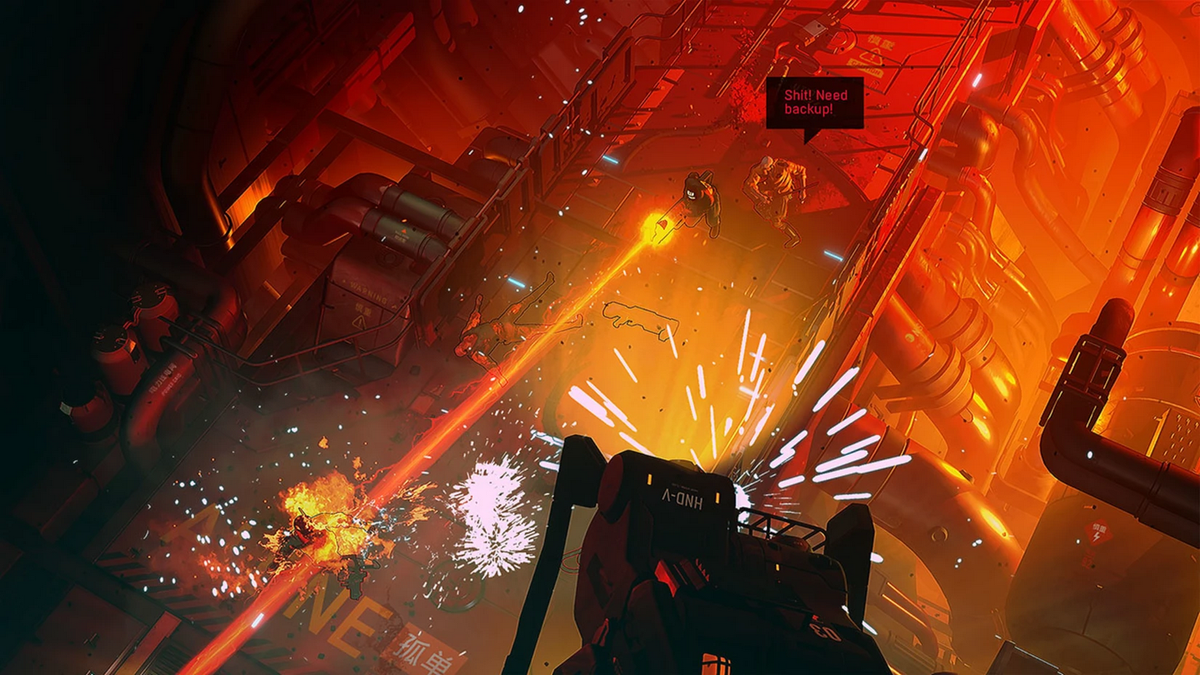
RUINER was a game I came away divided about when it first released.
Back in 2017, my review of the cyberpunk brawler admitted that “it's rare to find a game so striking in its absolute mastery of tone like RUINER is. However, while a good vibe can elevate an experience to greatness, all it can do to a mediocre one is disguise it a little. It's appropriately dystopian like that.”
Now, three years later, RUINER is available on Nintendo’s handheld hybrid. I decided to jump back in and give the game a second spin to see if it’s a better fit for the Switch than the PC and whether a few years of post-release polish have changed my read on it.
Leaner and meaner
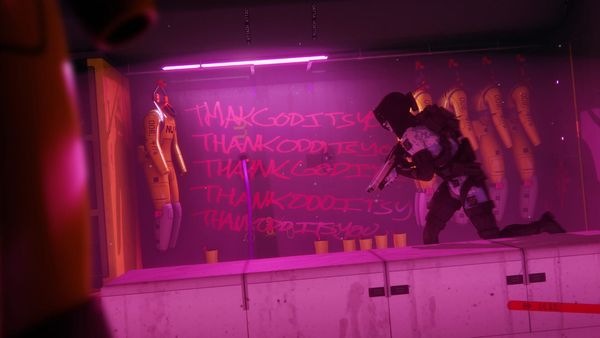
Set in a neon-lit cyberpunk metropolis, RUINER sees you take play as a nameless victim who has his brother kidnapped and his brain hacked. Now under the guidance of an enigmatic ally – known only as “her” – you’re on a relentless mission of revenge.
This main quest will see you stomp, shoot and slash your way through 14-levels of industrial-grade gunfire as you dart across, through and underneath the Reikon Games' dystopic vision of the future.
Mechanically, the description of RUINER as Hotline Miami meets Blade Runner still applies. You enter a level. Then, you kill everything between you and your target. There’s nothing in the way of that additional or exclusive bonus content. What you’re getting here is very much the same version of RUINER available on other platforms.
Your nameless, jacket-wearing, psychopath can take out enemies using both vicious melee attacks and a variety of scifi-flavored firearms, so there’s plenty of room for creative expression and improvisation amidst all the homicide.
The twist on the top-down, twin-stick brawler formula here comes in the form of the Karma system. Killing enemies (and melting down their weapons) earns you Karma, which can then be spent on unlocking and upgrading abilities for use in combat.
These preternatural improvements range from passive quirks like increased health to entirely new tools like hacking enemies to fight alongside you, dropping down shields to absorb incoming fire or activating a form of bullet time.
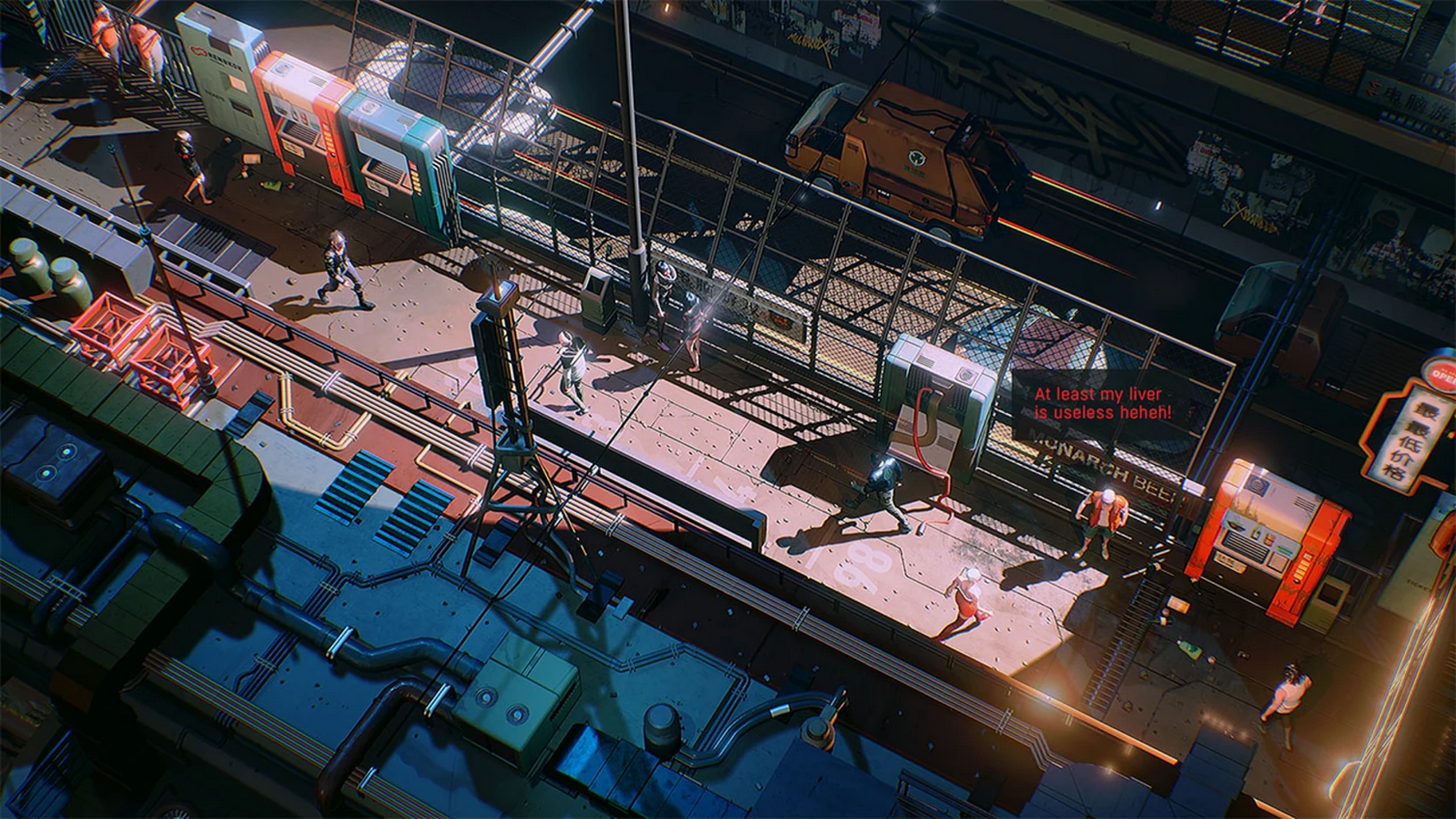
The first half of RUINER encourages you to pick one of these skills and stick with it. The latter all but necessitates combining them. Thankfully, there’s no cost or limit when it comes to subtracting and reallocating Karma points, which encourages you to experiment with the system whenever you run up against a particularly gnarly encounter or boss.
The core combat loop in RUINER on the Switch is more-or-less intact. However, where the PC version felt precise and polished, the Switch port feels messy by comparison. The experience of playing without the accuracy of a mouse means relying on the game’s soft-lock aiming is inevitably a clunkier outcome.
There’s a soft lock-on whenever you swipe the right joystick towards your enemies, but it’s not as reliable as you’d hope. Most of the time, I’d attempt to compensate for the difference and spend ages trying to get a single hit in. Over time, I tended towards more melee and shotgun-heavy play - since that meant I’d be forced to use the aiming system less.
You can tinker with this in the settings to make this lock-on a little more generous but, no matter how much I did this, the combat in this version of RUINER rarely felt as tight as it did on PC. It doesn’t help that the graphical downgrade and inconsistent performance found in this version of the game hurt the experience further.
The Switch version of RUINER doesn’t just play worse, it looks worse. The all-important vibe of the piece survives its transplant onto the handheld’s smaller LCD display but the environments and models lack much of the detail that previously made them so delighting to inhabit.
The difference between how the world of RUINER looks when you’re playing it and when you’re watching one of the game’s intensely-stylish cutscenes was already stark but here it sometimes feels almost comical. The frame-rate is also prone to sudden and dizzying drops, though – thankfully – I found this rarely happened during all but the most intensive combat sequences.
The Bottom Line
The compromises that have been made here really are a shame because, revisited on the Switch, the fast-paced hyperviolence of RUINER feels like a perfect fit for the Nintendo’s handheld. It’s easy to fit a quick level in and a delight to dip into these violent delights in short bursts. Despite the issues with it, I suspect I probably enjoyed playing through the game this time around much more than I did the last.
RUINER is good on the Switch but that just makes it easier to see how it could have been greater than the sum of its parts.