Sunless Skies (2019) review
No limits.

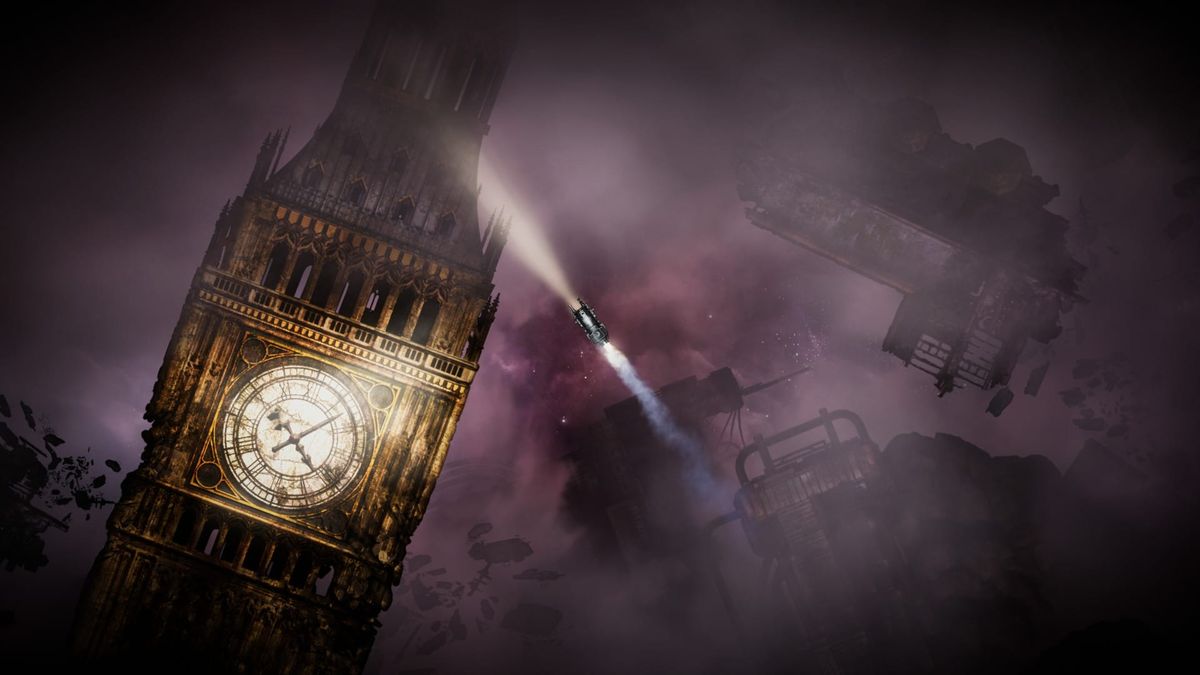
If you break the experience of Sunless Skies down to its elements, everything that’s magical about it becomes mundane.
Decision-making, resource management and exploration are all common in the marketplace of modern game design. There are plenty story-focused gaming experiences out there that try to pull from this same deck of cards. Of course, the knack has always been in how you play those cards.
If the dynamic between players and developers is a card game then the best are always going to be those who find a way to turn the familiar into the unfamiliar. The act of transformation that flips the known into the unknown and quietly morphs the mundane into the magical. It’s a polite lie but a necessary one. An illusion that leverages the sticky, ambiguous grey-space between the cards you’re dealt, the cards people think you’ve been dealt and the chain of suspicion tying the two together. Cause begets effect and in a world where perception is reality even illusions can be art.
Like its predecessor, Sunless Skies is a harrowing adventure game that blurs the lines between survival roguelike and decision-driven RPG. Set in an alternate version of history where the Victorian imperialism expands into the stars through eldritch means, you’re cast as the first mate on a ship that begins the game returning to the frontier (colloquially known as The Reach) after your last expedition went awry, leaving your vessel damaged and your captain on their deathbed.
Before long, you find yourself at the helm of your own ship and cast adrift into a world of Victorian decorum, cosmic horror and space trains.
Tabula Rasa
Out of the gate, you’re given the choice of choosing your captain’s attributes (stats) and their ambition (win condition). Each captain is a blank slate waiting to be filled in. You can become a soldier of fortune, a thrifty smuggler, an overeager explorer or an agent for one of the game’s factions.
Fulfill that ambition (or die trying) and you’ll be faced with a choice. Either reset to your last autosave or continue playing as a new captain. If you opt for the latter, you’ll inherit some your items, most of your earned experience and all of your progress when it comes to cartography. Multiple endings and additional ambitions are unlocked as you play along, so death eventually becomes a necessary part of the Sunless Skies experience if you want to see it all. Even after spending over forty hours in this world, there’s still so much to see.
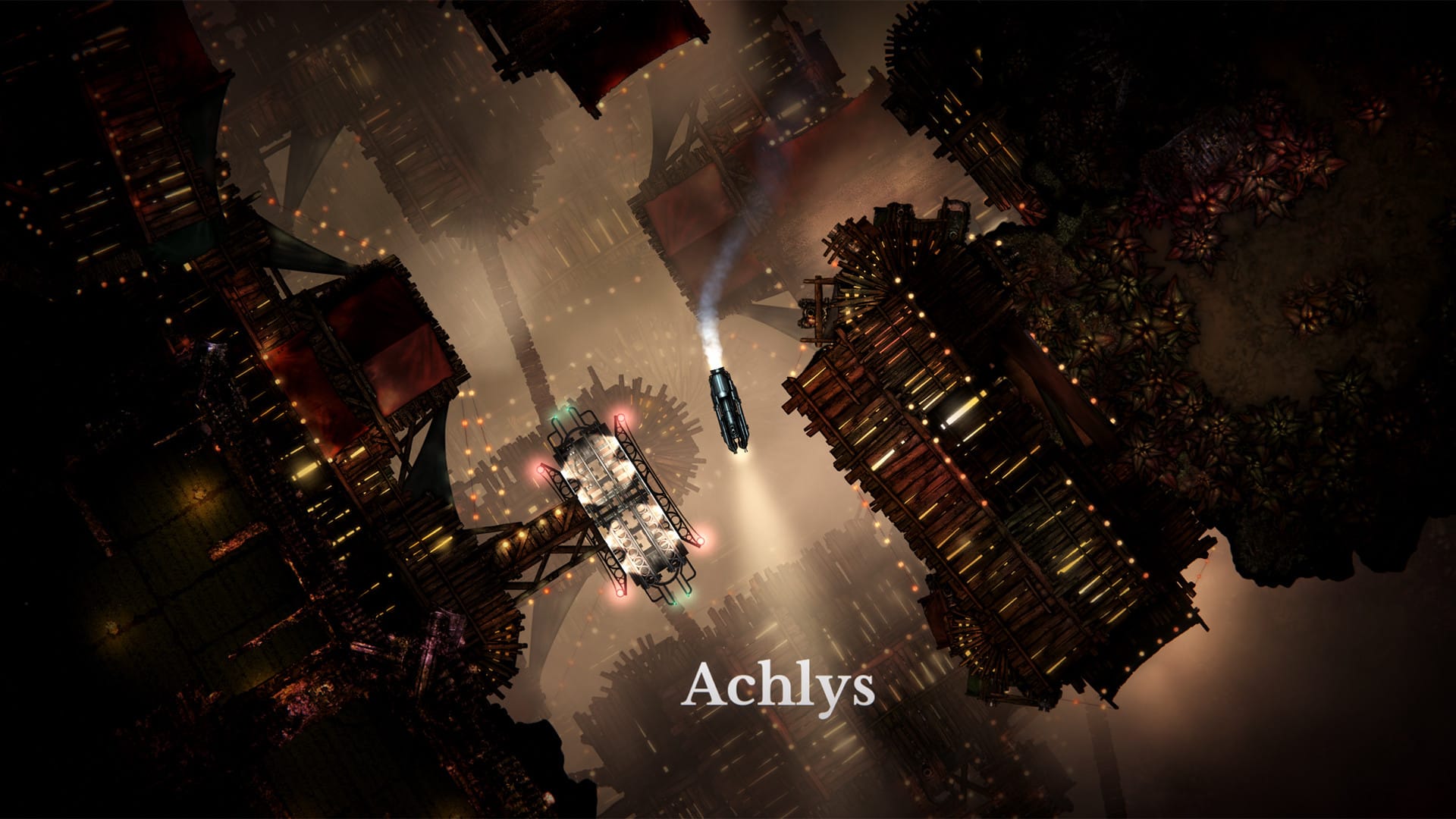
Regardless, the raw gameplay in Sunless Skies can be broken into two halves: Journeys and destinations.
When you’re out in the black, you control your ship (it’s more of space-train) using the keyboard/controller and fire your weapons (when necessary) using the mouse.
Combat isn’t especially complicated or deep but it does mesh well with the vibe of the piece. Like many aspects of Sunless Skies, it’s easy to pick up and geared to rewards patience above all. The trick is to pay attention. Running in guns blazing will cause your ship to overheat, leaving you vulnerable. Playing things smart, weaving out of the way of enemy fire and chipping away at their health is usually the way to go.
Though the details and visual design varies, there’s a consistent and gradual arc to the way you experience each region in the game. To start with, each map is one big unknown. You never know what will be around the next corner and you never know if you’ll make it back to port in time to restock and refuel your ship.
Once you’ve begun to fill in the map, you can start to optimize your gameplay. Need to go from A to B? You’re able to plot a course that’ll minimize both the time, fuel and risk involved. You start thinking like the space captain you are.
“You want me to smuggle some Chorister nectar to the folk over at Worlebury-juxta-Mare? Sure. I know how to do that.”
As with Sunless Seas, you also have to manage to the sanity of your captain and crew. If your terror or nightmare stats go too high, your crew will mutiny against you.
Though the setting, tone and lingering-fascination with tea parties set it apart, it’s easy to see the influence that space-trader sims like Elite and Freelancer have had on Sunless Skies. Whenever you dock at one of the game’s locations (or stumble upon random events like a wrecked ship or homestead), the focus shifts from top-down astro-navigation to interactive fiction. Sometimes the outcomes here are driven by your choices. Other times, they’ll be dependent on your captain’s stats.
Pursuing quest-lines and exploring each of the game’s four diverse regions will net you experience. Leveling up allows you to augment your character by filling in bits of their backstory with facets. If you’re keen to roleplay your character and pick the facets that make the most sense, you can. If you just want to see the numbers go up, that works too.
Even if death might be lurking around the corner, it always feels like you’re building momentum as you hurtle through the stars.
Chasing the clockwork sun
There’s a certain symmetry to be found in the way that all of Failbetter games position their respective settings as sources of danger and obstacles to be overcome.
That being said, there’s a thematic distinction to be made between the oceans of Sunless Seas and the vacuum of Sunless Skies. Oceans aren’t empty space. They conceal. They erode. They rise. They fall. By contrast, space feels a little more one-note. It’s big and it’s often more-or-less defined by its emptiness and desolation.
At times, those qualities work in this game’s favor though. There’s rarely a line of dialogue that doesn’t sing and the game’s aesthetic is positively dripping with flavor and detail.
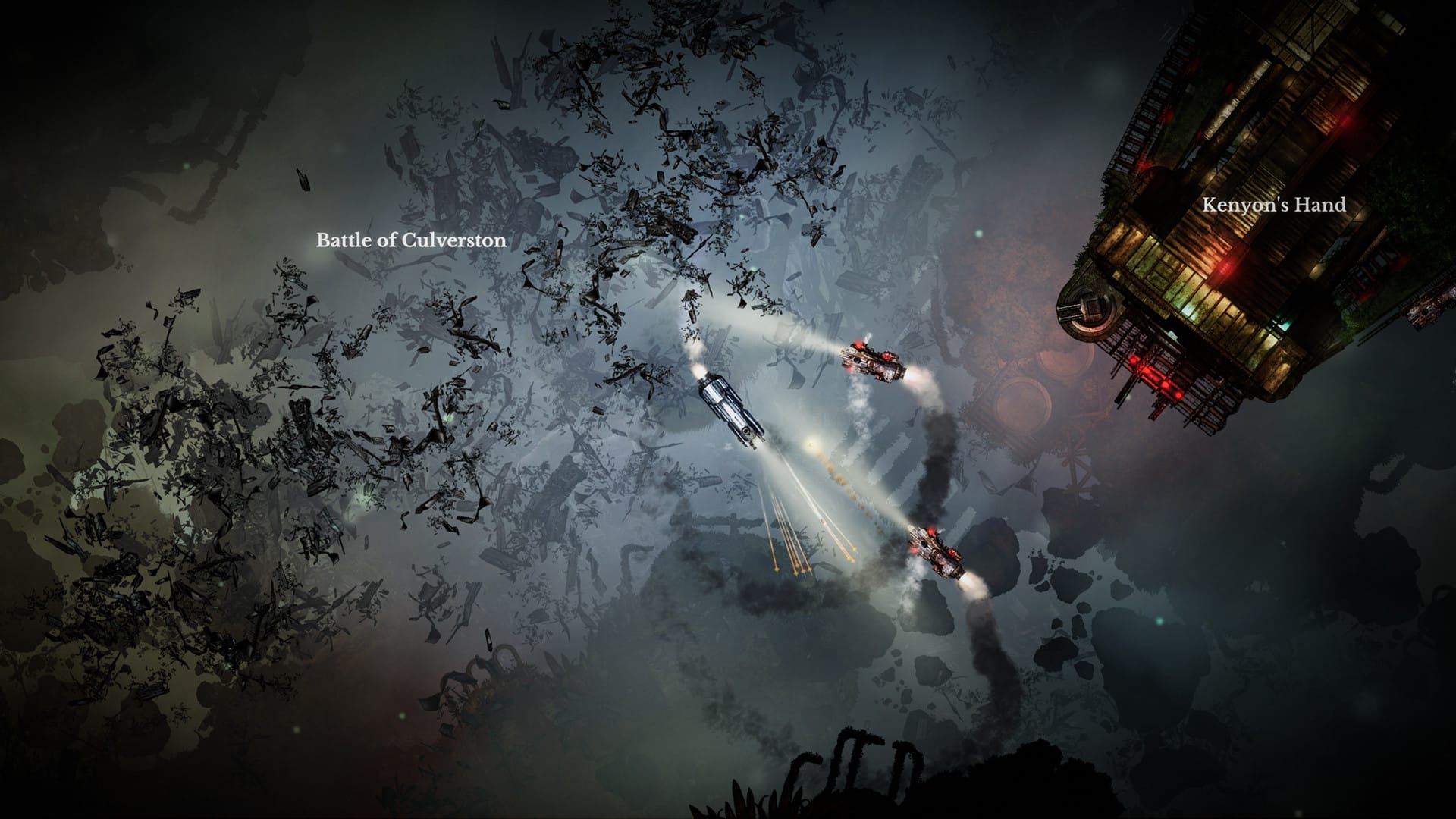
The sense of tone and atmosphere that Sunless Skies achieves in its quieter, liminal moments is dauntless to behold. There are games with ten times the budget of this that can’t make me feel dread in the way that this one does – let alone inspire me to keep coming back for more.
Even so, I came away a little underwhelmed by pull of the main narrative. Beyond the rich premise and an initial opening mission that saw me escort a horologist from one port to another, the opening hours of the game are pretty loose. There’s no central narrative hook or main plot that you can really rely on to pull you through apart from working towards your captain’s own initially-humble ambitions. Sunless Skies is a world filled with character, color and soul but it relies pretty heavily on the player’s willingness to take the initiative. You have to work for it.
My first few hours with Sunless Skies were a slog. I’d die again and again, my captain destitute, my crew distraught and my ship damaged beyond repair. I’d find quests that I had no idea how to complete and dialogue problems I couldn’t see a way to overcome. Things got frustrating real fast and, if I wasn’t reviewing this game, I honestly don’t know if I would have stuck it out long enough to actually start to find the momentum that carried me through the rest of my time with the game.
The in-game tutorial covers the basics really well but I really would have appreciated some better explanation about how the more advanced aspects of the game. Similarly, I felt a little dropped into the deep end when it came to the setting. I wish Sunless Skies had some sort of lore codex or explainer that helped give the story here the framing it deserves and gave me a better grip on the mythology of the Fallen London universe. Some voice-acting wouldn’t go amiss either.
The other caveat here is the performance hiccups. Sometimes, the game skips like a broken record. Other times, I’d choose a dialogue option and the next section of the encounter wouldn’t appear. There were plenty of instances where these irks snapped me out of the experience, and more than enough that I wanted to mention them here. Hopefully, these get resolved through post-launch patches sooner rather than later.
The Bottom Line
This isn’t a game about the journey, nor one about the destination. In many ways, it’s a game about the very idea of “place” itself. Identities and ideologies intermingle as you crisscross from the Reach to Albion to Eleutheria and then finally return to The Blue Kingdom. If you’ve lost hours to a Failbetter game before, safe to say you’ll be happy to do so again here.
But that’s just it. The effectiveness of the exquisite atmosphere, haunting sound design and razor-sharp prose in Sunless Skies are all based on a single assumption: that you’ve got to have time for this. That you’ll stick around for the long run. If you haven’t or aren’t willing to do so, the magic falls apart pretty fast. The illusion breaks down.
It’s one thing for a developer to play their cards just right and trick the player into seeing the game the way they want it to be seen. It’s quite another to maintain that masquerade. At some point, the player has to decide they want to continue be tricked. At some point, they have to make peace with the fact that the bulk of Sunless Skies is just flying through the same patches of empty space running the same sort of tedious errands.
If it was available on a more compact form-factor like mobile/tablet or the Nintendo Switch, maybe I might feel more gracious about this. Played on PC, Sunless Skies can feel overly geared towards slow-burn, long-term payoffs in a way that sometimes makes casual play feel tedious. It’s not a game that really respects your time, but it is one that respects your dedication. It’s the kind of game where if you don’t love it, you’ll probably hate it.
Sunless Skies is a tremendous piece of work and a more than worthy follow-up to Failbetter's earlier games. It plays its cards right, and it feels like everyone involved brought their A-game. Yet, it asks something from you in return.
Sunless Skies asks you to to overlook its sins. The near-glacial pacing, shallow combat, repetitive design and insufficient on-boarding. Sometimes that’s a hard ask. Frequently, the narrative experience you get in return makes it a price worth paying. I can’t speak for everyone who tries this game but I like to think the latter applies here more oft than not.
Sunless Skies offers a world of few limits and rich storytelling but its open-ended design isn’t going to be for everyone.