Sunless Skies (2019) review-in-progress
There and back again.

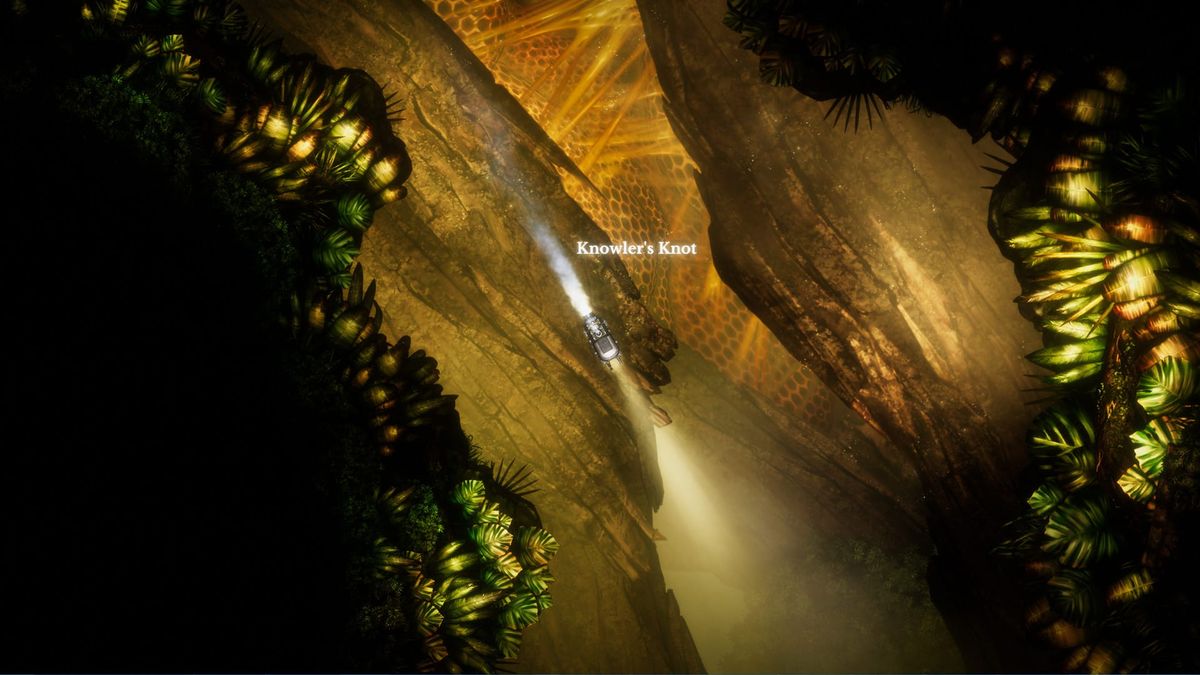
Most games have a target audience but Failbetter Games feel like a studio with an even more specific kind of player in mind. Putting it bluntly, the developer is after players with an appreciation for worldbuilding, plenty of patience, and more time than money.
Most well-known for their browser game Fallen London, Failbetter expanded into the wider indie games space with Sunless Seas in 2017. Now, it's setting its sights even higher with Sunless Skies.
Like its predecessor, Sunless Skies is envisioned as a harrowing adventure game that blurs the lines between survival rogue-like and branching RPG. It casts you adrift in a world of Victorian-era decorum, cosmic horror and space trains and asks you find your destiny among the stars. The game begins with you as the first mate on a ship that begins the game returning to the frontiers of The Reach. Your last expedition went awry, leaving your vessel damaged and your captain on their deathbed.
Before long, you’ll find yourself promoted and set loose among the cosmos. Though compelling, that open-ended framing ends up being both the root cause of both Sunless Skies’ highest highs and lowest lows.
The skies the limit
Out of the gate, you’re given the choice of adding choosing your captain’s attributes – AKA your stats – and ambition – essentially, your win condition.
Fulfill that ambition (or die trying) and the credits will roll. If you do perish in pursuit of your ambitions, your next captain will inherit some your items and most of your world-state. Like Sunless Seas, Sunless Skies offers multiple endings and additional ambitions are unlocked as you play along. Each captain is a blank slate waiting to be filled in.
You can become a soldier of fortune, a thrifty smuggler, an overeager explorer or an agent for one of the game’s factions. Regardless of which path you choose to go down, the gameplay in Sunless Skies breaks down into two halves. The journey and the destination, if you like.
The first part of the experience encompasses flight, navigation, combat and exploration. When you’re out in the black, you control your ship using the keyboard/controller and fire your weapons using the mouse. Combat isn’t especially complicated or deep but it is easy to pick up.
The trick is to pay attention. Running in guns blazing will cause your ship to overheat, leaving you vulnerable. The most effective approaches tend to involve playing things smart. Weaving out of the way of enemy fire and chipping away at their health will get you a lot further than a frontal assault. On this front as much as any other, Sunless Skies rewards patience.
In line with the premise, there’s a gradual arc to the way you experience each region in the game. To start with, the map will be one big unknown. You never know what will be around the next corner. Then, once you’ve begun to fill in the map, you start to optimize your journeys. Need to go from A to B? You’re able to plot a course that’ll minimize both the time, fuel and risk involved.
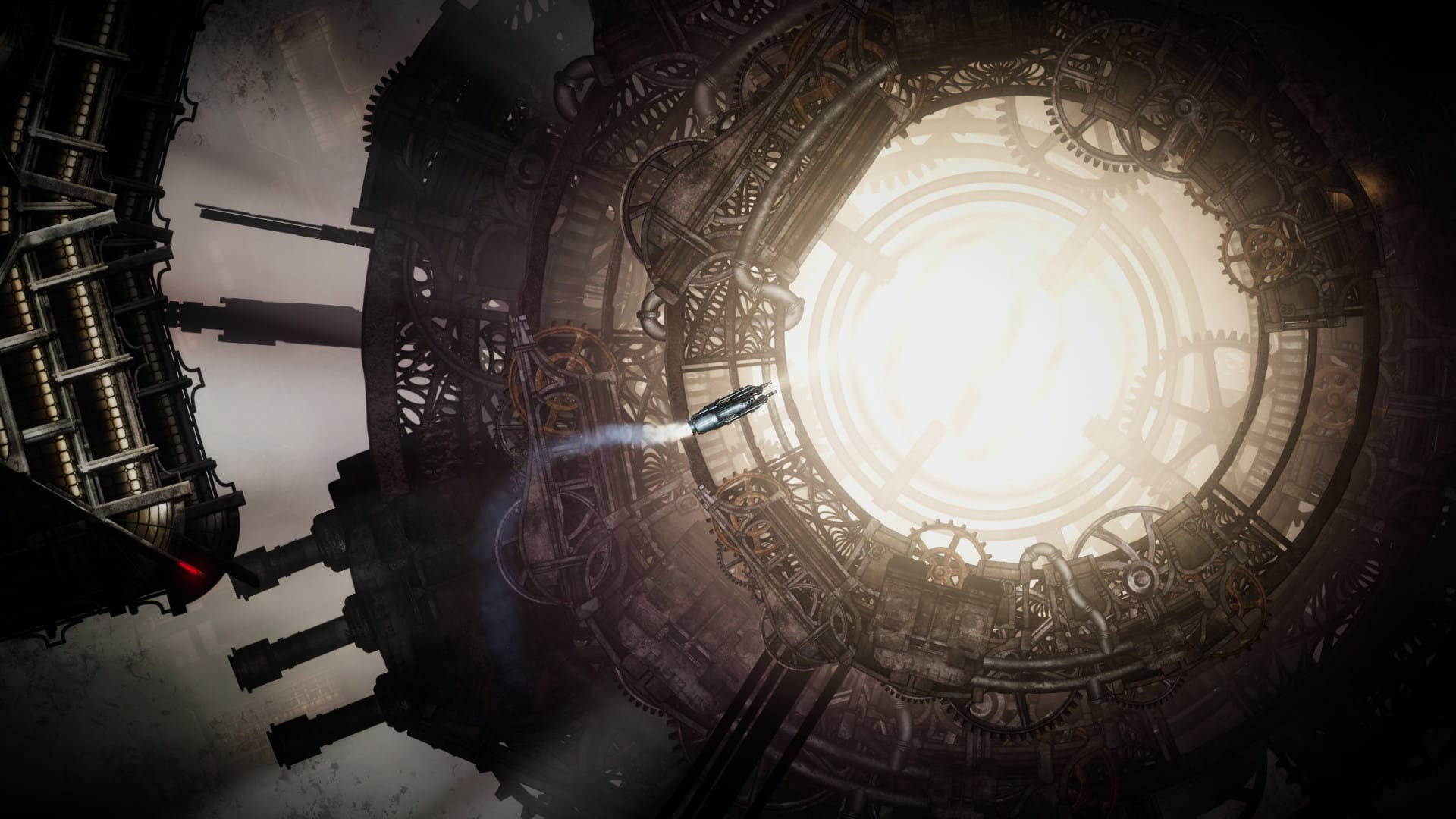
Pursuing quest-lines and exploring each of the game’s four diverse regions will net you experience. Leveling up allows you to augment your character by filling in bits of their backstory with Facets. These bonuses are rooted in narrative. For instance, you might be better at certain skill challenges because of an experience in their past. It's all very inspired by tabletop RPGs and a stark contrast to the usual conventions of the genre.
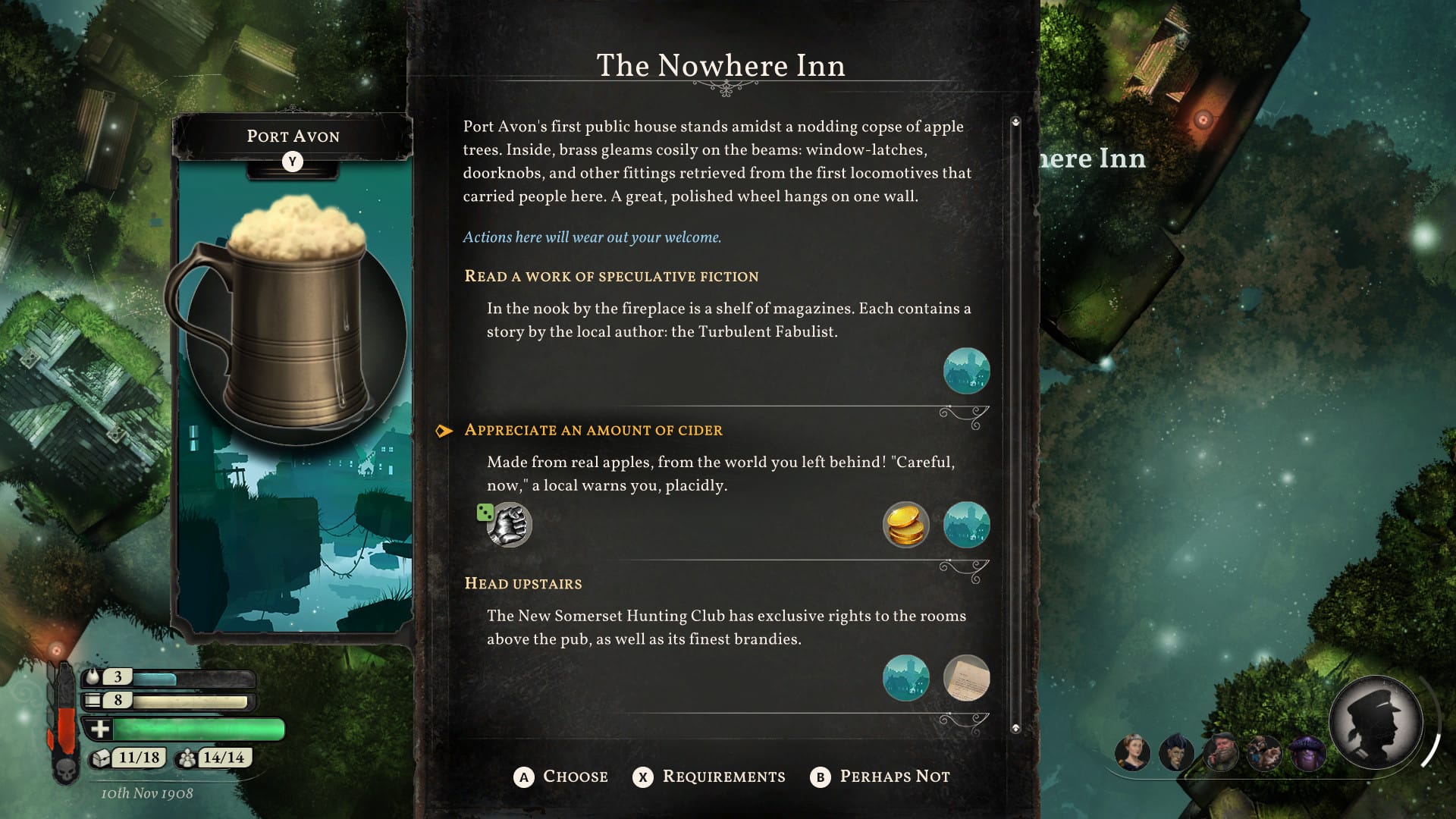
Whenever you dock at one of the game’s locations, or stumble upon a wreck, the game transitions to a choose-your-own-adventure-style interactive fiction encounters. Sometimes the outcomes here are driven by your choices. Other times, they’ll be dependent on your captain’s stats.
Counting Stars
There’s a certain symmetry to be found in the way that both Seas and Skies position their respective biomes as sources of danger and obstacles to be overcome.
However, thematically, there’s a distinction to be made between the oceans of Sunless Seas and the vacuum of Sunless Skies. Oceans aren’t empty space. They can rise, fall, erode, conceal, and reveal.
By contrast, space feels a little more one-note. It’s big and it’s often more-or-less defined by its emptiness and desolation. At times, those qualities work in the game’s favor. The sense of tone and atmosphere that Sunless Skies achieves in its quieter, liminal moments is breathtaking to behold. That said, I came away a little underwhelmed by the gravity of the main narrative.
Sunless Skies offers a world filled with character, color and soul, but it relies pretty heavily on the player’s willingness to take the initiative and find those things.
Beyond the rich premise and an initial opening mission that saw me escort a horologist from one port to another, the opening hours of game are so light-handed its easy to lose interest. There’s no central narrative hook that you can really rely on to pull you through if you're not sure where to go next. As a result, my first few hours with this game were a slog. I’d die again and again, my captain destitute, my crew distraught and my ship damaged beyond repair.
Things got frustrating real fast and, if I wasn’t reviewing Sunless Skies, I don’t know if I would have stuck it out long enough to actually start to find momentum with it.
Failbetter have opted for a less is more approach here in an attempt to not overwhelm players. However, having a little more structure beyond my character’s initially broad motivation to would have gone a long way towards making the early game a bit more enjoyable and a little less of a grind. I wish the game had some kind of explainer for series newcomers like myself that would help give the story and setting here the framing it deserves and explain some of the mythology of the setting.
It feels like everyone involved in Sunless Skies has really flexed when it comes to the art, writing and sound design. There’s rarely a line of dialogue that doesn’t sing and the game’s aesthetic is positively dripping with flavor and detail.
As such, it's a shame that Sunless Skies suffers from the performance hiccups it does. Sometimes, the game skips like a broken record. Other times, I’d choose a dialogue option and the next section of the encounter wouldn’t appear. I never encountered anything outright game-breaking but there were plenty of instances where these issues snapped me out of the experience.
The Bottom Line
As someone who never found the time to dive into Sunless Seas but has always been in envy of the enthusiasm accrued by those who have, I relished the chance to try and experience the Fallen London universe for myself.
However, in spite of the impeccable atmosphere, sharp dialogue and rich setting, I couldn’t help but feel a little turned off by the apparent-disrespect that Sunless Skies seemed to have for my time. If it was available on a more compact form-factor like a smartphone or the Nintendo Switch, maybe I might feel differently. Played on PC, the gameplay loop feels geared towards long-term payoffs in a way that sometimes makes casual play feel tedious.
Everything that works about this game hinges on the assumption that you’ll be okay with that. After a dozen or so hours with it, I get the sense that Sunless Skies is fundamentally a sink-or-swim experience. Those who don’t love it, will probably hate it.
For some, Sunless Skies is going to be an arduous journey. For others, it’ll be a vivid destination.