The Elder Scrolls: Blades (2020) review
A decent dungeon crawler that eschews the series' strengths.

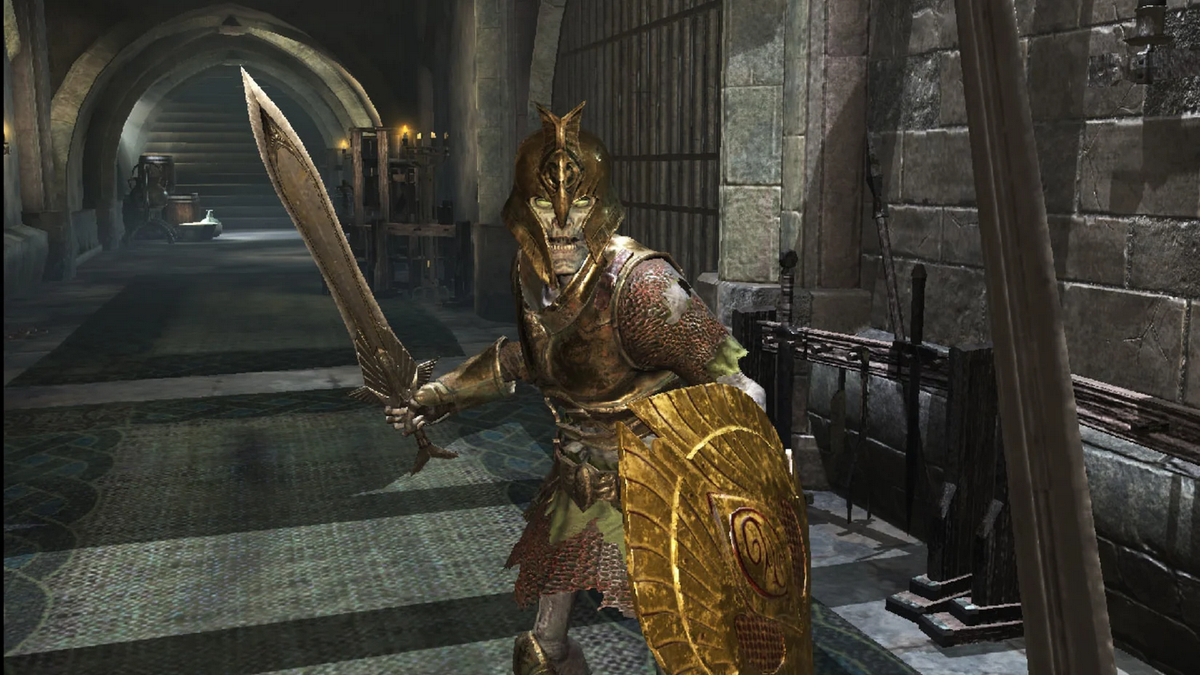
When you think about how Bethesda first pitched the mobile installment of their popular fantasy RPG series, it becomes hard to reconcile that with the reality of what they’ve delivered. I’m not trying to drag Blades too sharply. I played enough of it to know I like it. However, the whole affair feels undercut by a lack of ambition and – love it or hate it – the Elder Scrolls franchise has never really lacked for ambition.
Elder Scrolls: Blades isn’t what it could be. Even so – and especially now that I've sunk some time into the game on the Nintendo Switch – I'd still call it a decent mobile dungeon crawler. It’s no Skyrim, but it’s not really trying to be one either.
The journey
The Nintendo Switch version of the Elder Scrolls Blade is more-or-less identical to the version you’ll be able to find on either the iOS or Google Play app stores. You download it, undergo a brief tutorial that runs through the combat and feeds you the setup for what storytelling there is here.
Blades takes place sort-of between Oblivion and Skyrim but it's not nearly so grandiose as either. In it, you play as a former-Blade in exile. Your hometown has been ransacked by a group of mercenaries and it’s up to you to rebuild, restore order to the region and expose the sinister forces behind the attack.
Like other installments of the series, The Elder Scrolls: Blades is primarily experienced from a first-person perspective and it generally operates in two different modes.
The first sees you explore, upgrade and interact with the citizens living in your hometown. It’s an echo of what’s involved in games like Oblivion but a shallow one at that. Your town in Blades isn’t very large and where other Elder Scrolls games have casts of characters that number in the hundreds and a slew of diverse locales, Blades is only interested in about a dozen individuals and only one proper location.
That being said, you do have a little more agency when it comes to what that location looks like than older Elder Scrolls games.
A bit part of the meta-game here involves rebuilding and raising both the player utility and prestige level of your town. Maybe you want to invest in a smith, so you can repair your items and forge new weapons. Perhaps you want to invest in an alchemist's lab so you maintain a stockpile of potions to fall back on.
This is a pretty familiar trope of mobile game design but it kind of works here in that it gives you something to invest time and resources in upgrading beyond just yourself. It’s a little flavorless but the more time you spend in it as a hub location between quests, the more the town in Blades feels like home.
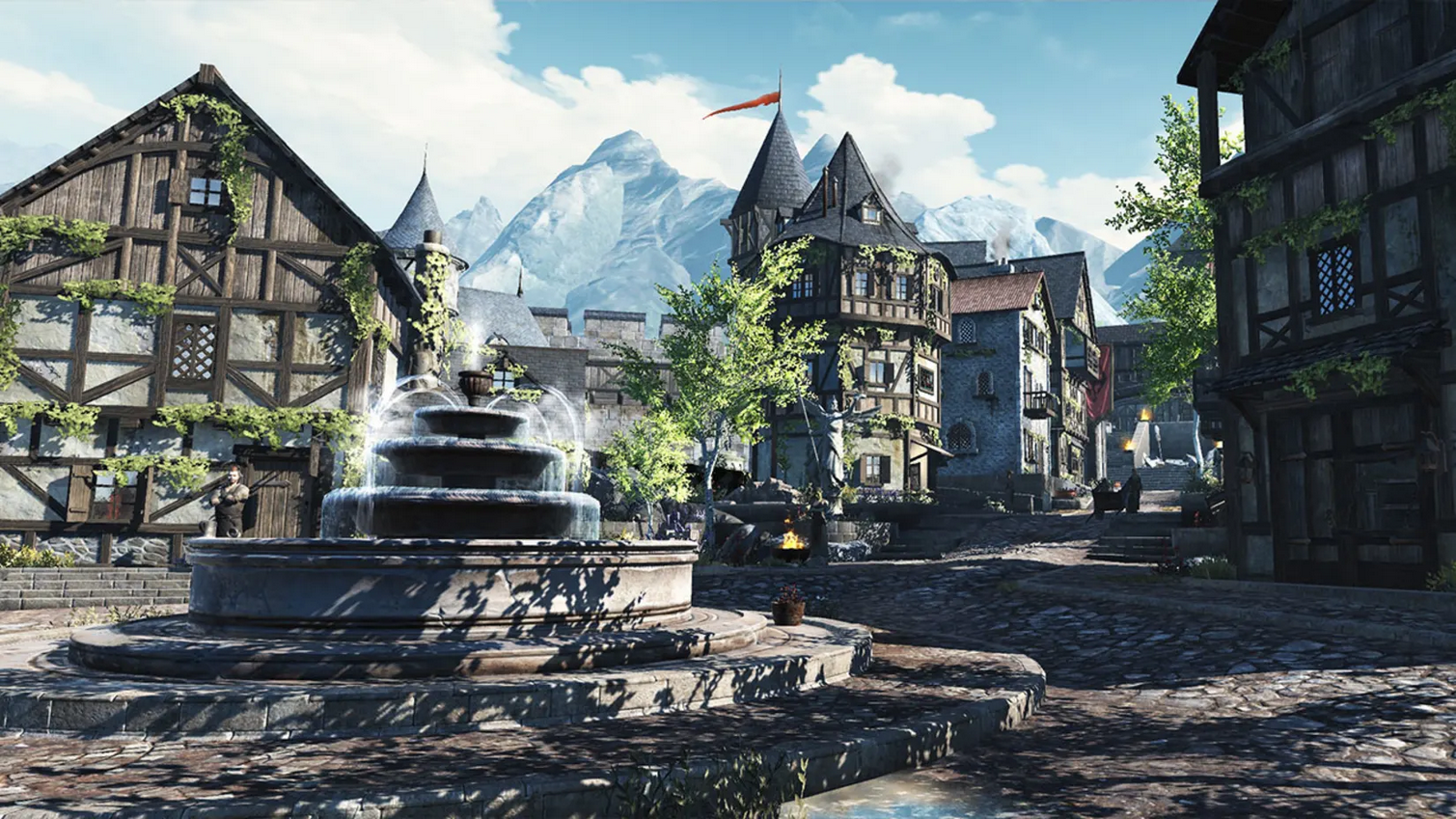
Nevertheless, it’s a shame that the process of upgrading and investing in your town’s infrastructure is so linear and limited. Decorations aside, there’s little incentive to build up your town in any way but the obviously optimal one. You’re never making any interesting decisions in what to put in your town beyond determining what investments are worth prioritizing.
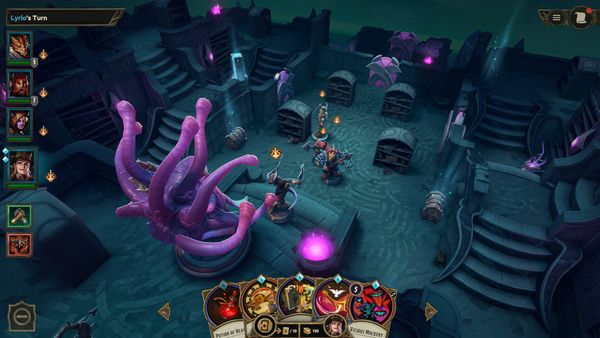
The other mode that Elder Scrolls: Blades operates in sees you venture out from your town on quests. These are usually no more than five minutes in length. Some of them are story focused. Most aren’t. Usually, you’re just out there killing ten trolls or collecting eight piles of lumber.
Personally, combat in the Switch version of the game feels a lot more engaging than that of the mobile version. Most of this is due to the physical buttons involved. There’s a nice rhythm to swinging your weapon left and right, notching up the right timing to earn yourself a combo or critical hit.
The first dozen or so hours of combat in Blades are a bit of a breeze but by the time you hit the mid-game, things begin to get a little dicier. Weirdly, as someone who has always found the combat in the Elder Scrolls games to be a bit weightless and unsatisfying, the arcade-style action encounters in Blades actually made for more memorable fights. They’re fast and broadly dictated by your base stats but peppered with moments of micro-strategy where the quick thinking or precise timing can save you from taking a lot of damage.
The destination
The real issue here seems like, the more time I spent playing Blades the more it only wanted to give me high-difficulty missions, which usually involved some sort of grinding to overcome. Though perfectly functional and satisfying as it is to smash through a handful of quests in your lunch break, it feels like Bethesda are rarely trying to push the tech here to its limits when it comes to storytelling.
Despite the occasional attempt to be otherwise, the vast majority of the quests in Blades are as by the numbers as MMORPG and mobile games come. Given how robust the tool-set for these missions seems, it’s a shame they didn’t try a little harder. I wish we lived in the world where I could recommend non-pandemic-crazed players looking to jump into Blades do so with the promise that there’s some good writing here but there isn’t. There isn’t even in-game literature to collect.
Tamriel isn’t my favorite fantasy setting but it’s so easy to imagine a version of Blades that feature small, meaningful ventures into that fiction. Sure, mechanically, the quests in this game do have to conform to a set of familiar structures but there’s so much room in those limitations for interesting writing. A version of this game where the in-game lore is on par with something like Destiny’s grimoire cards would be something I’d be actively trying to sell my friends on playing.
Another issue here is that the Switch version of the game seems noticeably buggier than the mobile version. Often-times, I’d have the game freeze out or disconnect for seemingly no reason. Sometimes the controls would just lock up in the middle of a fight. Other times, the frame rate would plummet for no foreseeable reason. All of these things are bad and I hope that post-launch patches address them.
I wouldn’t go so far as to call Blades a pay-to-win but it is a free-to-play game and it isn’t subtle about trying to obnoxiously sell you its microtransations. Weirdly, there are no XP boosts here – though the game might benefit from them. Just loot crates, cosmetics for your town, PVP emotes and resource packs designed to fast-track your progress through the game’s crafting system.
You can also buy gems, which have a ton of time-saving uses – such as letting you cheat a potential death or instantly finish building a structure. I made my way through the game without spending a cent, but I wouldn't blame you for doing otherwise.
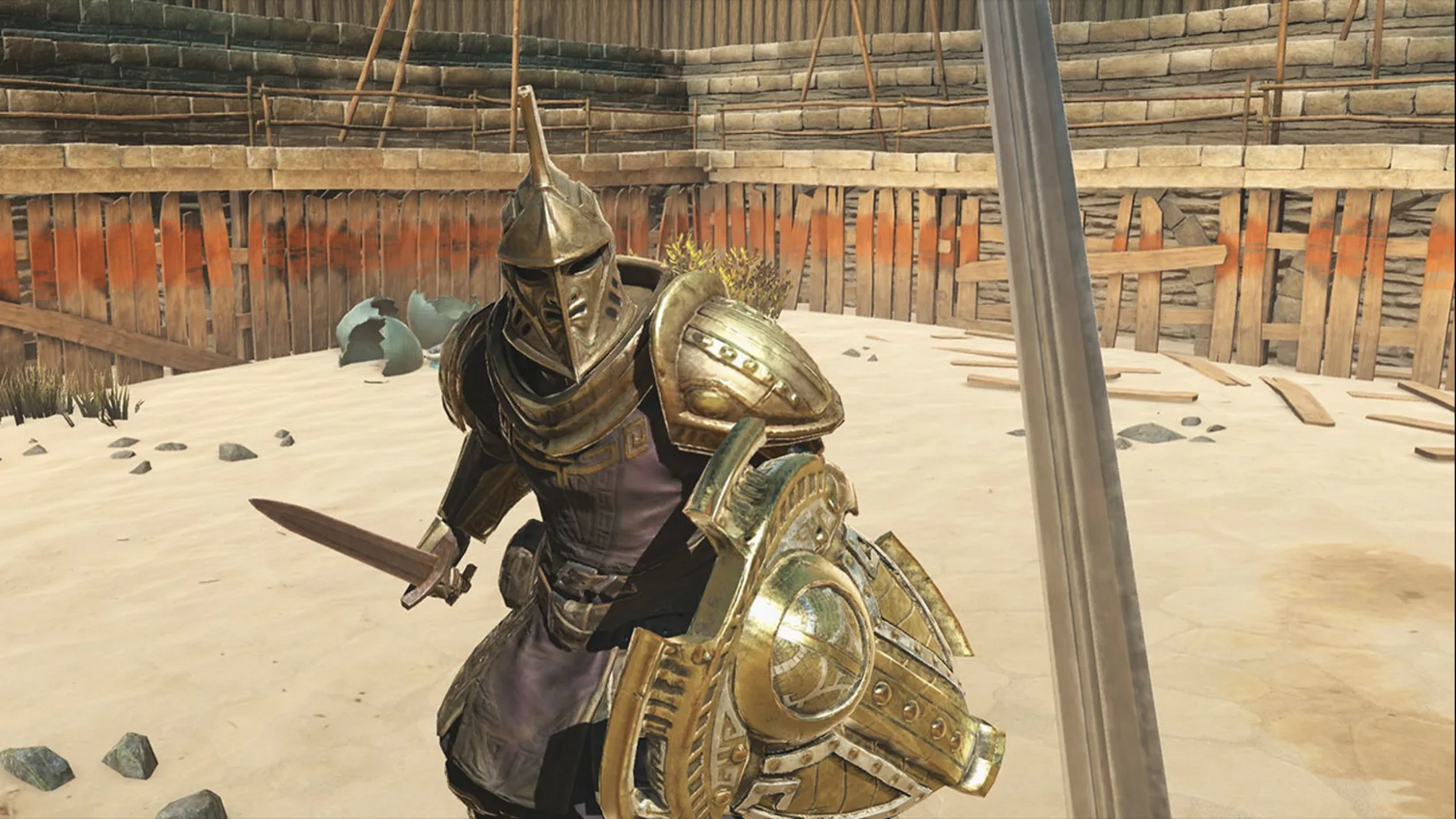
Finally, there’s also PVP mode called Arena. As the name suggests, this lets you throw yourself against other players in best of three single combat encounters. It’s fine but it’s a bit of a mixed bag in terms of whether or not the latency makes the real-time combat in the game feel all that fair.
The Bottom Line
I’ve sunk way too many hours into the Nintendo Switch version of Elder Scrolls: Blades to be that mad at it, but I am a little disappointed.
As someone who has recently dumped a ton of time into MMORPGs like World of Warcraft and Star Wars: The Old Republic, I found it hard not to think about how those games found compelling ways to embrace the high-quality storytelling that their respective settings are known for despite the limitations when it comes to the gameplay involved. It’s a shame Blades just doesn't quite get there when it would be such an easy and obvious way for Bethesda to make their mobile dungeon crawler feel special or different.
The Elder Scrolls mobile game is a great fit for the Switch but this version of Blades doesn’t suddenly solve any of its larger shortcomings. If you’re after a decent loot-grind game, you could do worse. However, after more than a dozen hours with it, I can’t help but feel like Bethesda could do better.
I want to play the version of this game where you have as many ways to build your character as you do the other Elder Scrolls games, story-driven quests that stand out or the ability to visit the towns that my friends have build.
The Elder Scrolls: Blades lacks many of the series’ traditional strengths but the areas where it does shine, however briefly, suggest that it could still find room to deliver in ways that those games couldn’t.