X-COM: Chimera Squad (2020) review
Firaxis' tactics spin-off trims the fat but doesn't lose the thrills

After War of the Chosen added ample flesh to the bones of an already-ambitious sequel, I honestly wasn’t sure if we’d ever get another installment of Firaxis’ extraterrestrial tactics series. Where do you even take things from here?
Having defended the world against alien invaders and inspired an uprising to free it after failing at the former, X-COM as a series seemed to have found itself in something of a design cul de sac. With mods like The Long War filling in the gaps, any new installment has to provide more than just more levels or enemies.
Chimera Squad brings that metaphorical down to street-level. Rather than raise the stakes, the spin-off opts to rethink them entirely. Where previous X-COM games saw you wage grand guerilla wars against alien invaders and oppressors respectively, Chimera Squad sees you fight to maintain the fragile peace between the alien, human and hybrid citizens of City 31.
More like X-COP, amirite?
If X-COM 2 flipped the series' big picture meta-game on its head, Chimera Squad hones in on the smaller details. While there are plenty of similarities between this and the action of previous X-COM games, the fundamental differences here are going to stand out to series veterans in a very real way.
To begin with, Firaxis have changed up the traditional tempo of firefights. Rather than land on a map and spend the first half-dozen turns getting your squad in position before opening fire, Chimera Squad cuts right to the chase. It's less of a marathon and more a series of sprints.
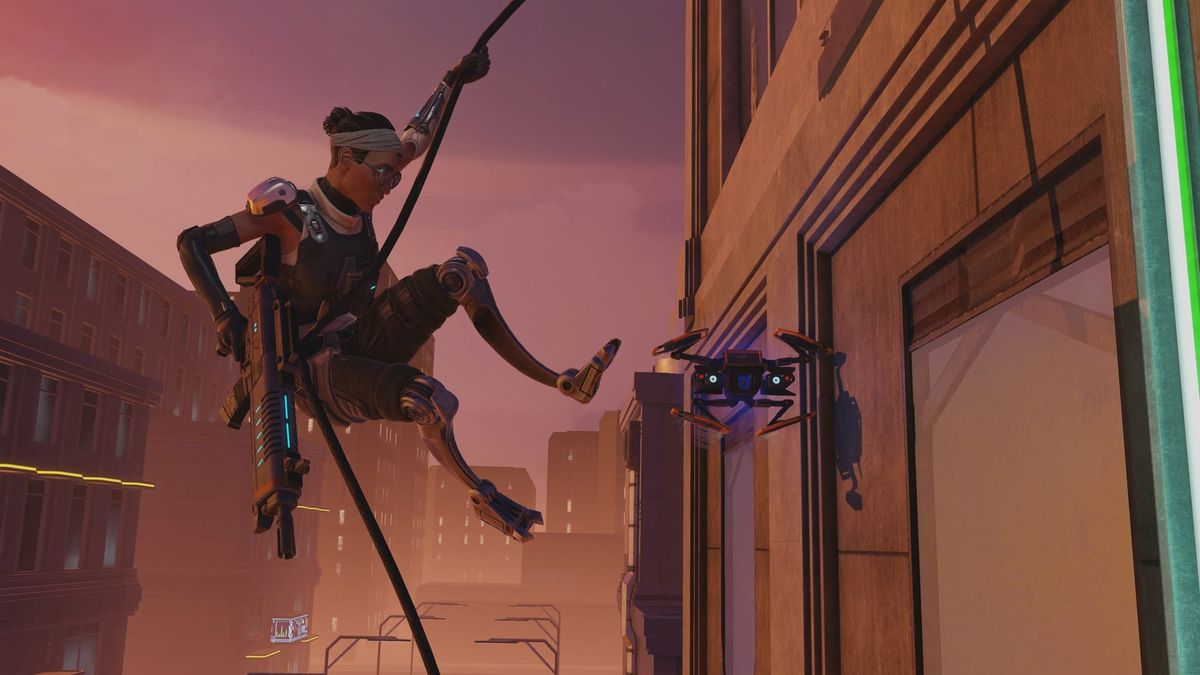
Every mission in the game is broken into a series of discrete encounters. Each of these skirmishes begin with your team breaching the enemies defenses and opening fire. This framing makes for a natural fit for the game’s more cinematic camera angles and pulls you into the action that much quicker.
There’s some room for experimentation here as certain encounters allow for exclusive or advantageous breach opportunities if you have the right equipment. Sometimes, it makes more sense to split up the team. Other times, you'll find yourself balancing the risks of opening yourself up to a counterattack in exchange for a guaranteed hit elsewhere. Regardless, bursting through the walls to take the bad guys by surprise never stops feeling cool.
Once you’ve cleared the encounter of enemies and completed any critical objectives, Chimera Squad immediately cuts to your team prepping to breach the next roomful of enemies. Compared to previous entries in the series, this abridged pacing feels like a real trimming of the fat. It’s a welcome bit of streamlining that almost serves to make older entries in the series feel cumbersome and tedious by comparison.
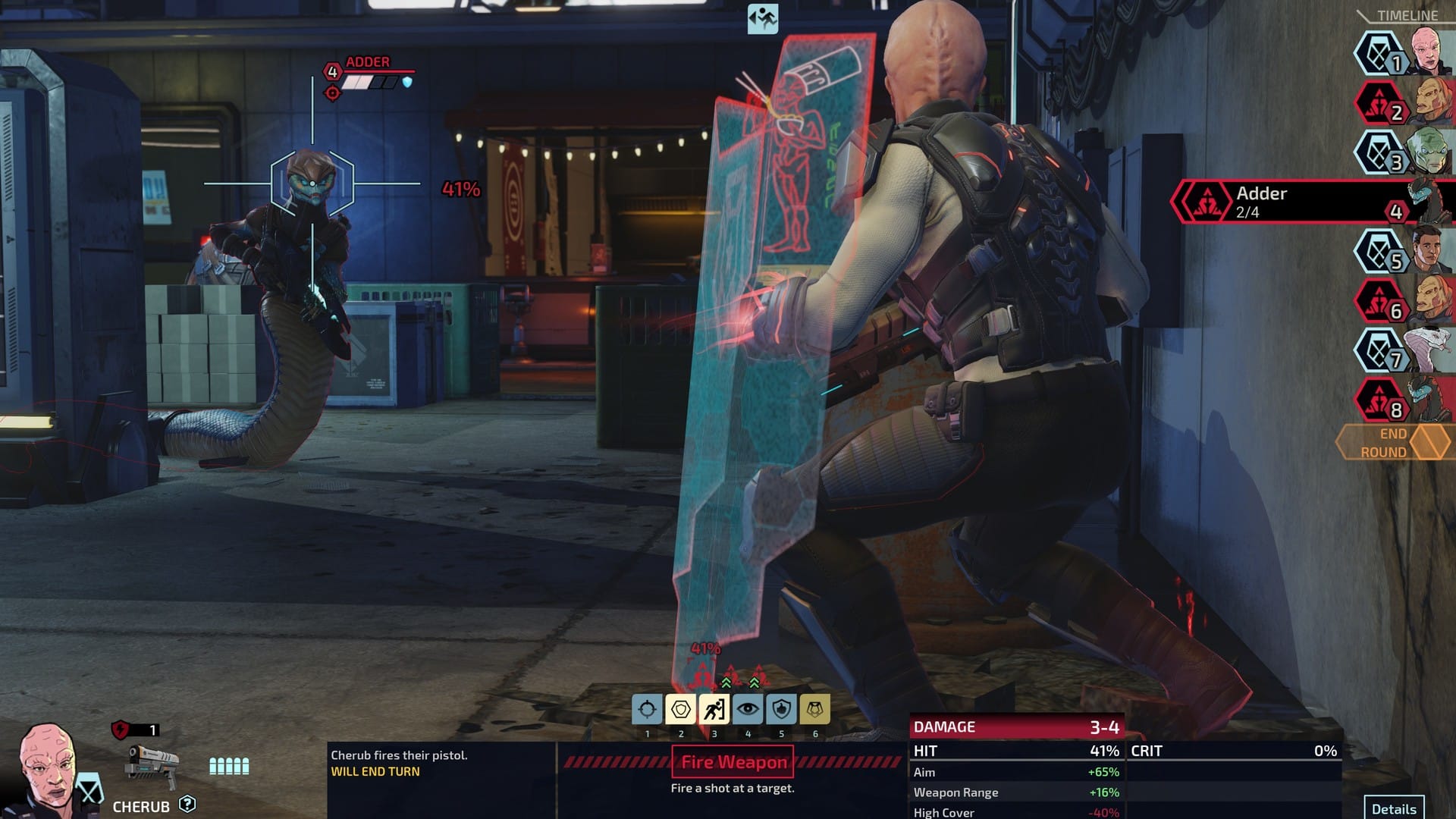
Instead of allowing you to move and act with any unit on the map at any time, Chimera Squad restricts you to controlling units in a specific turn-order. This creates an interesting dynamic where you have to weigh larger priorities (‘I want to take down that Chrysalid as fast as humanly possible’) against short term opportunities (‘If I stun that Thrall, the turn counter will skip over them and allow my medic to follow up’) on a regular basis.
Another major revision here is the reliance and focus on named characters. Chimera Squad offers a total of 11 unique alien and human agents, each with their own personality and unique abilities. Many of these agents complement one another – allowing for powerful cooperative maneuvers.
On paper, this promises to be a pretty big departure from the series usual M.O. In practice, it’s not nearly so drastic of a change. Sure, the developers have tried to imbue these agents with the same charm you might find within the roster of a hero shooter like Overwatch. However, the game never quite gets all the way there.
There are a few fun details but the stories that I’d create around Chimera Squad’s roster ended up being much more compelling than anything Firaxis left on the narrative table.
Though the banter is welcome and the abilities each character offs are useful, it feels like there's a piece missing. A loyalty mission or two would go a long way here, as would dialogue trees. As it is, you really never really get to know these characters beyond their surface-level introductions and core abilities.
Godmother might be written to be a stoic badass but nothing in Chimera Squad’s dialogue ever conveyed that so well as my decision to kit her out with equipment and abilities that made gave her a buff that made her ‘Untouchable’ after every kill. A shotgun-slinging paragon of murder, my Godmother would tear through enemy after enemy with comical impunity and deadly precision. Your Godmother might not fit the same mold but that's just typical X-COM.
In contrast, the abolishment of perma-death and the introduction of the scars mechanic ends up being more of a misfire.
When a unit is downed in Chimera Squad, you’ll have to stabilize their injuries or risk that unit attaining a semi-permanent negative modifier to their stats in the form of a scar. Scarred agents can be treated by spending a couple of days recovering.
If an agent goes down during a mission, you’re also able to deploy an Android in their place once you reach the next breach point. Essentially, it's an alternative to resetting a partially-completed mission or playing out the rest of it at a disadvantage.
Your Android’s core stats and equipment can be upgraded between missions but they don't offer any special abilities akin to the named-characters in Chimera Squad. Though novel, this mechanic ended up being under-utilised. My characters rarely went down and, minus the possibility of losing them, I rarely hesitated to throw lower level recruits into the fray instead.
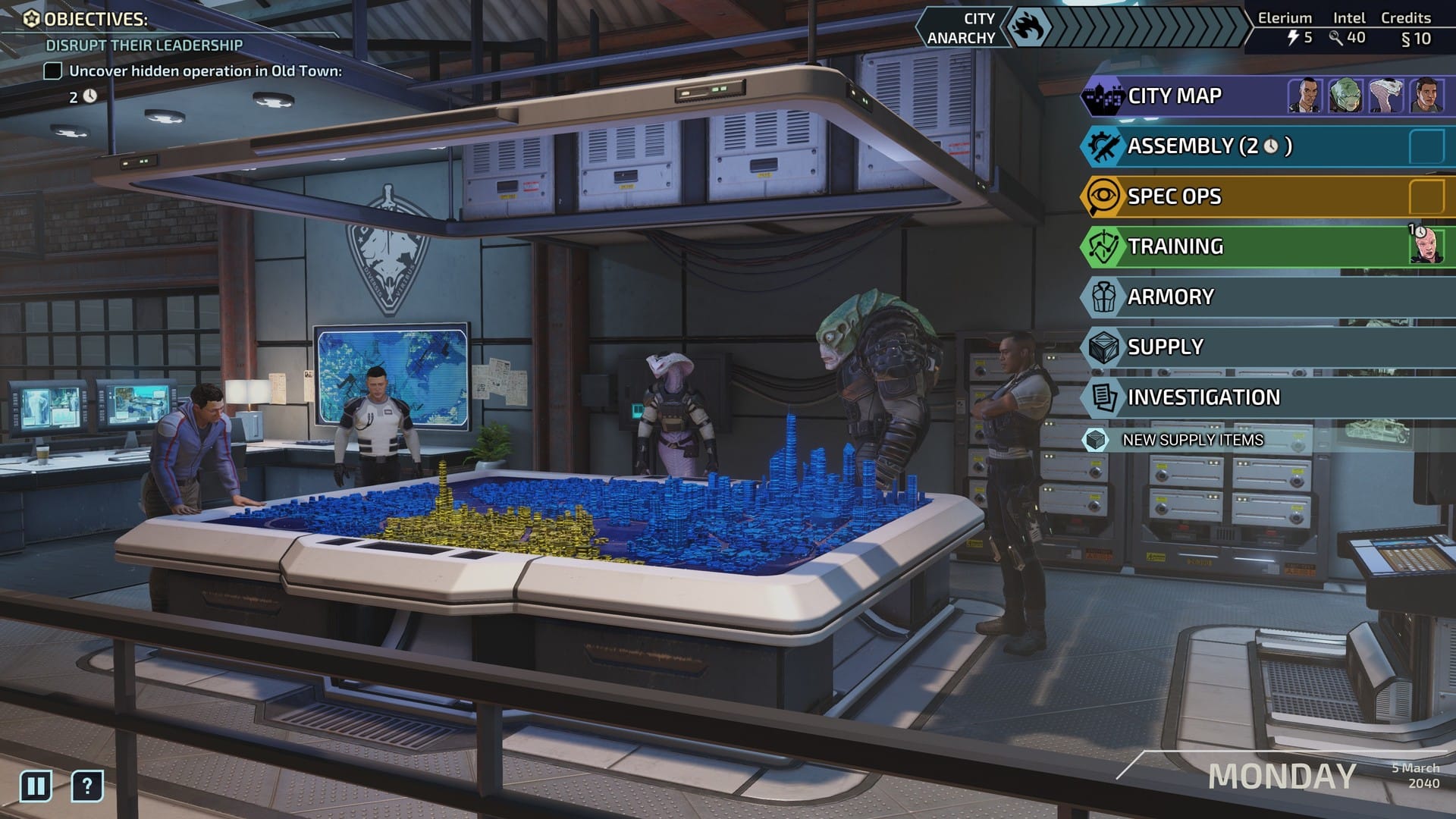
Between missions, Chimera Squad features a bevy of base management mechanics akin-to-but-less-involved-or-punishing to the base building mechanics of previous X-COM installments.
Your endgame here is to manage and mitigate unrest in City 31 while you investigate each of the city’s major criminal organisations. To that end, you’ll have to divide your focus across each of the game’s nine districts in order to manage unrest. You’re also able to buy more additional equipment for your units, research new tech and train units to permanently increase their stats.
Some missions reward you with new items and resources. Others reward you by reducing unrest across the city or granting progress in your investigations. Most are a bit of a mix of the two, which results in everything feeling a bit samey (and a little too easy) after a dozen or so hours.
All up, my initial run through the game took around 24 hours of playtime. Still, I was delighted in the early stages of my run through Chimera Squad to find a decent amount of variety in the length of missions. The game’s longer boss missions can end up taking 30-40 minutes, though most veer closer to 5-10 minutes.
Rather than keep you on the hook for just one more turn, bouts of Chimera Squad are bite-sized and approachable in a way that previous X-COM games are not.
The Bottom Line
As an experiment to deviate from the series’ template, Chimera Squad is a largely a successful one. Despite all the changes, the finished product still feels like X-COM in all the right ways and it’s still a blast to lose yourself to it for five minutes or five hours.
With modders certain spruce up the spots where Firaxis have fallen short, Chimera Squad still mostly hits the mark.