Remnant: From The Ashes (2019) review
Dark Souls meets Hellgate: London, with a splash of The Secret World.

In about ten years, gaming historians will probably look back on this year as the one where the idea of the Souls-like began to mutate in unexpected directions. Sure, many of the early imitators and homages of From Software’s iconic action RPG put their own spin on things – such as Nioh’s loot system or The Surge’s science fiction setting – but they rarely strayed too far from the foundations. Slow, deliberate combat. Moody, mythic settings. Curt, non-linear storytelling.
By contrast, many of this year’s Souls-like crowd are less interested in just replicating what works about the formula and more interested in engaging in a larger dialogue with the genre and its fans. Just how much can you take away or change from the blueprint before the fans of the genre push back or the core appeal ceases to be? Nobody really knows but we’re all in the process of finding out.
The latest verse in this larger conversation is Remnant: From The Ashes.
Developed by Gunfire Games, Remnant is a multiplayer-focused cross between Dark Souls, Hellgate: London and The Secret World.
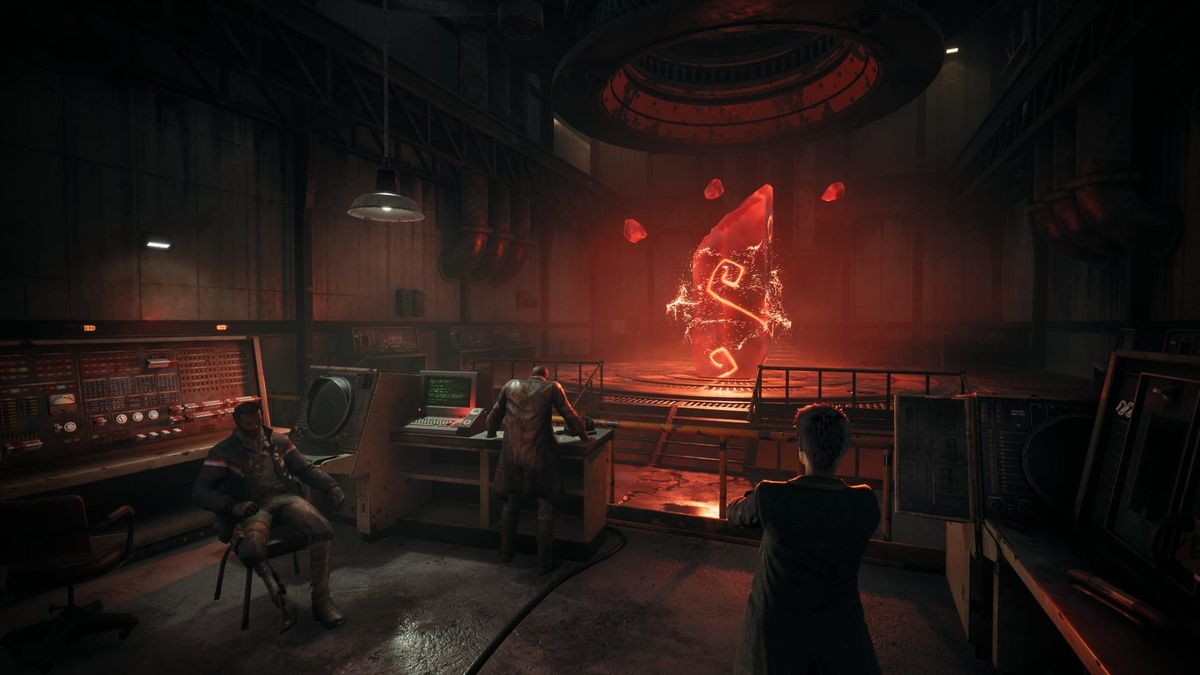
Set in an ambiguous but certainly apocalyptic future where mankind has been invaded and hunted to extinction by a race of plant-like creatures called the Root. You play as a nameless chosen one who is tasked with venturing forth from the underground shelter that house the few survivors of the calamity in the hope that you’ll be able to find a way to turn the tide.
Without venturing too deeply into spoiler territory, your journey might start and end on earth – but you go far more places than just the third rock from the sun. If you’re a fan of the obtuse-yet-compelling storytelling found the Dark Souls games, you’ll probably get a good kick out of piecing it all together. I found myself pleasantly surprised by the (literal) places the story went but found little to latch onto in the way of characters or concepts.
What's more, if we circle back to the three key qualities I highlighted earlier, there’s a key element of the Souls experience missing in Remnant. Instead of slow and deliberate combat, Gunfire have opted for frenetic firefights and a style of corridor shooting that’ll be immediately familiar to anyone who has ever played a third-person shooter made in the Unreal engine.
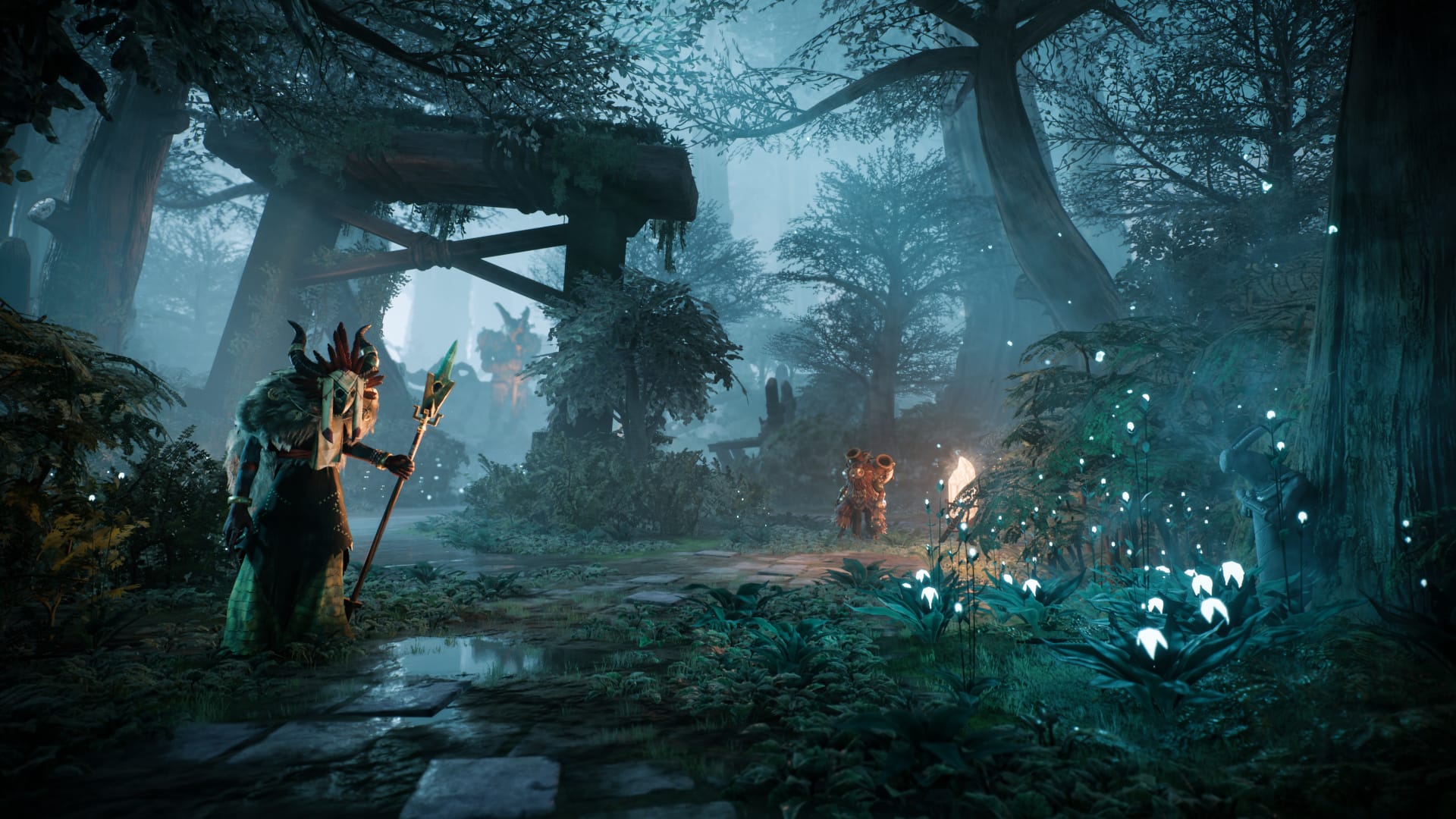
One of the phrases that’s been thrown around since Remnant: From the Ashes first launched is Dark Souls with guns and while that label isn't exactly inaccurate, it doesn't really convey the nuance of what that twist on the formula actually entails.
In games like Dark Souls, combat is messy. You have to get close and commit to an attack in order to overcome your foes. Attacking inevitably involves putting yourself at risk and putting you in a spot where it only takes a small mistake for everything to go wrong.
Introducing reliable and reusable firearms to the experience changes this equation in a major way. You don’t have to be close to your foes to fight back against them. You can kill enemies from a distance and without necessarily exposing yourself to fresh damage. The risk-management you have to bring to combat is forever changed.
Remnant is a Souls-like where you have access to guns that can be used more than sparingly. At first, that shift in the status quo feels freeing. You don’t need to think as tactically about how you’re going to position yourself or time your dodges. You just have to shoot the enemies before they get to you. It feels like you brought a gun to a knife-fight.
It isn’t long before Gunfire turn the screws on you. First, the game starts throwing more and more enemies at you. Then, they begin to mix it up by introducing new enemies with their own unique attacks and mechanical hooks.
You have to start thinking more and more about what you’re doing. Killing each foe doesn’t take too long and few are particularly difficult. However, en-masse, you’re kept on your toes. The real challenge of the game lies in being able to dance your way around them and juggle the different threats in your vicinity until you can resolve them.
You do have access to a melee weapon and this does allow you to play things like a more traditional Souls-like game, but it’s more of a last resort than anything else.
Honestly, it’s difficult to imagine realistically being able to surmount everything that Remnant throws at you without access to firearms. There comes a point not too far in where the difficulty curves sharply upwards and you’ll want to start playing with friends. Thankfully, the game supports cooperative play with up to two others and – unless you’re a maniac with a Twitch stream and a superiority complex – that’s probably the way you’re gonna want to play through the rest of Remnant.
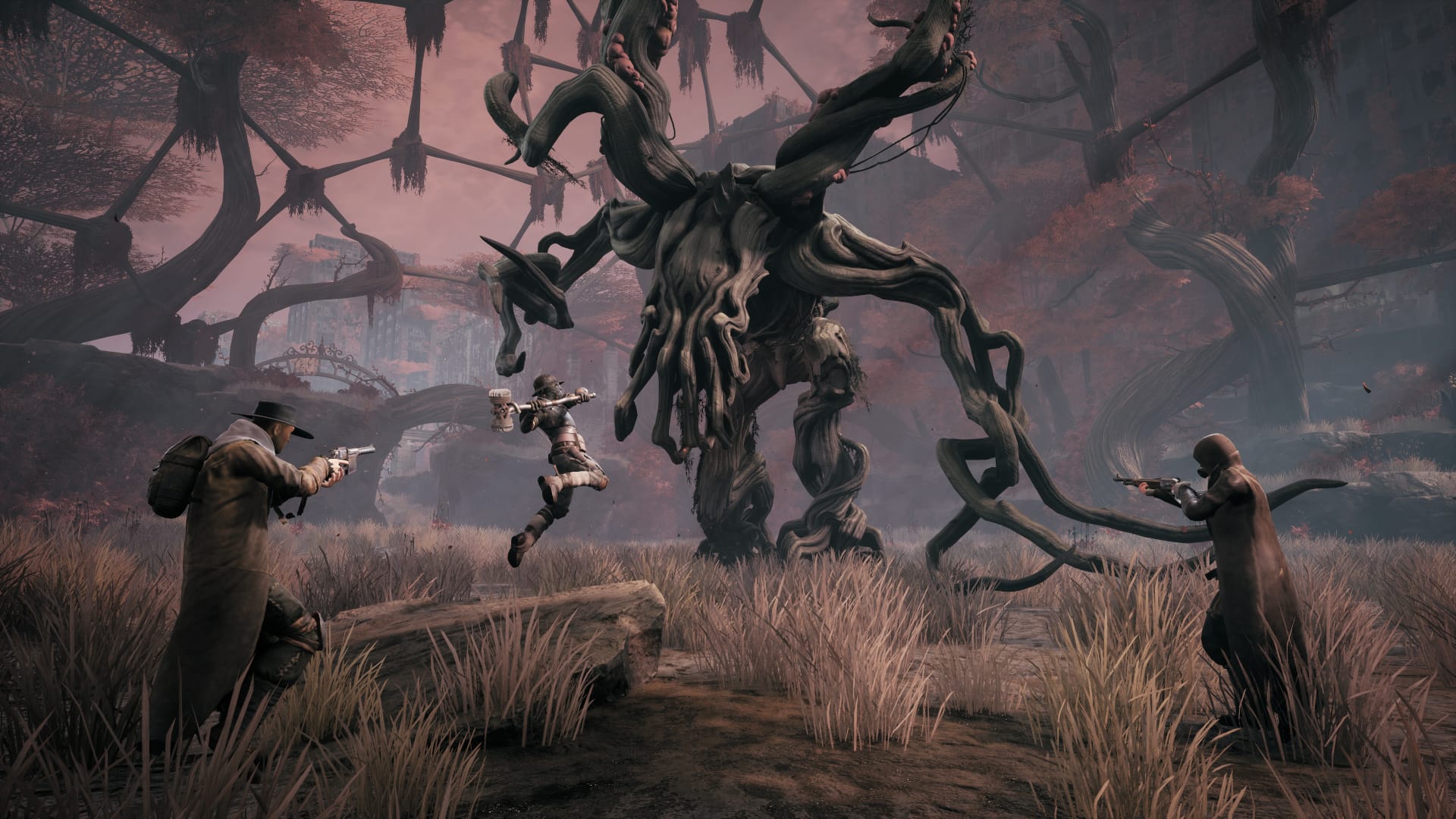
Summoning allies is a more formal here than it is something like Ashen. Still, Gunfire have made done a great job of making things as frictionless as possible. You just load up the main menu, join a friend’s game and you’ll spawn in the next time they hit a checkpoint.
Remnant is a little more linear in structure than the genre usually is. Rather than work your way through the loose-ends that branch off some sort of hub location, you’re venturing out into randomly-generated locales in the style of something like Diablo or Hellgate: London.
Each time you jump into the game, things will look a little different. Nevertheless, it doesn’t take long before the familiar patterns of the universe reveal themselves. You’ll fight your way through a zone, beat a boss, teleport back to base and invest resources into improving your character.
Things do get a little more twisty and complex towards the end and the boss fights aren’t always conventional arena battles but – for the most part – each section of Remnant plays out as per this pattern.
With each major boss you slay, you gain a new passive skill tree that you can invest points into. The nodes on this tree will give you passive upgrades like flat bonuses to damage or the speed with which you reload or heal downed teammates. Early on, you’ll only have four ways to spec your character. By the end, it feels hundreds of different builds are possible.
As a side-effect of the generated levels, the bosses in Remnant also change from run to run – which is admittedly a pretty unique hook. Since each boss drops different loot, there's ample incentive to go back and replay the game with friends if you want to see it all.
The Bottom Line
Remnant: From the Ashes is a Souls game with guns but that’s only half the appeal. It’s also a Souls game that you can quickly and easily play with friends. These twists on the formula add a lot of value and makes it much easier to recommend to newcomers than it would be otherwise.
If you still want the tense atmosphere and the cryptic storytelling, you’ll still get it. However, it’s Remnant’s commitment towards trying to do something that other spins on the genre haven't been willing to explore set it apart in a big way.
It’s more of an evolution on the genre than a revolution but Remnant is still an unexpected delight.