Wolfenstein: Youngblood (2019) review
Growing pains.

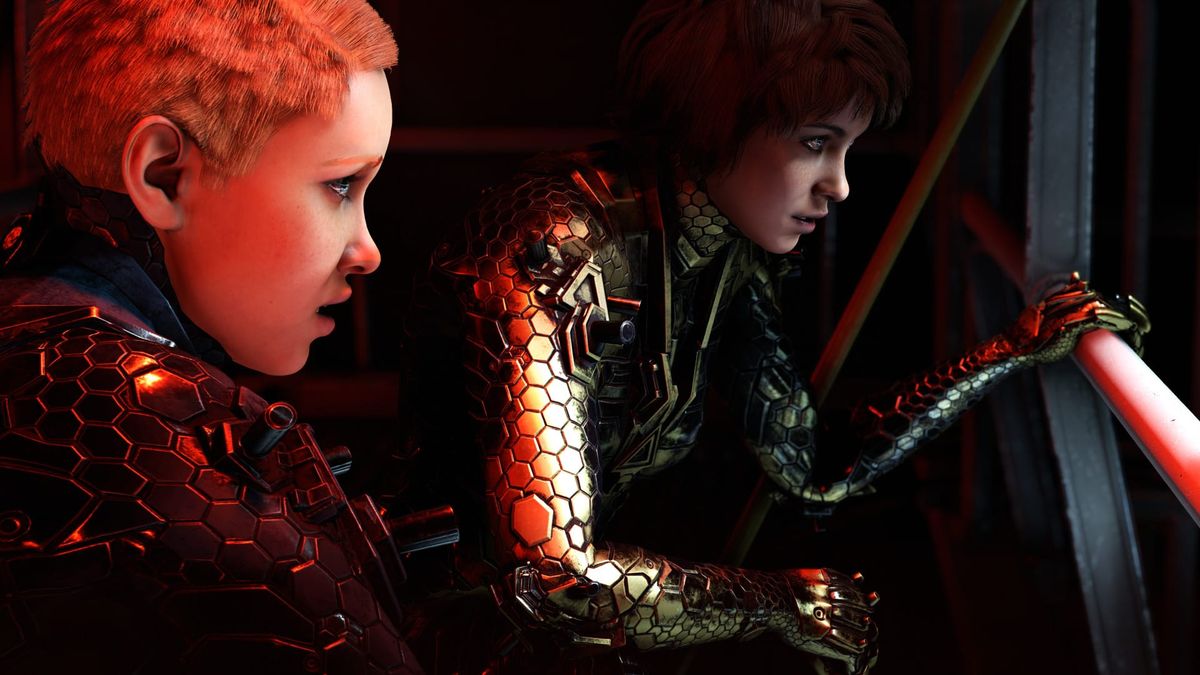
If the last few Wolfenstein games have seen the iconic shooter evolve into the Fast & Furious of the gaming world, this is definitely the the franchise's Tokyo Drift.
Co-developed by MachineGames (Wolfenstein: The New Order, Wolfenstein: The New Colossus) and Arkane (Dishonored, Prey), Wolfenstein: Youngblood runs against the grain of the series’ history.
When it comes to first person shooter franchises, Wolfenstein isn’t just one of the oldest names in the book. It’s the author. In some ways, Wolfenstein is the James Bond of shooters. Both franchises have changed and evolved with the times and the tastes of its audience, but all the tropes, symbols and beats you want out of them are still there throughout. That unwillingness to evolve is easy to overlook, but it isn't hard to find it if you know where to look.
Putting aside spin-offs like Enemy Territory and Wolfenstein RPG, Youngblood might actually be one of the most radical entries in the series to date. Not all of the experimentation pans out, but it certainly feels like MachineGames are trying to test the waters and try out a new take on the franchise writ large.
Set about two decades after the events of The New Colossus, Youngblood follows Jessica and Sophia Blazkowicz – twin daughters to series mainstay BJ Blazkowicz – as they fight their way through a Nazi-occupied version of 1980s Paris searching for their missing father. It’s a setup that lends itself to plenty of action, but where the MachineGames' previous Wolfenstein games merely flirted with more non-linear level design and structure, this one offers more concrete commitment to the idea.
The alternate version of Paris depicted in Youngblood is fun to explore but it’s not all that large. Each district of the city is close to something like Destiny’s zone-like planets in size.
Comparisons to Raven Software’s 2009 Wolfenstein might also be apt. What's here is more of hub-and-spoke structure than a true open world. You’re able to travel between each area of Paris using the metro system and, while there is some variety to be found, they all feel painted from the same palette. This isn’t necessarily a bad thing, but it feels like more could have been done to make each zone feel distinct.
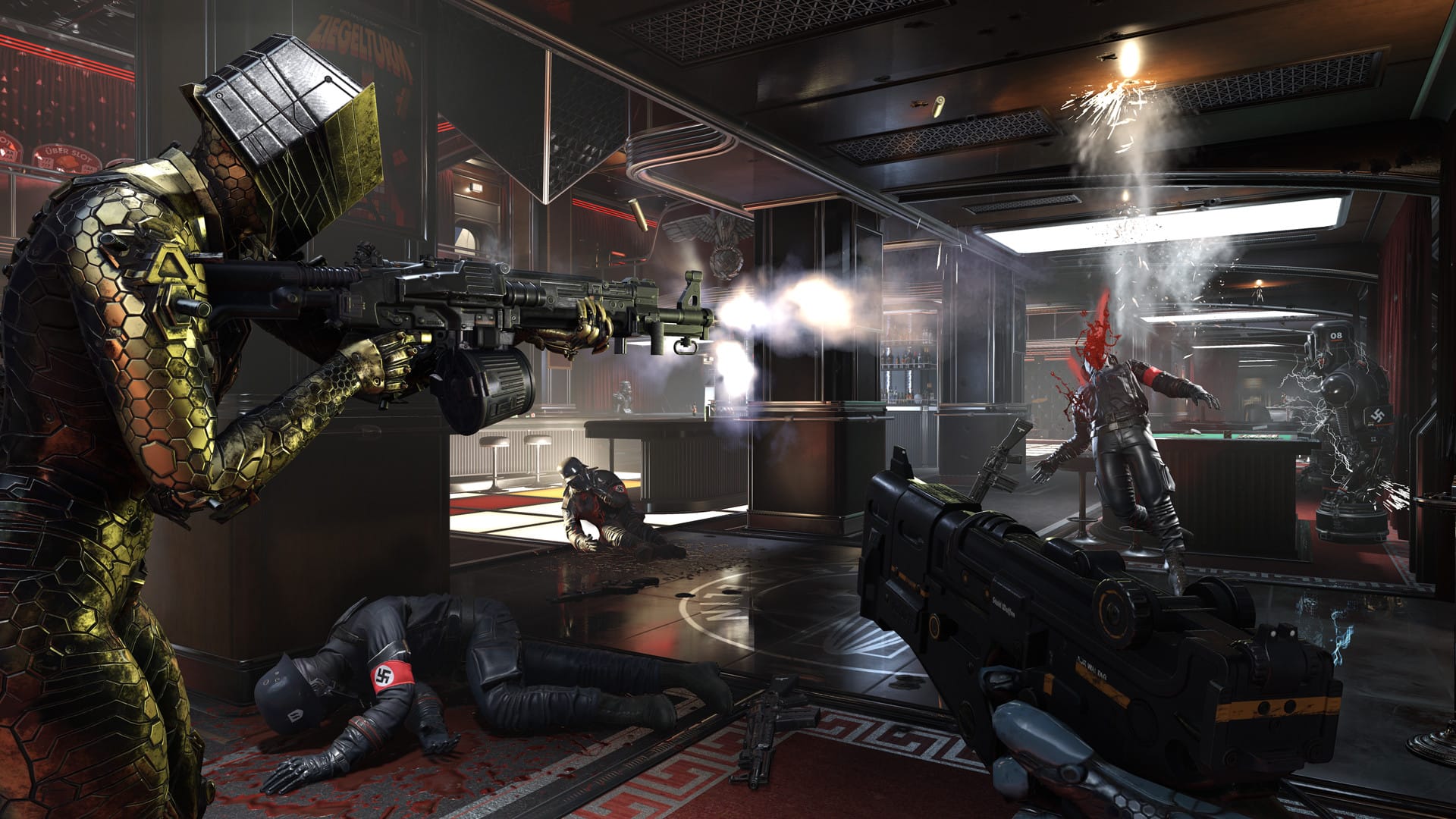
The banner-laced Little Berlin is the only part of Paris that really made an impression on me. The rest blurs together before long and Youngblood is largely devoid of the incredible, jaw-dropping moments, sense of scale and personality that made The New Colossus so much fun. There’s nothing nearly as crazy as going on an American late-night talk show and scalping a Nazi on air. You don’t even get to visit any of Paris’ usual landmarks like the Eiffel Tower or the Arc de Triomphe.
In any case, your overall goal in Youngblood is to work your way through each major district in the city and fight your way to the top of three critical Nazi communication towers. Once you get to the top of each structure, you'll fight a quick boss battle, hack into the Reich’s communication network and learn a little more about the larger goings-on within the wider Wolfenstein universe.
Many of the story beats here are predictable, but if you’re hankering to see where the series goes next then Youngblood offers plenty of tantalising hints.
For all the differences, Youngblood does do a lot to live up to the legacy of the last few Wolfenstein games when it comes to letting you play the game your way. Right up front, you have the choice of playing as either Jess or Soph. The differences between the two are largely cosmetic. There’s a microtransaction system built into the game that does let you kit out your character with alternative skins, but when it comes to their actual capabilities, there’s no real reason to pick one sister over the other.
Then, when it comes to tackling the usual gauntlet of jackbooted goons, you’re given a lot of room to improvise. Weapon-wise, most of the usual suspects from the last two Wolfenstein games return. There are also a few fun and new abilities attached to the series’ powersuits, such as the ability to temporarily become invisible. These additions make it much easier to sneak through encounters using stealth and pick off your foes one-by-one than in previous games.
I opted for a mix of both approaches during my time with Youngblood. This time around, there are other ways to kill Nazis aside from as loudly and violently as possible. You can also do so with a friend.
Youngblood is also the first story-focused Wolfenstein game that you can play through in co-op. When it works, it's a blast. If you get incapacitated, your comrade can get you back on your feet. However, if you both get knocked down, you’ll have to spend one of your shared pool of spare lives to get a second wind.
If you’re playing through Youngblood on your own, an AI will take over as the second player. In practice, I found that this computer-controlled companion was mostly competent. They won’t break stealth until you do, but if you need them to bail you out after you’ve been incapacitated then you might be pushing your luck.
Even if it’s very much designed to be experienced with a friend, playing through Youngblood on your own is totally possible. Nevertheless, I did find that the game was too little punishing when it came to checkpointing. If either character bleeds out, you’ll fail the mission and, most of the time, you’ll be booted back to the very beginning.
Depending on how fast you play and how high level you are, you’re looking to having to salvage 10-20 minutes of progress. This can be pretty frustrating. Given the relatively-short length of Youngblood, I quickly found myself suspecting that this might be by design. I hit the credits in just over seven hours.
If you had told me that the new Wolfenstein game would take many of its cues from Destiny, I would not have believed you. Yet, the cooperative focus and zone-based structure aren’t the only things that Youngblood pulls from Bungie’s loot-shooter. The latest Wolfenstein is the first to truly incorporate an RPG-like leveling system.
In addition to earning skill points (which are used to unlock new abilities) and silver coins (which are used to upgrade your weapons), shooting Nazis in Youngblood will also net you experience points. Kill enough fascists, and you’ll level up. With each level you earn, the Blazkowicz sisters deal more and more damage to enemies.
Somewhat surprisingly, this progression system lends itself nicely to the series’ usual power fantasy. You might start slow but by the end not even the Reich’s finest footsoldiers can stand in your way. Unfortunately, the flipside of this is that you sometimes encounter enemies which are too powerful for your guns.
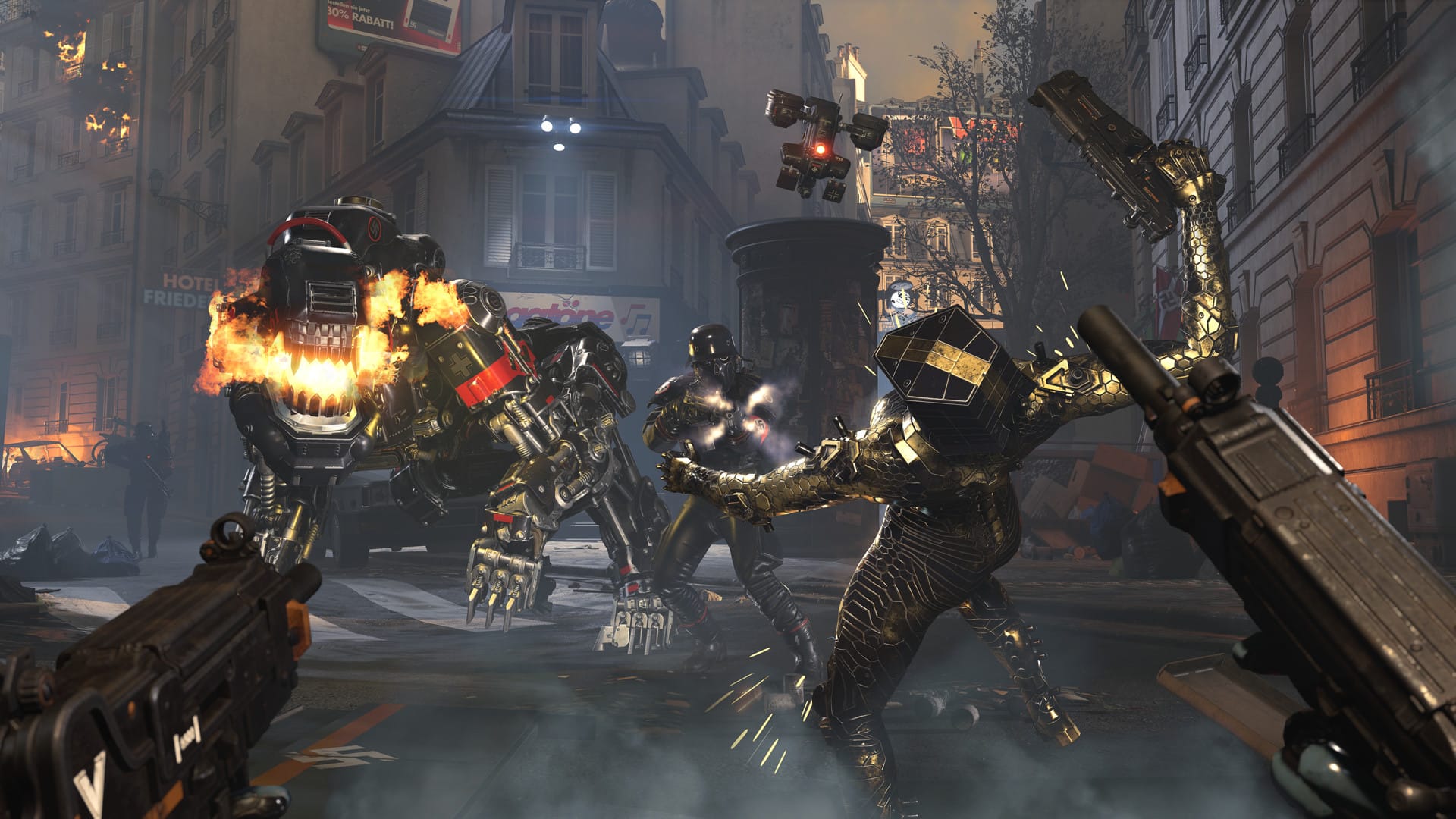
Whenever this happens, it stifles and disrupts the core logic and conceit of what any Wolfenstein game is about: killing Nazis. Sure, sometimes the Nazis have giant mechanical power-suits.
However, for the most part, you’re shooting flesh and blood soldiers and where the last few installments have offered a seamless symphony of cathartic ultraviolence and a never-ending stream of new and exciting ways to kill Nazis, this Wolfenstein game finds a way to make that foundational hook feel routine and mundane.The pieces are all here but the magic isn’t. It doesn’t so much feel like you’re weaving karmic justice upon modern history’s greatest punching bags so much as it does running on an experience points treadmill and watching the numbers go up.
The Bottom Line
For as much as MachineGames’ previous Wolfenstein games felt filmic and cinematic, Youngblood feels like yet another video game. It’s got some charm but not nearly enough to get by in the same way that The New Order and The New Colossus did. Fortunately, there’s still some fun to be had if you can rope in a friend.
Even then though, Youngblood doesn't live up to the high bar that MachineGames has set for themselves. It's unlike anything the series has attempted before, but ends up dragged by the complications that those changes introduce.
Wolfenstein is one of those franchises that’s built around simplicity. It’s a shooter about killing Nazis. If you’re going to get more complicated than that, you have to have a good reason for doing so. If you’re going to deviate from the core fantasy that has underpinned this particular series for decades, that destination has to be one worth the detour.
In Youngblood, it isn’t – but it’s not hard to see how a bigger and bolder version could have been.